
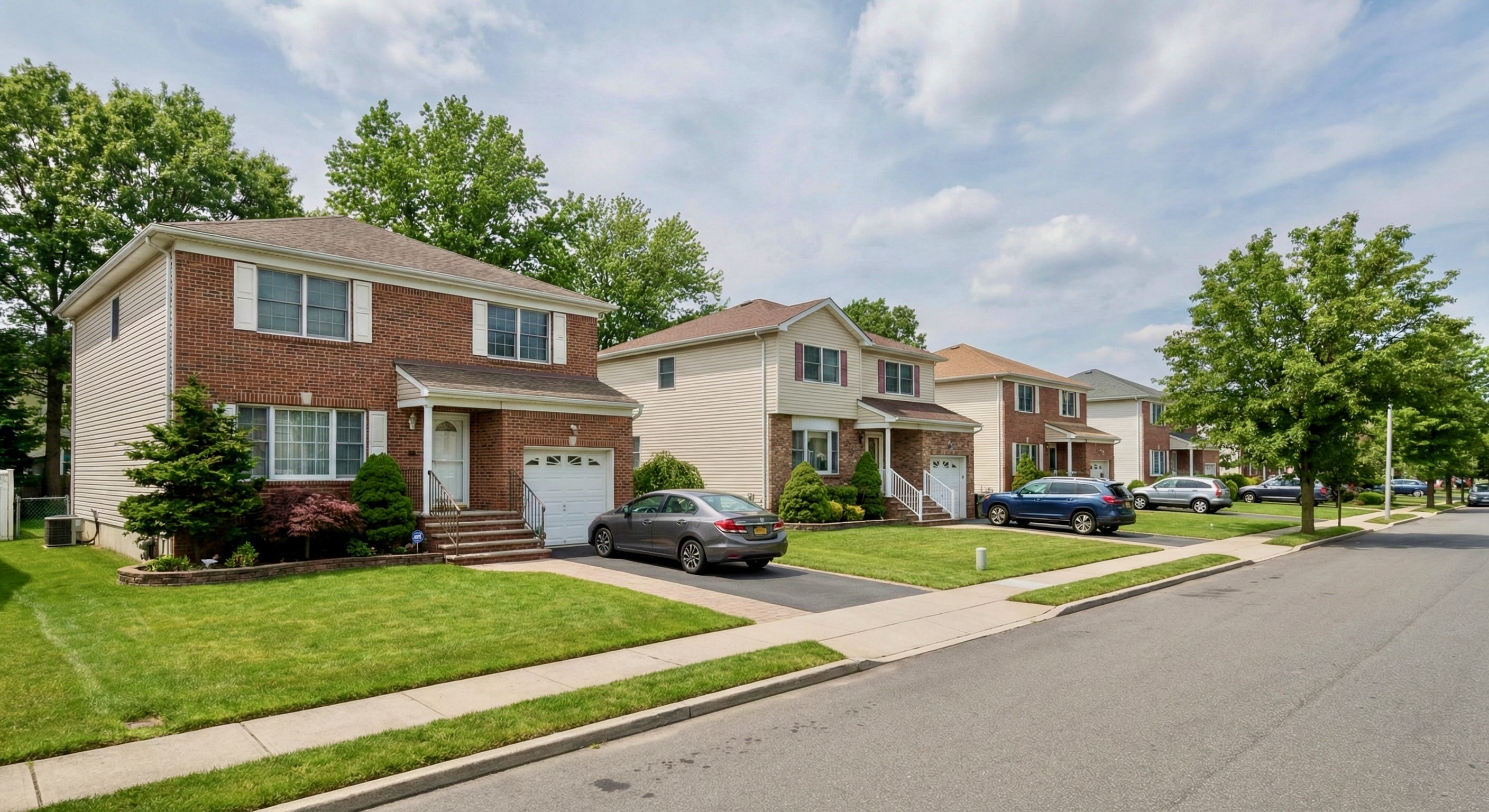
Staten Island stands out among New York City boroughs for having the highest homeowner turnover rate. Homes change hands more frequently here than in Manhattan, Brooklyn, Queens, or the Bronx.
This is not a new trend. Multiple factors drive Staten Island homeowner turnover: migration patterns to New Jersey, a high homeownership rate of 67%, active investor and flipper interest, and a median household income around $98,290 that enables frequent moves.
For buyers, high turnover means more inventory and opportunities. For sellers, it means competition but also an active pool of qualified buyers. Let’s examine what the data reveals.
What the Data Shows: Staten Island Home Sales Activity
The numbers confirm Staten Island’s active market. The Staten Island Board of Realtors (SIBOR) December 2025 report shows robust activity despite broader market headwinds.
SIBOR December 2025 Market Statistics
| Metric | Value | Year-over-Year Change | Source |
|---|---|---|---|
| Median sales price | $755,000 | +11.0% | SIBOR |
| Inventory | 772 units | -29.2% | SIBOR |
| New listings | 251 | -8.1% | SIBOR |
| Pending sales | 298 | -0.7% | SIBOR |
| Days on market | 70 days | -4.1% (faster) | SIBOR |
| Months of supply | 2.3 months | -26.8% | SIBOR |
Homes are selling in approximately 70 days on average, 4.1% faster than the prior year. Redfin January 2026 data shows homes selling in a median of 55 days in some areas.
January 2025 Sales Momentum
Earlier SIBOR data from January 2025 reinforced the high-turnover pattern:
| Metric | Value | Year-over-Year Change |
|---|---|---|
| Closed sales | +14.7% | Strong growth |
| Pending sales | +11.1% | Buyer activity high |
| Homes purchased | 300 | Up from 270 prior year |
| New listings | -13.4% | Supply tightening |
Closed sales jumped 14.7% year-over-year in January 2025. Three hundred homes transacted in a single month, up from 270 the prior year. This velocity distinguishes Staten Island from other boroughs.
Why Staten Island Leads NYC in Homeowner Turnover
Multiple factors explain why Staten Island has the highest home turnover rate in NYC.
1. High Homeownership Rate Creates More Sales Activity
Staten Island’s homeownership rate is approximately 67%, far exceeding other NYC boroughs. For comparison:
| Borough | Homeownership Rate |
|---|---|
| Staten Island | ~67% |
| Queens | ~44% |
| Brooklyn | ~28% |
| Bronx | ~18% |
| Manhattan | ~23% |
More homeowners means more potential sellers. When two-thirds of residents own their homes, the base for turnover transactions is significantly larger than in rental-heavy boroughs.
2. Migration to New Jersey Drives Outbound Sales
Staten Islanders frequently relocate to New Jersey’s “M” towns: Marlboro, Manalapan, Middletown, Monroe, Old Bridge, Hazlet, and Aberdeen. Between 2021 and 2022, approximately 75,103 people moved from New York to New Jersey overall.
Why Staten Islanders move to NJ:
- Larger property sizes and more spacious homes
- Lower housing costs in some areas
- Better public schools (NJ ranked 3rd nationally vs. NY at 24th)
- No city income tax in New Jersey
- Less crowded environments with suburban feel
This outbound migration creates steady inventory as homes hit the market when families leave.
3. Higher Median Income Enables Mobility
Staten Island’s median household income of approximately $98,290 (some sources cite $101,200 in 2023) exceeds many other areas. Higher income correlates with greater ability to absorb transaction costs, down payments, and closing fees.
Wealthier homeowners move more frequently because they can afford to. They upgrade, downsize, or relocate based on life circumstances rather than being locked in place by financial constraints.
4. Active Investor and Flipper Market
Staten Island attracts real estate investors who purchase, renovate, and resell properties. Hard money lenders actively fund fix-and-flip projects across neighborhoods. Companies that buy houses “as-is” for cash operate throughout the borough.
This investor activity accelerates turnover:
- Distressed properties sell to investors
- Investors renovate and relist within months
- Turnkey homes attract traditional buyers quickly
The two-family home investment strategy is particularly popular for generating rental income while building equity.
5. Inbound Migration From Other Boroughs
While some Staten Islanders leave for New Jersey, others arrive from Brooklyn, Queens, and Manhattan seeking affordability and space. Rising costs in Brooklyn push families toward Staten Island’s larger homes and yards.
This creates a conveyor belt effect:
- Manhattan/Brooklyn residents move to Staten Island for affordability
- Staten Island residents eventually move to New Jersey for even more space
- New buyers fill vacated Staten Island homes
- The cycle repeats, maintaining high turnover
6. Suburban Character Attracts Life-Stage Movers
Staten Island’s suburban feel attracts families with school-age children. When children graduate or family situations change, these homeowners often sell.
Common life-stage triggers for Staten Island sales:
- Children finishing school
- Job relocation or retirement
- Divorce settlements requiring home sale
- Upsizing for growing families
- Downsizing for empty nesters
Browse current Staten Island homes for sale to see available inventory.
Turnover Patterns by Neighborhood
Different Staten Island neighborhoods show varying turnover characteristics.
South Shore: Family-Driven Turnover
The South Shore includes Tottenville, Annadale, Eltingville, and Great Kills.
Turnover drivers:
- School district changes prompting moves
- Families upgrading to larger homes
- Empty nesters downsizing
- Days on market: 47-84 days depending on pricing
South Shore median prices range from $720,000 (Great Kills) to $800,000+ (Eltingville) based on late 2025 data.
North Shore: Development-Driven Turnover
North Shore neighborhoods like St. George, Stapleton, and Clifton show different patterns.
Turnover drivers:
- Younger demographics with shorter expected tenure
- Rental-to-ownership conversions
- New development creating fresh inventory
- Gentrification and investor activity
- Price growth 100%+ over past decade in Clifton and Park Hill
The North Shore market attracts first-time buyers and investors seeking appreciation potential.
Mid-Island: Lower Turnover in Luxury Areas
Mid-Island neighborhoods including Todt Hill, Grymes Hill, and Emerson Hill see relatively lower turnover.
Turnover characteristics:
- Multi-generational ownership more common
- Higher price points ($990K-$1.25M+ in Todt Hill)
- Properties often sell off-market or through estate sales
- Owners have less financial pressure to move
Even in these areas, turnover exceeds comparable luxury neighborhoods in other boroughs.
What High Turnover Means for Market Participants
Staten Island’s high homeowner turnover creates distinct dynamics for buyers, sellers, and investors.
For Buyers: More Opportunities, But Competition
Advantages:
- More homes reach the market regularly
- Fresh inventory appears throughout the year
- Turnover reduces “forever home” mentality among sellers
- Motivated sellers who need to move quickly
Challenges:
- Active market means competition for desirable homes
- Must be prepared to move quickly
- Pre-approval essential before searching
Get pre-approved before you start looking. Understand prequalification vs preapproval to strengthen your position.
For Sellers: Active Buyer Pool, But Pricing Matters
Advantages:
- Steady buyer demand from inbound migration
- Investors provide cash-offer alternatives
- Properties moving in 55-70 days on average
- Strong price appreciation (+11% YoY per SIBOR)
Challenges:
- Must compete with other sellers on presentation
- Accurate pricing crucial for quick sale
- Overpriced homes sit longer despite active market
The Staten Island home value guide helps establish realistic expectations. Review home staging tips before listing.
For Investors: Active Market for Entry and Exit
Advantages:
- Regular inventory flow for acquisitions
- Active buyer pool facilitates resale
- Flip timelines are achievable given market velocity
- Rental demand from those not yet ready to buy
Challenges:
- Competition from other investors
- Rising prices compress margins
- Must move quickly on acquisitions
Consider two-family homes for investment opportunities that offset carrying costs through rental income.
Comparing Staten Island Turnover to Other Boroughs
Staten Island’s turnover rate contrasts sharply with other NYC boroughs.
Why Other Boroughs Have Lower Turnover
Bronx and Queens: Homeowners in the Bronx and Queens held onto their homes for the longest periods before selling in 2025. Lower homeownership rates and different demographic patterns reduce transaction volume.
Brooklyn and Manhattan: High prices and rental-heavy housing stock limit sales activity. Many properties are owned by investors rather than owner-occupants, and rent-stabilized apartments rarely turn over.
Staten Island Difference: The combination of high homeownership, migration patterns, investor activity, and suburban life-stage moves creates uniquely high turnover.
2026 Outlook for Staten Island Homeowner Turnover
What should the market expect for the remainder of 2026?
Projected Trends
Turnover will remain high. Staten Island’s structural factors driving turnover are persistent. Migration patterns, investor interest, and life-stage moves will continue.
Inventory may improve modestly. Mortgage rate projections from Morgan Stanley suggest rates could reach 5.50%-5.75% by mid-2026. Fannie Mae projects 5.9% by year-end. Lower rates could unlock additional sellers.
Prices will appreciate modestly. Expect 3-4% annual appreciation. SIBOR showed 11% gains in 2025, which may moderate.
Days on market will stabilize. The current 55-70 day average reflects market balance. Well-priced homes continue selling quickly.
Factors That Could Accelerate Turnover Further
- Declining mortgage rates releasing more sellers from lock-in
- Continued Brooklyn price pressure pushing buyers to Staten Island
- Increased new construction adding inventory
- Economic growth enabling more household mobility
How to Navigate Staten Island’s Active Market
Practical strategies for success in a high-turnover environment.
Strategies for Buyers
Act quickly on new listings. In an active market, desirable homes attract offers fast. Schedule showings within 24-48 hours of listings appearing.
Get pre-approved immediately. Sellers favor buyers who can demonstrate financing ability. Contact our Staten Island team for agent recommendations.
Consider multiple neighborhoods. High turnover means inventory appears across areas. Flexibility expands options.
Be prepared for competition. Multiple offers are common on well-priced homes. Understand your maximum budget before making offers.
The first-time homebuyer guide covers what to expect.
Strategies for Sellers
Price accurately from day one. Even in an active market, overpricing leads to extended days on market. The data shows 70 days average, but overpriced homes take longer.
Prepare for showings immediately. Active markets bring buyer tours quickly after listing. Have your home ready before going live.
Understand your competition. With regular turnover, similar homes will be available. Differentiate through condition and presentation.
Plan your next move. If you’re selling to relocate, have your destination plans ready. The reality of selling in New York explains the process.
Frequently Asked Questions: Staten Island Homeowner Turnover
Why does Staten Island have the highest homeowner turnover in NYC?
Several factors combine: (1) A 67% homeownership rate creates a large base of potential sellers. (2) Migration patterns to New Jersey drive outbound sales. (3) Higher median income enables mobility. (4) Active investor and flipper market accelerates transactions. (5) Inbound migration from Brooklyn and Queens creates steady buyer demand.
How fast do homes sell on Staten Island?
Homes sell in approximately 55-70 days on average, depending on pricing and condition. SIBOR December 2025 data showed 70 days on market, down 4.1% from the prior year. Well-priced homes in desirable neighborhoods often sell faster.
What does high turnover mean for home prices?
High turnover with strong demand supports price appreciation. Staten Island median prices increased 11% year-over-year to $755,000 in December 2025 according to SIBOR. Active buyer competition maintains pricing power for sellers.
Is Staten Island a good market for real estate investors?
Yes. High turnover provides regular acquisition opportunities and a ready buyer pool for resales. Investor-friendly lending (hard money loans, portfolio products) is available. However, rising prices require careful analysis of flip margins and rental yields.
Which Staten Island neighborhoods have the fastest turnover?
North Shore neighborhoods (St. George, Stapleton, Clifton) show high turnover due to development activity and younger demographics. South Shore family communities also see active turnover driven by life-stage moves. Mid-Island luxury areas (Todt Hill, Grymes Hill) have relatively lower but still active turnover.