
Spring is the busiest and most profitable season for home sellers across New York and New Jersey. Buyer demand peaks between April and June. Daylight stretches longer. Yards look their best. Families want to close before the school year starts. All of this works in your favor as a seller.
But the spring market also brings more competition. Your neighbors are listing their homes too. If you want top dollar, you need a plan that starts well before the first open house. These spring home selling tips for 2026 will walk you through every step from March prep work to a strong June closing.
Whether you own a colonial in Staten Island, a Cape Cod in Bergen County, or a brownstone in Brooklyn, this guide covers what works right now in the NY/NJ market.
Spring 2026 Market Conditions in NY and NJ
Understanding local market conditions is the foundation of any good spring home selling tips 2026 strategy. The NY/NJ metro area looks strong for sellers, but the days of blind bidding wars are behind us. Here is what the numbers tell us.
Inventory is still below historical norms. According to the National Association of Realtors (NAR), housing inventory across the Northeast remains roughly 20% below pre-pandemic levels. Fewer homes on the market gives sellers pricing power, especially in high-demand neighborhoods.
Mortgage rates have settled in the mid-6% range. After the volatility of 2023 and 2024, rates have stabilized. Buyers have adjusted their budgets. Pre-approved buyers are active and ready to move.
Median home prices in the NY metro area sit near $620,000. In northern New Jersey, median prices hover around $540,000. Staten Island continues to attract buyers priced out of Manhattan and Brooklyn, with median prices near $590,000.
Spring brings the highest buyer foot traffic of the year. NAR data consistently shows that homes listed between late March and early June sell faster and for more money than homes listed in any other season. The average spring listing sells for 5% to 10% more than a comparable winter listing.
If you are selling a house in New York, spring 2026 gives you a strong hand. But only if you play it right.
Your Spring Selling Timeline: 8 to 12 Weeks Before Listing
One of the most practical spring home selling tips for 2026 is simple: start early. Successful spring sellers do not wake up in April and decide to list. They start preparing in January or February. Here is a realistic timeline that works for a late April or May listing.
10 to 12 Weeks Out (January to Early February)
- Interview agents. Talk to 2 to 3 local agents who know your neighborhood. Ask about recent comps, days on market, and marketing plans. Robert DeFalco Realty specializes in the NY/NJ market and can give you a custom timeline.
- Get a pre-listing inspection. This is one of the smartest moves you can make. A $400 to $600 inspection now prevents a $10,000 surprise during buyer negotiations. More on this below.
- Order a comparative market analysis (CMA). Your agent will pull recent sales data to help you understand where your home fits in the market.
8 to 10 Weeks Out (February to Early March)
- Start decluttering. Go room by room. Pack away personal photos, collections, and anything that makes rooms feel small. Rent a storage unit if needed.
- Handle repairs. Fix leaky faucets, patch drywall, replace cracked tiles, and address anything flagged on the pre-inspection.
- Plan exterior work. Spring landscaping takes time. Order mulch, plan plantings, and schedule power washing for early spring.
4 to 6 Weeks Out (March)
- Deep clean everything. Hire professional cleaners for a top-to-bottom scrub. Carpets, windows, grout, and appliances all need attention.
- Stage your home. Either work with a professional stager or follow a room-by-room staging plan. Our Staten Island home staging tips apply to homes across the metro area.
- Schedule professional photography. Book your photographer for a day when landscaping looks fresh and natural light is strong.
1 to 2 Weeks Out (Early April)
- Final touch-ups. Fresh flowers, new welcome mat, clean windows, and a final walkthrough.
- Go live. List on Thursday or Friday for weekend showing traffic.
Curb Appeal and Exterior Prep
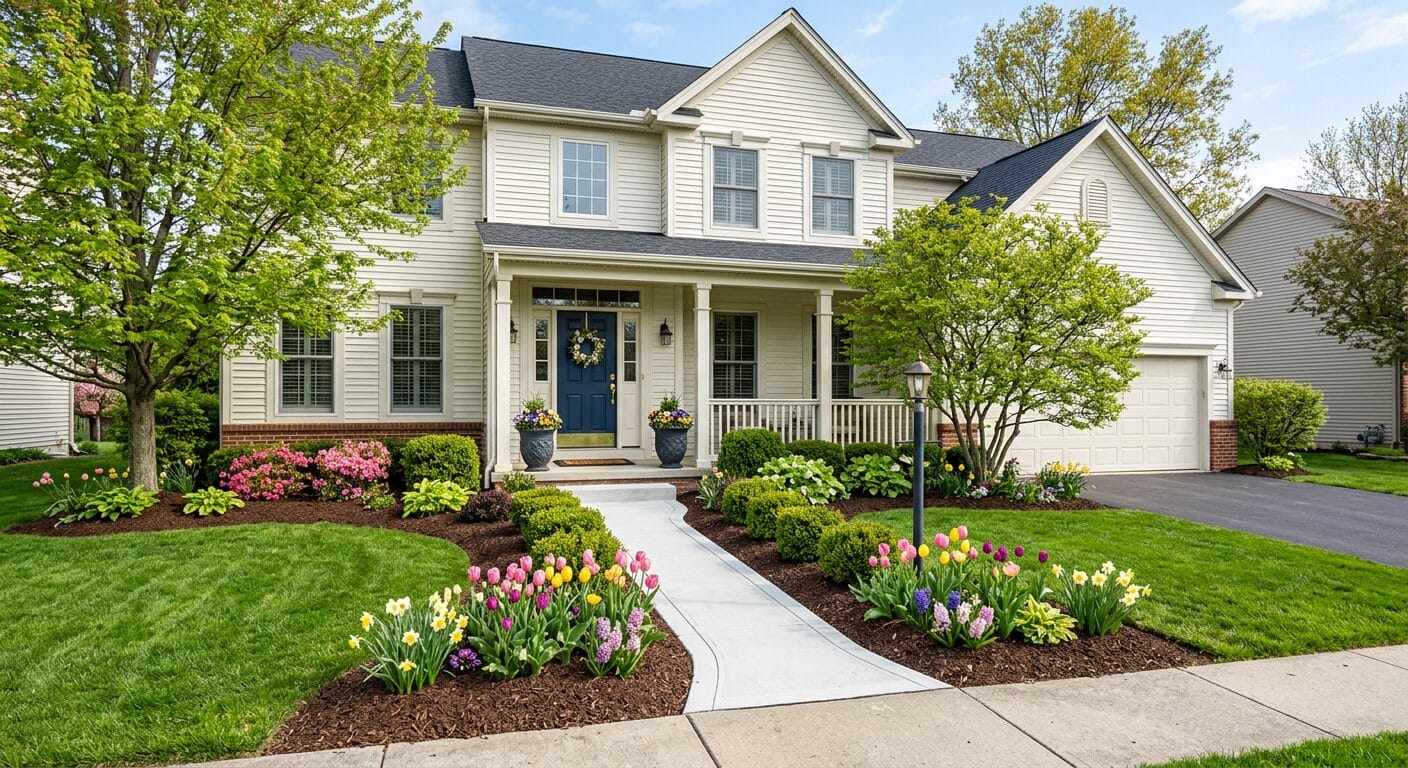
No list of spring home selling tips for 2026 is complete without curb appeal. Buyers form an opinion about your home before they step inside. According to a 2024 NAR report, 97% of agents say curb appeal matters. Nearly half say it is the single most important factor in attracting buyers.
Here is your spring exterior checklist.
Landscaping
- Mow, edge, and fertilize the lawn. A thick green lawn signals a well-cared-for property.
- Add seasonal color. Plant tulips, daffodils, pansies, and impatiens in garden beds and window boxes. Spend $100 to $300 on flowers for a return of $1,000 or more in perceived value.
- Mulch all beds. Fresh dark mulch makes everything look crisp. Budget $200 to $400 for an average yard.
- Trim bushes and trees. Cut back anything that blocks windows, walkways, or sightlines from the street.
Exterior Surfaces
- Power wash the driveway, walkways, siding, and deck. This single step can take years off your home’s appearance. Cost: $200 to $500 for professional service.
- Paint or stain the front door. A bold front door (navy, red, or black) creates a focal point. Budget $50 to $100 for a DIY refresh.
- Replace old house numbers and the mailbox. Modern, visible house numbers cost $20 to $50 and add a polished look.
- Check the roof from the curb. Missing shingles or visible damage send buyers running. Fix any obvious issues before listing.
Outdoor Living Spaces
NY/NJ buyers love outdoor space, especially after years of working from home. If you have a patio, deck, or porch, stage it with clean furniture, a small table, and potted plants. Show buyers how they will use the space.
If you want to sell your Staten Island home fast, curb appeal is where you start.
Interior Staging and Decluttering
Staging is not decorating. Staging is marketing. A staged home sells 73% faster than a non-staged home, according to the Real Estate Staging Association. The median staged home also sells for 5% to 25% above its list price.
Room-by-Room Staging Guide
Living Room
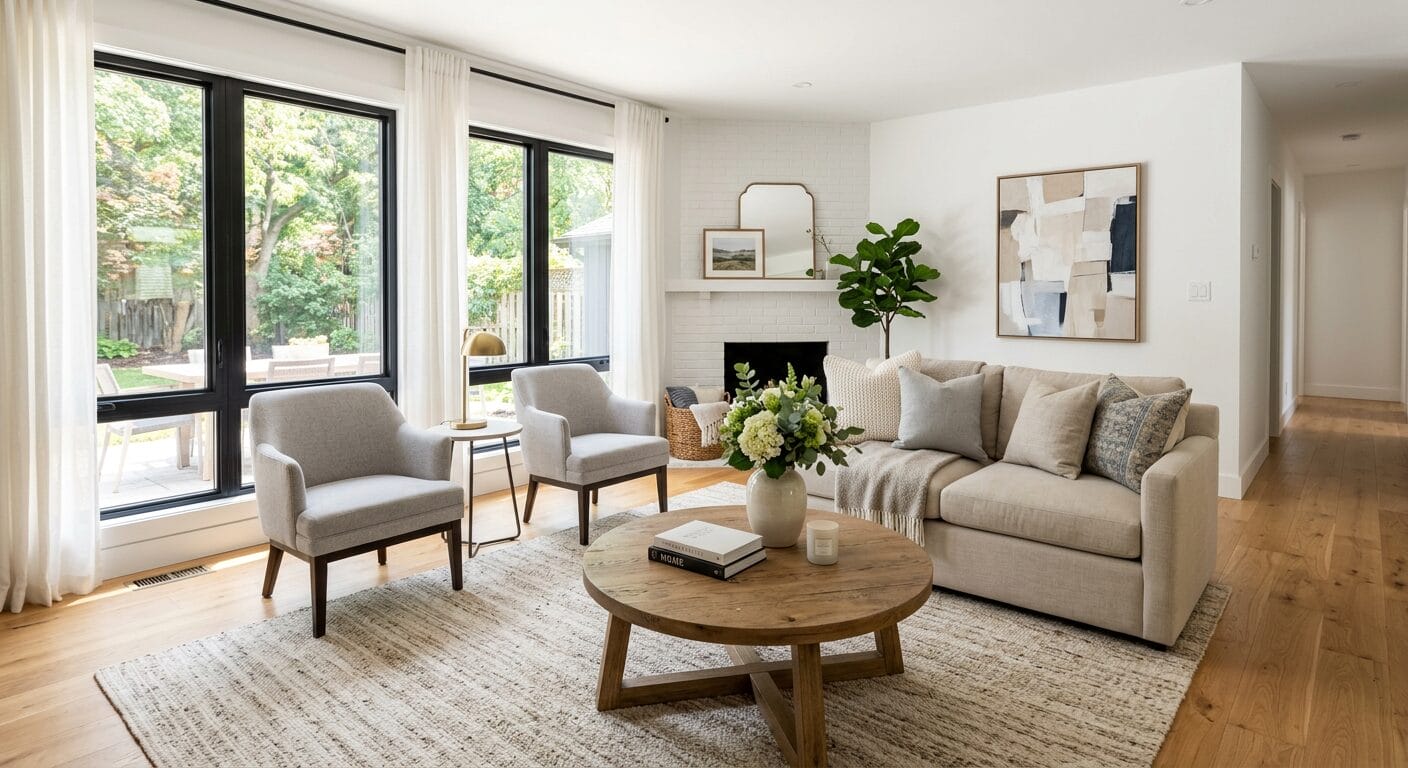
- Remove at least 30% of the furniture. Buyers need to see the space, not your sofa collection.
- Arrange remaining furniture to create clear conversation areas and traffic flow.
- Add neutral throw pillows, a simple area rug, and one or two accent pieces.
Kitchen
- Clear all countertops. Leave out only 1 to 2 decorative items (a fruit bowl, a small plant).
- Deep clean appliances inside and out. Buyers open the oven and the refrigerator.
- Replace outdated cabinet hardware for $50 to $150. Brushed nickel or matte black pulls modernize a kitchen instantly.
Primary Bedroom
- Use crisp white or neutral bedding. Add two accent pillows and a folded throw.
- Remove all personal items from nightstands and dressers.
- Make sure the closet is no more than 60% full. Buyers judge storage capacity.
Bathrooms
- Recaulk the tub and shower. Old caulk looks dirty no matter how clean it is.
- Replace worn towels with white spa-style towels. Fold them neatly.
- Add a small plant or a candle (unlit during showings).
Basement and Garage
- Do not ignore these spaces. Pack and organize everything. Use uniform storage bins.
- A clean, dry basement suggests a well-maintained foundation. A cluttered one raises questions.
The Smell Test
Odors kill deals. Pet smells, cooking odors, and musty basements are the top three complaints from buyers. Before listing, have a friend with a fresh nose walk through your home. Address any issues with professional cleaning, not air fresheners. Buyers distrust heavy fragrances because they assume you are covering something up.
Repairs and Pre-Inspection Strategy
A pre-listing home inspection costs $400 to $600 and gives you a clear picture of your home’s condition. This is one of the most underused spring home selling tips for 2026 and one of the most effective.
Why Pre-Inspections Work
- You control the narrative. Fix problems on your timeline and budget instead of scrambling after a buyer’s inspection.
- You reduce negotiation risk. Buyers who see a pre-inspection report feel more confident. They make fewer repair demands.
- You avoid deal killers. A surprise foundation crack or mold issue can blow up a contract. Finding it early gives you options.
Use our home inspection checklist for Staten Island as a starting point. Most items apply to homes anywhere in NY/NJ.
Common Repairs That Pay Off
| Repair | Cost | Impact |
|---|---|---|
| Fix leaky faucets and running toilets | $75 to $200 | Removes red flags |
| Patch and paint walls | $200 to $500 | Fresh, move-in-ready feel |
| Replace damaged flooring | $500 to $2,000 | Major visual upgrade |
| Service HVAC system | $150 to $300 | Shows maintenance history |
| Address water stains on ceilings | $200 to $800 | Eliminates water damage fears |
| Repair or replace broken windows | $200 to $600 each | Safety and energy concerns |
Disclosure Obligations
New York and New Jersey both have seller disclosure requirements. In New York, you either fill out a Property Condition Disclosure Statement or credit the buyer $500 at closing. In New Jersey, sellers must disclose known defects. Be honest. Failing to disclose known issues creates legal liability and can unwind a deal after closing. Read our full breakdown of home seller disclosures in NY/NJ.
Pricing Your Home Right
Among all spring home selling tips for 2026, pricing stands out as the make-or-break decision. Overpricing is the number one mistake spring sellers make. It is tempting to aim high because the market is strong. But an overpriced home sits on the market, collects “days on market” baggage, and eventually sells for less than it would have at the right price from day one.
How Pricing Strategy Works
Your agent should prepare a CMA that includes:
- Comparable sales. Homes similar to yours that sold in the last 60 to 90 days within a half-mile radius.
- Active listings. Your direct competition right now.
- Expired listings. Homes that did not sell. These tell you where the ceiling is.
Price your home at or just below the market value suggested by recent comps. This strategy generates the most showings, creates urgency, and often leads to multiple offers.
Pricing Pitfalls to Avoid
- Do not price based on what you “need” from the sale. The market does not care about your mortgage balance or your next down payment.
- Do not price based on Zillow’s Zestimate alone. Automated valuations miss condition, upgrades, and neighborhood nuances.
- Do not add your renovation costs to the purchase price. A $60,000 kitchen renovation does not add $60,000 in market value. The typical ROI on a major kitchen remodel is 50% to 70%.
If you own a higher-end property, read about luxury home pricing mistakes to see how even experienced sellers get this wrong.
You should also understand the financial side of your sale, including capital gains taxes on property in NY/NJ and the seller’s tax guide for Staten Island.
Professional Photography and Marketing
Great photos turn spring home selling tips 2026 into actual results. Listings with professional photos get 118% more online views than listings with amateur photos, according to Redfin data. In a market where 95% of buyers start their search online, your photos are your storefront.
Photography Tips for Spring Listings
- Shoot on a sunny day. Natural light is your best friend. Schedule the shoot for late morning when the sun is high and rooms are bright.
- Turn on every light in the house. This eliminates shadows and makes rooms feel warm.
- Photograph rooms from corners. Wide-angle corner shots make rooms look larger and more inviting.
- Include at least 25 to 30 photos. Cover every room, the yard, the garage, and any unique features.
- Add drone shots for homes with large lots. Aerial views show property boundaries, proximity to parks, and lot size.
Video and Virtual Tours
Video tours and 3D walkthroughs attract out-of-area buyers. Many buyers relocating to the NY/NJ metro start their search from out of state. A video walkthrough lets them experience your home before booking a flight.
Online Listing Description
Your listing description should lead with the strongest feature. Skip the generic opening lines. Instead of “Welcome to this beautiful home,” try “Two-car garage, new roof (2024), and a backyard that faces south for all-day sun.” Specific details sell. Vague adjectives do not.
Open House Strategy for Spring
Your spring home selling tips 2026 playbook should include a strong open house plan. Open houses work best in spring because buyers are already out and active. A well-run open house generates multiple showings in a single afternoon, creates a sense of competition, and can produce offers within 24 hours.
Before the Open House
- Pick the right weekend. Avoid holiday weekends (Easter, Memorial Day) when families travel. Target the first or second weekend after listing.
- Market the open house everywhere. Your agent should promote it on the MLS, Zillow, Realtor.com, social media, and local community groups.
- Set the stage. Fresh flowers, clean towels, every light on, blinds open, and a comfortable temperature (68 to 70 degrees).
- Remove pets and their belongings. Crate and carrier everything. Not every buyer loves animals, and pet hair triggers allergies.
During the Open House
- Leave the house. Let your agent handle it. Buyers feel uncomfortable when the owner follows them around.
- Provide printed materials. A one-page fact sheet with home specs, recent upgrades, tax info, and neighborhood highlights gives buyers something to take home.
- Collect contact information. Every visitor should sign in. This creates a follow-up list for your agent.
After the Open House
Your agent should follow up with every attendee within 24 hours. A quick call or email asking for feedback often converts interest into an offer. If feedback reveals a consistent concern (price too high, a specific room needs work), address it before the next showing.
Understanding seller concessions in Staten Island gives you room to negotiate without dropping your price. Offering to cover a portion of closing costs can be the push a hesitant buyer needs.
Common Spring Selling Mistakes to Avoid
Knowing what not to do is just as important as following spring home selling tips for 2026. Even in a strong spring market, these mistakes cost sellers thousands of dollars and weeks of wasted time.
1. Listing too early before the home is ready. A half-staged, poorly photographed listing gets one shot at a first impression. Buyers who scroll past it online rarely come back.
2. Skipping repairs and hoping buyers will not notice. They will. Or their inspector will. And the negotiation will cost you more than the repair would have.
3. Overpricing by more than 5%. Your home becomes a tool that helps sell your neighbors’ houses. Buyers use overpriced listings as a comparison to justify offers on correctly priced homes.
4. Ignoring the competition. Visit open houses in your neighborhood. See what you are up against. Adjust your staging, pricing, or marketing based on what you see.
5. Being inflexible with showings. Spring buyers are busy. If you turn away showing requests because of dinner plans, you lose potential offers. Make your home available 7 days a week during the first two weeks.
6. Neglecting the backyard. Spring buyers want outdoor space. A dead lawn, broken fence, or cluttered patio sends the message that maintenance is deferred everywhere.
7. Getting emotional during negotiations. This is a business transaction. Listen to your agent’s advice. Every offer is a starting point, not a personal insult.
Learn from what sellers actually experience in the reality of selling your home in New York.
Pros and Cons of Selling in Spring
Before you commit, weigh the trade-offs. These spring home selling tips for 2026 would not be complete without an honest look at both sides.
Pros
- Higher buyer demand. More buyers are actively searching in April through June than any other period.
- Better curb appeal. Green lawns, blooming flowers, and longer daylight hours make every home look its best.
- Faster sales. Spring listings spend 15 to 20 fewer days on market compared to fall or winter listings in the NY/NJ area.
- Higher sale prices. ATTOM Data Solutions reports that May and June sales consistently achieve the highest premiums above estimated market value.
- Family-friendly timing. Buyers with kids want to close and move before the new school year in September.
Cons
- More competition from other sellers. Your home is not the only new listing on the block. You need to stand out.
- Higher expectations from buyers. Spring buyers expect move-in-ready condition. Deferred maintenance stands out more when every other listing is polished.
- Prep costs add up. Between staging, repairs, photography, and landscaping, you may spend $2,000 to $8,000 before listing. This investment almost always pays for itself, but it requires upfront cash.
- Emotional buyers can be flaky. The excitement of spring drives some buyers to make offers they later retract. A strong pre-approval letter filters out the tire kickers.
If you are debating whether to sell now or wait, consider that every month on the market is another mortgage payment, tax bill, and insurance premium. For most NY/NJ homeowners, spring 2026 is the right time. Understanding your full cost picture, including closing costs in New Jersey, helps you make the final call.
You may also want to consider whether a home warranty makes sense as part of your selling strategy. Some sellers offer a home warranty to buyers as an added incentive.
Frequently Asked Questions About Spring Home Selling Tips 2026
When is the best month to list a home in NY/NJ for spring 2026?
Late April through mid-May is the sweet spot. Listings that go live during this window catch the peak of buyer activity before summer vacations slow things down. Aim for a Thursday or Friday launch to capture weekend traffic.
How much does it cost to prepare a home for the spring market?
Budget $2,000 to $8,000 for a typical NY/NJ home. This covers professional cleaning ($300 to $600), minor repairs ($500 to $2,000), staging ($500 to $2,500), landscaping ($300 to $1,000), and photography ($200 to $500). The return on this investment is usually 3x to 5x.
Should I stage my home or sell it empty?
Stage it. Staged homes sell 73% faster and for 5% to 25% more than empty homes. An empty room looks smaller than a furnished one. Buyers struggle to picture furniture placement and room function in a vacant space. If you have already moved out, hire a staging company to bring in rental furniture.
Is a pre-listing inspection worth the money?
Yes. For $400 to $600, a pre-listing inspection gives you control over the repair process. You fix issues on your terms, avoid last-minute renegotiations, and present a transparent, well-maintained home to buyers. See our home inspection checklist for details.
How long does it take to sell a home in spring in the NY/NJ area?
The average spring listing in the NY/NJ metro area spends 30 to 45 days on market. Well-priced, well-staged homes in desirable neighborhoods often go under contract in 7 to 14 days. Overpriced homes can sit for 90 days or more.
Do I need to make major renovations before selling?
No. Focus on cosmetic updates and repairs. Fresh paint, clean floors, modern hardware, and a well-maintained exterior give you the best return. Major renovations (kitchen gut jobs, bathroom remodels) rarely return 100% of their cost and can delay your listing.
What are the biggest turn-offs for spring buyers?
Pet odors, dark rooms, cluttered spaces, overgrown yards, and deferred maintenance top the list. Buyers also react negatively to overpriced listings. If your home is priced 10% above market, most buyers will not even schedule a showing.
Should I offer seller concessions in a spring market?
It depends on your market position. In a competitive spring market, you may not need concessions. But if your home has been on the market for more than 21 days, offering to cover 2% to 3% of the buyer’s closing costs can restart interest. Read our full guide to seller concessions.
How do I handle an estate sale in spring?
Estate sales require extra planning around probate, property condition, and emotional family decisions. Spring is a good time to list an estate property because buyer demand helps offset the as-is condition many estate homes carry. Our estate sale guide walks you through the full process.
What if I need to buy and sell at the same time?
This is common and manageable with the right strategy. Work with an agent who can coordinate your timeline. Options include a sale contingency, a rent-back agreement, or bridge financing. Your agent should map out a plan that protects you on both sides of the transaction.
Ready to List This Spring? Let’s Talk.
You now have a full set of spring home selling tips for 2026 built around the NY/NJ market. The spring selling season is shaping up to be one of the strongest in years for local homeowners. Buyer demand is real. Inventory is tight. And homes that are properly prepared, correctly priced, and professionally marketed are selling fast.
But spring selling tips for 2026 only work if you act on them. The best time to start preparing was last month. The second best time is today.
Robert DeFalco Realty has helped hundreds of NY/NJ homeowners sell their homes at top dollar in the spring market. We know the neighborhoods, the buyers, and the strategies that work right now.
Contact Robert DeFalco Realty for a free, no-obligation home valuation and a custom spring selling plan. We will tell you what your home is worth, what it needs, and how to get the most out of this spring season.
Browse more seller resources in our selling a house blog category.
Robert DeFalco Realty serves homeowners across Staten Island, Brooklyn, Manhattan, and northern New Jersey. Our team provides expert guidance on pricing, staging, marketing, and negotiations to help you sell with confidence.