
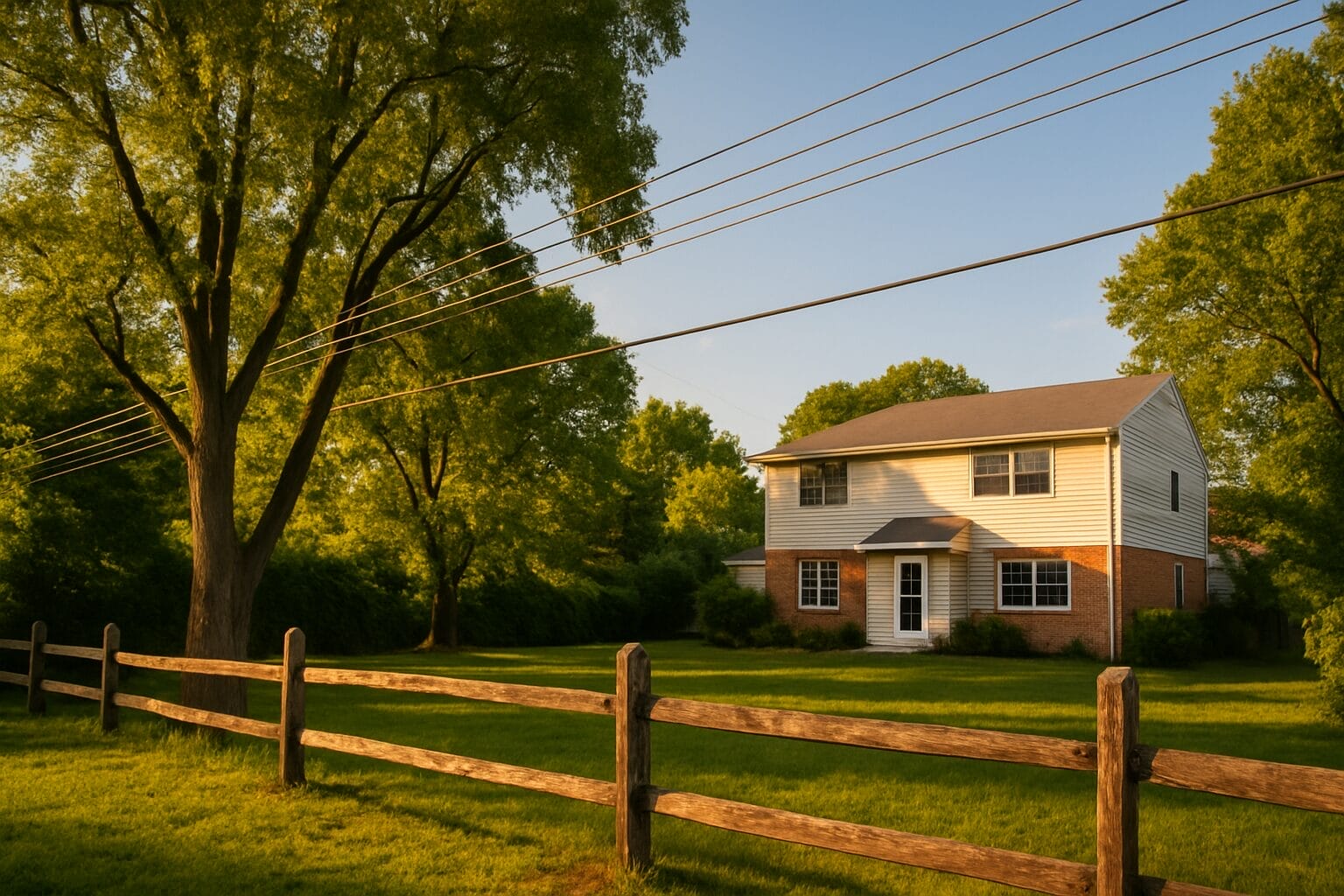
What is an easement, and why does the word keep showing up on your title paperwork? Short answer: an easement is the legal right for someone else to use part of your land for a specific purpose, even though you still own the land. After 30 years closing deals on Staten Island and across NY/NJ, I see at least one easement question per week. Most of the time the answer is routine. Sometimes the easement changes the price, the layout, or the deal itself. Either way, you should know what you are looking at.
This is the broader umbrella guide. We cover every common easement type, how easements appear on a title commitment and a survey, the NY and NJ rules that matter, and the exact steps a buyer or seller should take when one is on the table. If you only need the right-of-way slice, jump to my full guide on who owns right-of-way property. For everything else, keep reading. The question “what is an easement” comes up at almost every title review, and the answer changes the way you negotiate the deal.
Below: the plain-English definition, the ten easement types that show up in NY and NJ deals, what buyers and sellers should each watch for, plus five local scenarios I see most often.
In This Post
What is an easement, in plain English
So, what is an easement? An easement is a non-possessory right to use another person’s land for a defined purpose. The Cornell Legal Information Institute puts it cleanly: an easement gives someone the right to use part of someone else’s real property without owning it (Cornell LII). The land is still yours. You still pay the taxes. You still hold the deed. You just share a strip of use with another party.
Two roles matter. The land that benefits from the easement is the dominant estate. The land that carries the burden is the servient estate. If your neighbor needs to cross your driveway to reach their garage, your lot is the servient estate and theirs is the dominant estate. The right runs with the land in most cases, which means it sticks around when either of you sells.
Here is why this matters for buyers and sellers. An easement is an encumbrance. It limits what you can do on the affected strip. You generally cannot fence it off, build over it, or block access. You also cannot make it disappear by ignoring it. The right was recorded against the land, the land was sold to you, and you took the property subject to that right.
The two parties: dominant estate and servient estate
In every easement, one parcel is helped and one is burdened. A shared driveway easement helps the back lot reach the street. A utility easement helps Con Edison or PSEG get power lines across the front yard. A right of way across a beach lot helps the inland neighbor reach the water. Knowing which side you are on changes the conversation. Buyers of a servient estate are buying the burden. Buyers of a dominant estate are buying the benefit.
Why an easement is a “non-possessory” right
You do not own a slice of someone else’s lot when you hold an easement. You hold a use right. The owner can still mow it, walk on it, and pay the taxes. They simply cannot block your defined use. Under NY Real Property Law and NJ Title 46, that distinction is what keeps an easement separate from a lease, a license, or a fee transfer (NY RPP, NJ Title 46).
Easement real estate basics every NY/NJ owner should know
Easement real estate questions usually start in one of three places: the title commitment, the survey, or a friendly knock from a neighbor. Here is how to read each one.
How easements show up on a title commitment
When you sign a contract in NY or NJ, the title company orders a search and issues a title commitment. The commitment has two big sections you care about. Schedule A says who is selling, who is buying, and what they are conveying. Schedule B has two parts. Schedule B-I lists the requirements you must clear before closing, like paying off the existing mortgage. Schedule B-II lists the exceptions to coverage. That is where easements live.
If you see “easement recorded in Liber [X] Page [Y]” or “easement in favor of Consolidated Edison Company of New York” on Schedule B-II, the title insurer is telling you two things. First, the easement is real and recorded. Second, your owner’s policy will not pay if that easement causes you a loss. Read every word. Ask your title company for the underlying recorded document. My broader walk-through of the policy itself lives at what is title insurance in NY and NJ.
How easements show up on a survey
A current survey is the second place to check. The surveyor draws the metes and bounds of the lot and marks visible improvements. A good survey also shades any easement strips and labels them by purpose. Utility easements often run along front and side lot lines. Drainage easements often cut through back yards. Access easements often run as a driveway between two homes. If the survey is older than ten years, ask for a fresh one. Easements can be added or modified over time.
How easements are recorded at NYC ACRIS and NJ county clerks
In Brooklyn, the Bronx, Queens, Manhattan, and most of Staten Island, recorded easements show up in the city’s online land records system, NYC ACRIS. You can search by block and lot or by parcel address and pull the actual recorded instrument as a PDF. Richmond County (Staten Island) records since 1966 are searchable in ACRIS. Older records sit at the Richmond County Clerk’s Office’s Office. New Jersey is run county by county. Bergen, Hudson, Monmouth, and Ocean counties each operate online portals through their county clerk. Your title company pulls these records as part of the search. Run your own copy when you want a second look.
Types of easements: a complete breakdown
Most articles list four. There are at least ten that matter in NY and NJ. Here is the complete map of real estate easements, with how each one is created and what it means at the closing table.
Express easement
An express easement is created in writing, signed, and recorded against the land. This is the cleanest type and the one your attorney prefers. The grantor signs an easement deed or a grant of easement, the document gets recorded at ACRIS or the NJ county clerk, and the right is now public record. Almost every utility easement, shared driveway agreement, and party-wall easement starts as an express easement.
Easement by necessity
An easement by necessity arises when a parcel is landlocked. If your land has no legal way to reach a public road, NY and NJ courts will read in a path of necessity across the parcel that was once part of the same ownership. The classic case: a developer carves a back lot out of a larger parcel and sells it without writing a driveway easement. The back-lot owner can still reach the road. New York courts require strict necessity at the time of the original severance (NYSBA).
Prescriptive easement
A prescriptive easement is created by long, open, and continuous use without the owner’s permission. Think adverse possession’s cousin. Under New York law the use must be hostile, open, notorious, continuous, and uninterrupted for ten years. New Jersey requires twenty. If your neighbor has been driving across the corner of your lot for fifteen years and you never said yes or no, they may have a prescriptive easement. This is the type that surprises NY/NJ owners the most. If you do not want a prescriptive claim to ripen, give written permission. Permission breaks the hostility element.
Easement by implication
An easement by implication arises when prior use of one parcel was so obvious and necessary that a court reads it into the conveyance. The classic example is a single sewer line that historically served two homes from a common predecessor in title. When the property was split, the sewer line use carried with the back lot even though no one wrote it down.
Easement appurtenant vs easement in gross
This distinction is the one that quietly drives resale value. An easement appurtenant attaches to the land and runs with it forever. A driveway easement that lets the back lot reach the street is appurtenant. When the back lot sells, the new owner inherits the right. An easement in gross attaches to a person or a company, not the land. A utility easement held by Con Edison is in gross. Older personal easements (your great uncle’s right to fish from the dock) may not transfer.
Why care? Buyers of a dominant estate want appurtenant. Buyers of a servient estate want to know which type they have because that controls who they negotiate with. Your real estate attorney parses this language carefully during the attorney review period.
Utility easement
Utility easements are the most common type in NY and NJ. Con Edison, National Grid, PSEG, Verizon, Spectrum, and the local water and sewer authorities all hold utility easements that let them install, maintain, and replace lines. Most run along the front lot line within ten to twenty feet. Some run across the rear yard. The easement is usually in gross and almost always express.
What they limit: you cannot build a permanent structure over a utility easement. Patios, sheds, in-ground pools, and additions all need to clear the easement line. If you are eyeing an addition, pull the easement document and the survey before you draft plans.
Right-of-way easement
A right of way is the right to cross another’s land along a defined path. Public roads sit on a right of way held by the city or state. Private rights of way are common in old Staten Island subdivisions and NJ shore communities where lot lines pre-date modern zoning. Because right of way questions come up so often, I wrote a separate guide: who owns right-of-way property. That post answers the maintenance, fencing, and ownership questions step by step. Read this section for the umbrella view, then click through for the specifics.
Party-wall easement (Brooklyn brownstones, SI two-families)
A party-wall easement gives each owner of two attached homes the right to use, support, and repair the wall they share. Brooklyn brownstones and Staten Island two-families are full of these. The wall sits half on each lot. Each side has a duty to keep their half watertight and structurally sound. If you are buying a Staten Island two-family, read my walk-through at how to buy a two-family home on Staten Island for what to inspect.
Light and air easement
A light and air easement protects sunlight and ventilation across a neighbor’s lot. NY courts do not imply these. They must be express. They show up most often in dense Manhattan blocks where a tower owner pays a low-rise neighbor to record an easement that limits future development. If you are buying a low-rise next to a high-rise, ask whether a light and air easement was sold off the property. It can cap your future development rights.
Conservation easement
A conservation easement runs in favor of a land trust, a state agency, or a municipality, and it limits future development on environmentally sensitive land. NJ runs a well-developed program along the Pinelands and the shore. NY uses them in the Catskills and along the Hudson Valley. If you are buying acreage with a conservation easement, you can hike, farm, and live there. You usually cannot subdivide or build out the way an unencumbered lot allows. The trade-off is reduced property tax assessment and federal income tax benefits.
Easement explained for buyers: what is an easement going to mean for your purchase
Here is the buyer playbook I run through every week.
Reading the Schedule B exceptions
Open the title commitment to Schedule B-II. Mark every line that contains the word easement, right of way, or grant. For each one, ask your title company for a copy of the recorded instrument. The instrument tells you who holds the right, what they can do, where on the lot it sits, and whether the right is appurtenant or in gross. Ask your real-estate attorney to read it with you.
Talking to your title company and attorney
Your title company can sometimes endorse over an easement risk. ALTA Endorsement 17 (Access and Entry) and Endorsement 17.1 (Indirect Access), along with Endorsement 28 (Encroachments), can extend coverage in narrow ways (ALTA). Your attorney decides whether the easement affects the use you actually want. A utility easement at the front lot line rarely changes your plan. A drainage easement that cuts through where you wanted the pool changes everything.
Negotiating with the seller
If the easement reduces the value or limits the use, three options open up. You ask for a price reduction. You ask the seller to obtain a release or a relocation. You walk. Easement-related issues are one of the most common reasons buyers exercise contingency clauses in NYC real estate contracts. They also frequently surface during the attorney review period in NY and NJ.
Easements for sellers: disclosure and pricing
If you are listing your home with a known easement, your job is to disclose early and price accurately.
NY/NJ seller disclosure rules
New York’s Property Condition Disclosure Statement (PCDS) and New Jersey’s Seller Property Condition Disclosure both require sellers to disclose known material defects. A recorded easement that limits use is a material fact. Hiding it does not work. The buyer’s title search will surface the recorded easement anyway. My full walk-through is at home seller disclosures in NY and NJ.
How easements affect listing price
Some easements have zero price impact. A standard utility easement along the front lot line is priced into every comparable home on the block. Others move the price. A shared driveway easement, an unrecorded prescriptive easement that just got memorialized, or a deep drainage easement through the back yard can shave 2 to 8 percent off market value depending on how much usable land it removes. Price the home for the buyer who reads the title commitment, not the one who walks the block.
If you are getting ready to list, our sell page walks through pricing, prep, and timeline. I also break down giveback math at seller concessions on Staten Island.
NY/NJ-specific easement scenarios I see every month
These are the five easement situations I work the most. Each one is real. Each one closed.
The shared driveway on Staten Island
Two attached homes on a 40-foot lot share a driveway between them. The deed for one home grants a five-foot driveway easement over the other. Both owners use the driveway to reach their detached garages. Buyers of either home need to read the easement carefully to confirm parking rights, snow removal duties, and gate language.
The Con Edison overhead line
A 1950s ranch on Staten Island has a Con Edison overhead easement running along the rear lot line. The buyer wanted a 14×28 in-ground pool. The pool deck would have crossed the easement strip. We pulled the recorded easement, confirmed the 15-foot clearance requirement, and shifted the pool footprint forward five feet. Saved the deal. Pull the document before you draft plans.
The party-wall in a Brooklyn brownstone
A buyer found water staining on the third-floor party wall during inspection. The shared wall sat half on each lot under an express party-wall easement recorded in 1908. The repair cost split fifty-fifty between the two owners. The seller agreed to fund their half through closing. Both sides walked away whole. My home inspection checklist for Staten Island covers what to look for in shared walls.
The old neighbor fence: prescriptive easements
A South Shore Staten Island home had a wood fence three feet inside the surveyed lot line for thirty-plus years. The neighbor argued a prescriptive easement over the strip. We negotiated a written grant in exchange for the neighbor relocating their fence. The seller paid the recording fee. Buyer closed without ambiguity. Better than litigating a prescriptive claim mid-contract.
The conservation easement on a NJ shore property
A buyer wanted a wooded acre near the Pine Barrens. The lot had a recorded conservation easement held by a state-affiliated land trust. The buyer kept the home, lost the right to subdivide, and gained a property tax benefit. The trade-off worked because the buyer wanted the woods, not the splits.
What is an easement search? How to find, modify, or terminate one
Searching public records
Pull recorded easements from NYC ACRIS for the five boroughs. Use the NJ county clerk portal for your county. Search by block and lot. Pull every grant, deed, and easement that names the parcel. Your title company does this as part of the search but you can run a parallel check yourself.
Release, modification, abandonment, and termination
Easements end in five main ways:
- Release: the holder signs a recorded release.
- Merger: the dominant and servient estates come into common ownership.
- Abandonment: the holder shows clear intent to abandon plus non-use.
- Expiration: the easement document set a sunset date.
- Termination by court: a judge ends it for changed conditions or fraud.
Each path requires a recorded instrument or a court order. Talk to your real-estate attorney before you assume an easement is dead.
What is an easement worth at closing? Title insurance and your owner’s policy
Most easements get carried as Schedule B-II exceptions on your owner’s title policy. The policy will not pay losses tied to a listed exception. Endorsements can sometimes extend coverage. If the easement is unrecorded or surfaces late, your owner’s policy may cover the loss because unrecorded easements are usually not exception-listed. Read the policy with your attorney. The closing-day mechanics live at the closing process in NY and NJ and the dollars-and-cents at closing costs in New York.
Working with a NY/NJ broker who knows easements
You do not need to memorize NY Real Property Law to buy or sell a home. You do need a broker, an attorney, and a title officer who will read the documents with you. I have walked first-time buyers through utility easement questions on the first-time homebuyer guide for Staten Island and helped two-family investors clear party-wall issues on the Staten Island buyer’s guide. Looking at the Staten Island market today? See current listings at homes for sale on Staten Island and the latest Staten Island market report for April 2026. For taxes, the Staten Island property tax rate breakdown is a good companion read. New owners can move on to the first 90 days new homeowner checklist for NYC.
Ready to put a real eye on a title commitment or a survey? Send me a note and I will read the easement language with you, no charge for the first call.
About the Author
Robert DeFalco is the founder of Robert DeFalco Realty and a New York real estate broker with more than 30 years of experience. His team handles easement disclosures and title issues on every NY and NJ closing.
Frequently Asked Questions
What is an easement in simple terms?
An easement is the legal right for someone to use part of your land for a specific purpose without owning it. You keep the deed and pay the taxes. They get a defined use, like driving across a strip or running a utility line.
Who owns the land that has an easement on it?
The owner of the servient estate keeps full ownership. The easement holder gets a use right, not a slice of ownership. You still pay the property taxes on the entire lot.
Do easements transfer when I sell my home?
Most easements run with the land. An easement appurtenant transfers automatically when either parcel sells. An easement in gross attaches to a person or company and may not transfer. Check the recorded instrument.
How do I find out if my NY or NJ home has an easement?
Order a title search and pull recorded easements from NYC ACRIS for the five boroughs or your NJ county clerk’s online portal. Read Schedule B-II of your title commitment and review the survey.
Can a property owner block an easement?
No. The owner cannot block, fence over, or build over an active easement strip. The owner can use the land for purposes that do not interfere with the easement.
What are the most common types of easements in NY and NJ?
Utility easements held by Con Edison, National Grid, PSEG, and local water and sewer authorities are the most common. Shared driveway easements, party-wall easements on attached homes, and right-of-way easements in older subdivisions also appear often.
Can a prescriptive easement be created without my permission?
Yes. New York requires ten years of open, notorious, hostile, continuous, and uninterrupted use. New Jersey requires twenty. Written permission breaks the hostility element and stops the clock.
Does title insurance cover easement problems?
Recorded easements are usually listed as Schedule B-II exceptions and are not covered by the base owner’s policy. ALTA endorsements can extend coverage in narrow ways. Unrecorded easements that surface later may be covered because they were not exception-listed.