
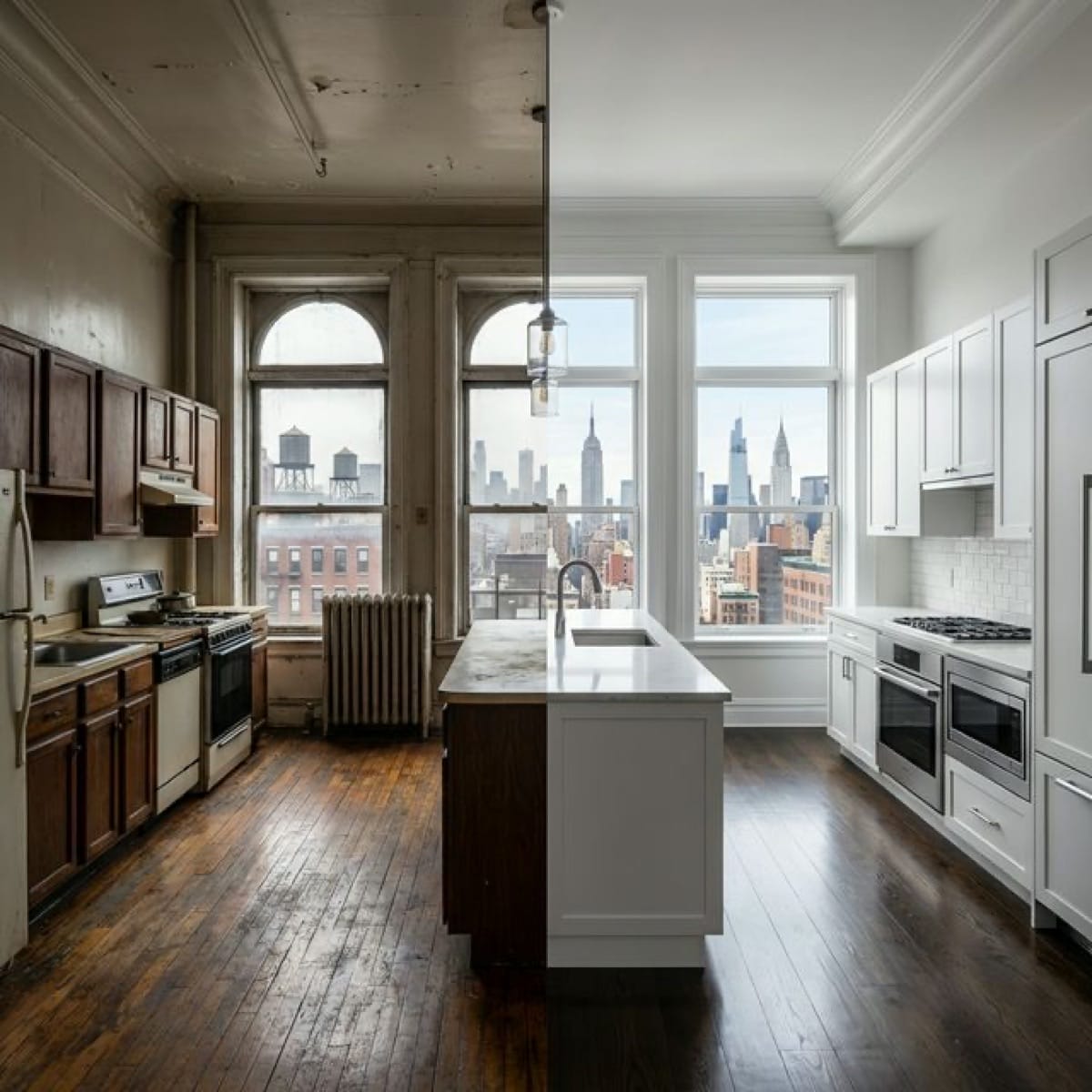
After years of Manhattan buyers demanding move-in-ready perfection, a surprising shift is happening. Co-op contracts dropped 15% in January 2026, hitting a four-year low. Yet industry experts from Forbes and Corcoran are flagging unrenovated co-ops as 2026’s quiet comeback story. For value-driven buyers willing to renovate, the numbers pencil out: buy at a discount, customize your space, and capture equity other buyers overlook.
This guide examines why the NYC co-op fixer upper 2026 market is heating up, what renovation trends define smart updates, the financials that make these deals work, and how to navigate co-op board requirements.
Why Unrenovated Co-ops Are Attracting Buyers in 2026
The Manhattan market is producing an unusual opportunity: the discount on unrenovated properties now exceeds typical renovation costs, creating an arbitrage buyers cannot ignore.
The Numbers Behind The Shift
January 2026 Manhattan co-op contracts fell 15% year-over-year, reaching a four-year monthly low according to Corcoran market data. Co-ops under $1 million saw the steepest drop at 20% fewer contracts compared to January 2025. Active listings for both condos and co-ops decreased, marking the lowest January inventory since 2017.
The average discount off last asking price for co-ops stood at just 2.0% in January 2026, with apartments averaging 151 days on market, a 1% increase from the prior year. This slowdown in the market, particularly for unrenovated units, creates buyer opportunity.
Forbes real estate analysis identifies this as a “quiet comeback” moment for NYC co-op fixer upper 2026 properties. The dwindling supply of new luxury development units is steering buyers toward well-located co-ops ripe for renovation. The calculation is straightforward: renovation costs less than the market’s current discount for unrenovated condition.
Why The Perception Gap Is Closing
The gap between seller expectations and buyer perception has historically kept unrenovated units off the market or overpriced. Sellers view their properties as needing cosmetic refresh. Buyers see expensive, year-long renovation projects.
That perception gap is finally closing. Buyers are making smarter calculations about total cost of ownership. Consider a two-bedroom co-op on the Upper West Side listed at $650,000 in unrenovated condition. A similar renovated unit sells for $850,000. If renovation costs $120,000 and takes 8-10 months, the buyer captures $80,000 in equity plus a customized home exactly to taste.
With limited new development inventory and Manhattan homes under $900,000 becoming increasingly rare, buyers who initially wanted turnkey properties are reconsidering. The move-in-ready premium has become too expensive.
Supply Constraints Driving The Shift
New luxury development completions are slowing. Buyers who would have purchased new construction three years ago now face two options: pay premium pricing for limited inventory, or buy well-located older co-ops and renovate to personal specifications.
Staten Island homebuyers crossing to Manhattan for work proximity are particularly attuned to this opportunity. Brooklyn real estate continues commanding premium pricing, making Manhattan vs Brooklyn comparisons favor Manhattan co-ops for buyers willing to renovate.
2026 Renovation Trends For NYC Co-op Fixer-Uppers
Buyers renovating NYC co-op fixer upper 2026propertiess are prioritizing functionality, energy efficiency, and personalized aesthetics. These trends reflect both practical necessity in small New York spaces and evolving design preferences.
Smarter, Greener, Sleeker Appliances
Energy-efficient appliances with Energy Star certification have become standard expectations, not upgrades. Buyers renovating co-ops prioritize integrated, space-saving options that maximize limited square footage.
Kitchen Appliances: Drawer-style refrigerators, compact induction cooktops, and steam ovens are replacing traditional ranges. These options save space while offering advanced cooking functionality. Induction cooking provides precise temperature control and faster cooking times while using less energy than gas.
Smart Integration: Appliances with WiFi connectivity allow remote operation and energy monitoring. Buyers can preheat ovens from the subway, receive alerts when the dishwasher cycle completes, and track energy consumption to optimize utility bills.
Design Cohesion: Panel-ready appliances that accept custom cabinet fronts create seamless kitchen designs. This trend reflects NYC buyers’ preference for clean, uncluttered aesthetics in small spaces.
Expanded Bathroom Vanities With Function
Bathrooms are receiving more attention as home offices and remote work normalized working from home. Larger, multi-use vanities include built-in organizers, charging stations, and task lighting.
Buyers are replacing pedestal sinks with expansive vanities offering storage underneath. LED-lit medicine cabinets with USB charging ports, electrical outlets, and defoggers have become standard requests. Double sinks in primary bathrooms are specified even in tighter layouts where they would have been omitted historically.
The emphasis is comfort and practicality. Small bathrooms receive careful space planning to include storage without feeling cramped. Floating vanities create visual space while providing concealed storage.
Minimalist Design With Elevated Simplicity
White and neutral kitchens remain popular, but 2026 renovations are incorporating expanded color palettes and bold design elements. Unique sink designs, statement lighting, and accent tile backsplashes add personality without cluttering limited square footage.
Durable, easy-to-maintain materials drive selections. Quartz countertops have largely replaced marble in NYC renovations due to stain resistance and lower maintenance. Large-format porcelain tile flooring reduces grout lines and creates cleaner visual flow.
Handleless cabinets with push-to-open mechanisms contribute to streamlined aesthetics. Buyers specify fewer upper cabinets in favor of open shelving or glass-front cabinets, creating airier kitchens.
Enhanced Kitchen Functionality
Home cooking emphasis continues driving kitchen renovation priorities. Steam ovens, pot fillers above ranges, and pullout pantry organizers maximize functionality in compact NYC kitchens.
Kitchen islands, even compact versions, remain high priorities where space allows. These provide prep space, informal dining, and crucial storage. When full islands cannot fit, peninsula configurations or rolling carts offer similar benefits.
Buyers are specifying commercial-grade range hoods with higher CFM ratings to manage cooking odors in apartment settings. Proper ventilation prevents cooking smells from permeating entire units, a particular concern in smaller co-ops.
Textile Interest and Living Spaces
Leather furniture is experiencing a comeback, adding natural color and tactile interest to living rooms. After years of gray minimalism, buyers renovating NYC co-op fixer upper 2026 units are embracing warmer color palettes with earth tones, deep greens, and rich browns.
Accent walls using wallpaper or textured paint add dimension without commitment. Built-in bookshelves and window seats maximize space while adding architectural character to generic layouts.
Financial Analysis: When Fixer-Uppers Make Sense
The decision to buy an unrenovated NYC co-op requires careful financial analysis. The math must support the effort.
The Arbitrage Calculation
The core opportunity in NYC co-op fixer upper 2026 properties lies in the spread between the unrenovated discount and renovation costs.
Example Calculation – Upper West Side 2-Bedroom:
- Comparable renovated unit asking price: $850,000
- Unrenovated unit asking price: $650,000
- Purchase price discount: $200,000
- Estimated renovation cost: $120,000
- Equity capture: $80,000
- Custom home built to exact specifications: Priceless
This simplified example assumes the renovated comparable actually reflects true market value and renovation costs come in on budget. Both assumptions require verification.
Renovation Cost Ranges
NYC renovation costs vary dramatically based on scope, finishes, and contractor selection. General guidelines for 2026:
Light Cosmetic Refresh:
- Paint, refinish floors, update lighting: $25,000-$45,000
- Timeline: 4-6 weeks
Moderate Kitchen and Bath Updates:
- New kitchen cabinets, appliances, counters: $50,000-$85,000
- Full bathroom gut/renovation: $25,000-$40,000
- Living space updates: $15,000-$30,000
- Total: $90,000-$155,000
- Timeline: 3-5 months
Extensive Gut Renovation:
- Complete kitchen rebuild: $75,000-$125,000+
- Two full bathroom renovations: $60,000-$90,000
- All new flooring: $15,000-$25,000
- Electrical/plumbing updates: $20,000-$40,000
- Painting/finishes: $12,000-$20,000
- Total: $182,000-$300,000+
- Timeline: 6-12 months
Costs escalate quickly with high-end finishes, structural changes, or discovering hidden issues during demolition. Building a 15-20% contingency into budgets protects against surprises.
Hidden Costs Beyond Renovation
Board approval processes, permits, insurance requirements, and post-closing liquidity add costs beyond direct renovation expenses.
Co-op Specific Costs:
- Alteration agreement fees: $1,000-$5,000
- Architect/engineer drawings for board approval: $3,000-$8,000
- Board application/review fees: $500-$2,000
- Additional insurance during renovation: $1,500-$3,000 annually
- Storage/moving costs during work: $2,000-$8,000
Post-Closing Liquidity Requirements: Some co-op boards now require 25-30% down payments and one to two years of post-closing liquidity (monthly maintenance and mortgage payments in reserve). This ties up capital that could fund renovations.
Carrying Costs During Renovation: Buyers pay monthly maintenance, mortgage interest, and utilities during renovation periods when the unit remains uninhabitable. For a 9-month renovation, these carrying costs can add $15,000-$30,000 to total project cost.
Understanding closing costs in New Jersey and Manhattan co-op board approval processes helps buyers budget comprehensively.
When Fixer-Uppers Don’t Make Sense
Not every buyer should pursue NYC co-op fixer upper 2026 properties. The strategy suits specific situations:
Skip Fixer-Uppers If:
- You need to move in within 3 months
- You cannot manage renovation project oversight or hire qualified help
- Your budget includes zero contingency for cost overruns
- You plan to resell within 3-5 years (renovation costs may not be fully recaptured)
- The co-op board has restrictive renovation rules limiting work windows
- You have no tolerance for construction disruption and delays
Fixer-Uppers Work Best For:
- Buyers planning 7+ year holds
- Those who value customization and want exact specifications
- Buyers with project management skills or ability to hire qualified contractors
- Purchasers who can live elsewhere during renovations
- Value-focused buyers willing to trade time/effort for equity capture
Navigating Co-op Board Approvals For Renovations
Co-op boards wield substantial control over renovation activities. Understanding their requirements before purchase prevents costly surprises.
Timeline For Board Approvals
Board renovation approvals typically require six to eight weeks minimum, though some buildings take longer. This occurs before any construction begins.
The Approval Process:
- Submit alteration agreement application with architect drawings
- Board’s architect or engineer reviews plans
- Board committee reviews and may request modifications
- Full board votes on approval
- Alteration agreement signed with fees paid
- Building Department permits obtained (if required)
- Construction begins
Some boards meet monthly, meaning submission timing affects when review occurs. Missing a board meeting can add 4-6 weeks to timelines.
Common Board Requirements
Most co-op boards require:
Documentation:
- Licensed architect or engineer drawings showing all proposed changes
- Contractor licenses and insurance certificates
- Timeline for work including permitted hours
- Details on dust barriers, noise mitigation, and hallway protection
Restrictions:
- Prohibited work hours (typically no weekends, noise restrictions before 9 AM/after 6 PM)
- Structural element restrictions (no removing load-bearing walls without engineering approval)
- Plumbing and electrical work requiring licensed professionals
- HVAC modifications subject to building system compatibility review
Financial:
- Alteration deposit ($5,000-$15,000 refundable upon satisfactory completion)
- Alteration agreement processing fees ($1,000-$5,000 non-refundable)
- Building super monitoring fees for daily project oversight
Understanding what is a condo vs co-op in NYC and the HOA vs co-op fee differences helps buyers appreciate board control levels.
Buildings With Restrictive Renovation Policies
Some co-op buildings severely restrict renovations through:
Seasonal Restrictions: Limiting construction to specific months (often prohibiting work during summer when boards/residents vacation)
Scope Limitations: Prohibiting kitchen layout changes, bathroom expansions, or “wet over dry” plumbing relocations
Contractor Requirements: Mandating use of building-approved contractor lists, limiting competition and potentially increasing costs
Percentage Rules: Restricting how many units can simultaneously renovate to limit building disruption
Buyers must request a copy of the building’s alteration agreement and renovation rules during due diligence. Identifying restrictive policies before purchasing prevents buying units that cannot be renovated as planned.
Market Outlook: NYC Co-op Fixer Upper 2026 Opportunities
Market conditions in 2026 favor patient, capital-available buyers pursuing unrenovated co-ops.
Interest Rate Trends
Mortgage rates are projected to continue downward trends in 2026 after stabilizing in 2025. Fannie Mae forecasts suggest rates settling in the 5.9-6.1% range by year end, down from the 6.23% rates seen in early 2026.
Lower rates improve affordability calculations for NYC co-op fixer upper 2026 purchases. A 0.5% rate reduction on a $500,000 mortgage saves approximately $140 monthly, or $50,400 over a 30-year term. These savings can fund portions of renovation costs.
Buyers should consider mortgage points vs buydowns to optimize financing costs and explore first-time home buyer programs in New York and New Jersey if applicable.
Inventory Constraints
January 2026 marked the lowest inventory levels since 2017 for both condos and co-ops. Limited supply supports pricing even as contract volume declined.
For buyers, low inventory means less competition for fixer-uppers. Unrenovated units languish on market longer as most buyers chase turnkey properties. This creates negotiation leverage on unrenovated units.
Sellers increasingly recognize that holding out for full asking price on unrenovated units produces extended listing times without offers. Buyers can negotiate based on specific renovation needs identified through pre-purchase inspections.
Geographic Opportunities
Certain Manhattan neighborhoods and outer borough areas offer stronger NYC co-op fixer upper 2026 opportunities:
Upper West Side: High concentration of pre-war co-op buildings with substantialincludestock of unrenovated units. Strong school districts and parks support long-term value.
Upper East Side: Similar pre-war building stock with less intense buyer competition than comparable Brooklyn neighborhoods. Most expensive NYC neighborhoods often see less investor activity, creating openings for buyers.
Brooklyn Heights/Park Slope: Brooklyn neighborhood co-ops offer renovation opportunities with easier Manhattan vs Brooklyn commute trade-offs.
Staten Island To Manhattan Buyers: Staten Island residents upgrading to pied-à-terre Manhattan co-ops find value in combining their Staten Island home with unrenovated Manhattan units for work-week use. Some boards are relaxing pied-à-terre restrictions.
Frequently Asked Questions
Are co-op fixer-uppers actually cheaper than renovated units in 2026?
Yes, if you buy smart. The discount on unrenovated co-ops now often exceeds renovation costs, creating an arbitrage opportunity. January 2026 data shows the gap between renovated and unrenovated comparable units creating $80,000-$150,000 equity capture potential after renovation costs. The math requires careful analysis of specific properties and realistic renovation budgeting.
How long does a typical NYC co-op renovation take in 2026?
Expect 3-5 months for moderate kitchen and bath updates, and 6-12 months for extensive gut renovations. This excludes the 6-8 weeks minimum for board approval before construction starts. Total timeline from board application submission to completion typically runs 5-7 months for moderate work and 8-14 months for gut renovations.
Do all co-op boards allow renovations?
Most co-op boards allow renovations with proper approvals, but the degree of restriction varies dramatically. Some buildings severely limit renovation scope, work hours, or seasonal timing. Always request the building’s alteration agreement and renovation rules during your due diligence period before purchase.
What are the biggest hidden costs in NYC co-op renovations?
Beyond direct construction costs, buyers face board approval fees ($1,000-$5,000), architect drawings ($3,000-$8,000), alteration deposits ($5,000-$15,000 refundable), and carrying costs during renovation (monthly maintenance and mortgage while unit is uninhabitable). These can add $15,000-$40,000 to total project cost.
Can I get a renovation loan for a co-op purchase?
Traditional renovation loans (FHA 203k, Fannie Mae HomeStyle) typically do not work for co-ops due to ownership structure. Most co-op buyers need to finance renovations through: cash reserves, home equity lines of credit against other properties, personal loans, or construction loans with higher interest rates. Some buyers purchase underbudget specifically to reserve renovation funds.
Are unrenovated co-ops harder to finance?
Some lenders hesitate on unrenovated properties requiring substantial work before habitation. Co-ops already face stricter lending standards than condos. Buyers should confirm lender comfort with property condition during mortgage pre-approval, showing photos if needed. Working with mortgage prequalification vs preapproval helps clarify financing capacity early.
What renovations provide the best return in NYC co-ops?
Kitchen and bathroom renovations typically return 75-85% of costs upon resale in NYC. High-end finishes rarely recapture full costs. Focus on quality materials in neutral styles with efficient layouts maximizing space. Energy-efficient appliances and updated electrical/plumbing systems add value buyers appreciate.
Should I hire an architect for a cosmetic renovation?
Co-op boards determine architect requirements. Many buildings require licensed architect or engineer drawings even for modest renovations like kitchen cabinet replacement or bathroom updates. Budget $3,000-$8,000 for this professional service even on smaller projects. Architects also help maximize space efficiency in NYC’s compact layouts.
How do I find contractors for NYC co-op renovations?
Start with the building’s approved contractor list if one exists. Get at least three competitive bids for any project. Verify licenses, insurance certificates, references from prior NYC co-op work, and familiarity with your building’s specific requirements. Contact Robert DeFalco Realty for contractor referrals experienced with NYC co-op renovations.
Will renovations increase my monthly maintenance fees?
Generally no. Co-op monthly maintenance covers building-wide expenses and your share of underlying mortgage and taxes. Interior renovations do not affect these costs. Some buildings charge temporary construction insurance fees during renovation periods ($100-$300 monthly). Improvements that increase your unit’s square footage through adding rooms could trigger reassessment of your shares, but this is rare for cosmetic/layout renovations.
Next Steps: pursuing NYC Co-op Fixer Upper 2026 Opportunities
Market conditions favor buyers with renovation budgets, project management capacity, and patience. The gap between unrenovated discounts and renovation costs creates real equity capture opportunities for the right buyers.
Ready to explore homes for sale in Manhattan, affordable Brooklyn neighborhoods, or Staten Island properties that support Manhattan pied-à-terre purchases? Robert DeFalco Realty understands NYC and NJ real estate markets and can guide you through co-op purchases, renovation planning, and board approval processes.
Learn about buying a home in winter timing advantages, understand TLC meaning in real estate to decode listings, and explore how to buy two-family homes as alternative investment strategies.
Contact us today to discuss NYC co-op opportunities and renovation planning strategies.