
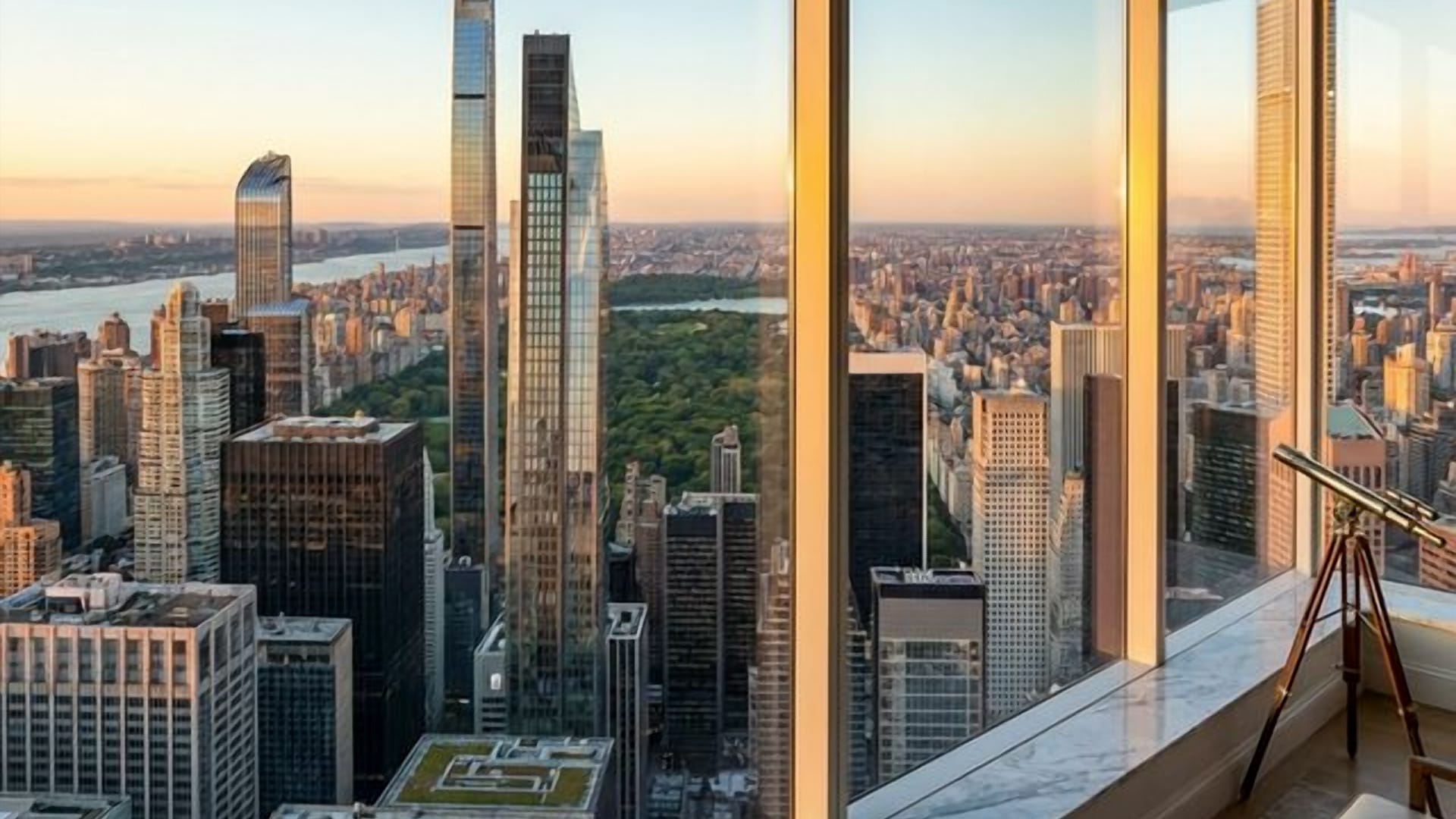
Two forces are pulling the Manhattan real estate market 2026 in opposite directions. Luxury sales just posted their strongest week for eight-figure contracts since October 2024. At the same time, co-op contracts dropped 15% year-over-year in January, hitting a four-year monthly low.
The result is a market that looks wildly different depending on where you stand. Buyers shopping above $4 million face intense competition. Buyers in the co-op segment under $1 million have more negotiating power than they have seen in years.
This report covers the full Manhattan real estate market 2026 picture: sales data, neighborhood breakdowns, rental trends, and what comes next for buyers and sellers.
In This Report
Market Overview: January-February 2026
Sales Activity
The headline numbers tell a story of growth with an asterisk. According to data from Miller Samuel for the Elliman Report:
- Median sale price: $1.4 million (+14.8% YoY)
- Average sale price: $2.4 million (+11.1% YoY)
- Total contracts signed (January): Moderate activity with select segments outperforming
The 14.8% median price increase masks a sharp divide between condos and co-ops. Condo prices drove the gains while co-op values pulled in the other direction.
Condo performance:
- Average condo price: Up 25.1% year-over-year
- Median condo price: Up 20.8% year-over-year
- New development drives much of this increase
Co-op performance:
- Co-op sale prices: Down 9% year-over-year
- Co-op contracts (January): Down 15% year-over-year
- Under-$1M co-op contracts: Down 20% year-over-year
Understanding the manhattan real estate market report history helps put these numbers in context. The current divergence between condos and co-ops represents one of the widest gaps in recent memory.
Inventory Levels
Co-op inventory decreased 10% from January 2025, tightening supply even as demand softened. This creates a unique dynamic: fewer co-ops listed but fewer contracts signed, suggesting that buyers are being selective rather than aggressive.
Condo inventory remains constrained in prime neighborhoods but new development has added units in Midtown East, Hudson Yards, and the Financial District. Absorption rates for new construction vary significantly by building and price point.
The Luxury Surge: Why High-End Manhattan Is Booming
Record-Setting Activity
The luxury tier of the Manhattan real estate market 2026 is running hot. In a single week in February, agents recorded:
- 33 signed contracts at $4 million and above
- 13 deals exceeding $10 million (strongest since October 2024)
- Ultra-luxury ($20M+) deals averaging $7,185 per square foot
For all of 2025, Manhattan luxury sales hit nearly $12 billion across more than 1,400 contracts, an 11% year-over-year increase. That momentum appears to be accelerating into early 2026.
According to reports from Corcoran, demand in the ultra-luxury tier is driven by scarcity. Trophy apartments with architectural distinction, privacy, and views cannot be replicated. When one comes to market, qualified buyers move fast.
Where Luxury Buyers Are Spending
Tribeca and SoHo: Loft conversions and new-build townhouses command the highest price-per-square-foot metrics downtown. Full-floor residences in boutique buildings regularly trade above $4,000/sqft.
Upper East Side: Prewar cooperatives in prime locations (Park Avenue, Fifth Avenue above 60th Street) attract buyers seeking established addresses. Despite the broader co-op slowdown, trophy UES properties remain competitive.
Hudson Yards and West Chelsea: New development in these corridors continues to attract international and domestic wealth. Buildings offering full-service amenities packages draw buyers willing to pay premium pricing for turnkey luxury.
Central Park adjacency: Any property with direct park views or park frontage carries a significant premium. Central Park South and Central Park West addresses consistently trade above comparables just one block away.
Buyers exploring the top of the market should review the guide to most expensive neighborhoods in NYC to understand pricing tiers across boroughs.
What Is Driving Luxury Demand?
Several factors converge to fuel the luxury surge:
Stock market gains. Record equity markets through late 2025 and early 2026 boosted wealth among Manhattan’s core buyer demographic.
International capital. Foreign buyers from the Middle East, Asia, and Europe continue to view Manhattan real estate as a stable store of value. The strong dollar has not significantly dampened this demand.
Limited supply. True trophy properties (prewar penthouses, full-floor residences, townhouses) represent a tiny fraction of total inventory. When one lists, multiple qualified buyers compete.
Tax strategies. Buyers at the $10M+ level often structure purchases through LLCs and trusts. Understanding the NYC mansion tax becomes critical at these price points since the tax reaches 3.9% on purchases above $25 million.
The Co-op Slowdown: What Is Happening and Why
The Numbers
Co-ops represent approximately 70% of Manhattan’s housing stock by unit count. The current slowdown has significant implications:
- January contracts: Down 15% year-over-year versus January 2025
- Under-$1M co-op contracts: Down 20%, the steepest decline
- Co-op sale prices: Down 9% year-over-year on average
- Co-op inventory: Down 10%, suggesting sellers are pulling listings rather than accepting lower offers
Why Co-ops Are Stalling
Board approval process. Co-op boards maintain strict financial requirements and personal approval processes. In a market where buyers have alternatives (condos, rental), the board approval barrier steers some buyers away.
Financing restrictions. Many co-ops limit financing to 75-80% loan-to-value, require significant post-closing liquidity (often 2-3 years of maintenance and mortgage payments), and restrict certain loan types. These requirements reduce the eligible buyer pool.
Subletting limitations. Most Manhattan co-ops restrict subletting to 1-2 years out of every 5-year period, or prohibit it entirely. Buyers who want flexibility prefer condos. Learning about HOA vs co-op fees clarifies the structural differences.
Age of inventory. Many co-ops are in prewar buildings that need significant renovation. Buyers factor renovation costs ($200-$400/sqft) into their total budget, making the asking price look less attractive compared to renovated condos.
The Co-op Opportunity
Despite the slowdown, experienced buyers see value. Co-ops in the manhattan real estate market 2026 offer:
- Lower price per square foot than comparable condos (typically 20-30% less)
- Stronger financial stability due to rigorous buyer vetting
- Character and architecture that new construction cannot replicate
- Renovation upside for buyers willing to invest
The recent coverage of Manhattan co-op board approval helps buyers prepare for the process. Those who navigate it successfully access a segment of the market where competition has meaningfully decreased.
Buyers weighing value plays should also explore buying in Manhattan under $2M, where co-ops dominate the inventory.
Neighborhood-by-Neighborhood Breakdown
Upper East Side
The UES maintains its position as Manhattan’s largest residential market. Sales activity remains steady in the $1-3M range, driven by families and empty-nesters downsizing from suburban homes. Co-ops along Park and Madison Avenues show stable pricing despite the borough-wide co-op decline.
New construction along Second Avenue (following the subway extension) has added modern inventory to a historically prewar neighborhood.
Upper West Side
Similar dynamics to the UES, with strong brownstone and townhouse demand. The UWS saw particular strength in the $2-5M segment, with buyers targeting prewar classics near Central Park and Riverside Park. Lincoln Center proximity continues to add cultural value.
Midtown East
Post-rezoning development continues to reshape Midtown East. New commercial towers bring residential components, and older office conversions add unique housing options. The neighborhood appeals to buyers who prioritize proximity to Grand Central Terminal and corporate offices.
Chelsea and West Village
Downtown Manhattan’s most consistently desirable neighborhoods. The West Village sees virtually no price declines in any cycle. Chelsea benefits from gallery district culture and High Line access. Both neighborhoods trade at premium levels, with single-family townhouses regularly exceeding $10M.
Financial District and Lower Manhattan
The conversion of office space to residential continues downtown. First-time buyers and young professionals find relative value compared to Midtown and uptown. The Manhattan vs Brooklyn buyer’s guide helps buyers decide between downtown Manhattan and comparable Brooklyn neighborhoods.
Harlem and Upper Manhattan
Harlem continues its multi-decade renaissance. Brownstone prices in Central Harlem have appreciated steadily, though they remain below comparable prewar homes in other Manhattan neighborhoods. East Harlem is seeing new development, particularly along the 125th Street corridor.
Rental Market: Record-Breaking Rents
Manhattan’s rental market shows no signs of cooling. Data from REBNY (Real Estate Board of New York) and Miller Samuel for Douglas Elliman confirms:
- Median rent: $4,695-$4,950/month (third-highest on record; 7.9-9% YoY increase)
- Luxury doorman rentals: Median hit all-time high of $5,295/month
- Vacancy rate: Below 2.5% in prime neighborhoods
These rental numbers directly impact the buy-vs-rent calculation. At current rent levels, buyers in the $800K-$1.5M range often find that monthly ownership costs (mortgage, maintenance, taxes) match or undercut rental payments, particularly for co-ops where maintenance includes property taxes and utilities.
Understanding how much house you can afford in NYC helps renters evaluate the transition to ownership.
Price Forecast: Where Manhattan Is Headed
Short-Term (Q1-Q2 2026)
The Manhattan real estate market 2026 should see continued strength through spring selling season based on several factors:
Mortgage rate trajectory. Rates around 6.2% with Fannie Mae projecting decline toward 5.9% by year-end. Each quarter-point drop expands buyer purchasing power by approximately 3%.
Employment stability. Manhattan’s finance, technology, and professional services sectors show stable employment. Wall Street bonus season (February-March) traditionally triggers luxury home purchases.
Limited supply. New construction cannot keep pace with demand in established neighborhoods. Zoning restrictions and construction costs limit new development in the most desirable areas.
Medium-Term (2026-2027)
Appreciation of 3-5% annually across the borough, with luxury and downtown condos outperforming. Co-ops should stabilize as the price gap with condos attracts value-focused buyers back to the segment.
What This Means for Buyers
If You Are Buying Luxury ($4M+)
Move quickly on properties that meet your criteria. The luxury Manhattan market rewards decisive action. Expect competition, particularly for trophy properties. Work with agents who have relationships with building management and access to pre-market listings.
Pricing mistakes at this level are costly. Review the analysis of luxury home pricing mistakes to understand common pitfalls.
If You Are Buying a Co-op ($500K-$2M)
This is your window. Reduced competition, declining prices, and negotiating power create favorable conditions for prepared buyers. Focus on buildings with strong financials, reasonable board processes, and modernized common areas.
If You Are a First-Time Buyer
Manhattan entry points exist in homes under $500K (studios and one-bedrooms in upper Manhattan and the Financial District) and under $900K for larger one-bedrooms and junior fours in more central locations.
What This Means for Sellers
Condo Sellers
Pricing power is strong. Median condo prices are up 20.8% year-over-year. Stage your property professionally, price at recent comparables, and expect offers within 30-45 days in prime locations.
Co-op Sellers
Price realistically against current closed sales, not 2024 peaks. The sellers who succeed in today’s co-op market price competitively from day one rather than chasing after price reductions. Understanding seller concessions can help structure deals that close.
Contact Robert DeFalco Realty for a market analysis of your Manhattan property.
Frequently Asked Questions
What is the median home price in Manhattan in 2026?
The median sale price in Manhattan reached $1.4 million in January 2026, a 14.8% increase year-over-year. This figure combines condos, co-ops, and townhouses. Condos alone carry a higher median while co-ops trade below this level.
Are Manhattan co-ops a good buy right now?
Co-ops offer strong value in early 2026. Prices are down 9% year-over-year, competition has decreased with contracts off 15%, and the price-per-square-foot discount versus condos typically runs 20-30%. Buyers who can navigate the board approval process access a less competitive segment of the market.
Why are Manhattan luxury sales so strong?
Stock market gains, international capital flows, and extremely limited trophy inventory drive luxury demand. Manhattan recorded nearly $12 billion in luxury sales in 2025 across 1,400+ contracts. The ultra-luxury tier ($20M+) averaged $7,185 per square foot.
What is the average rent in Manhattan 2026?
Median rent reached $4,695-$4,950/month in January 2026, representing a 7.9-9% year-over-year increase. Luxury doorman rentals hit a record $5,295/month median. Vacancy remains below 2.5% in prime neighborhoods.
Is it cheaper to buy or rent in Manhattan?
At current rent levels ($4,700+/month median), buying becomes competitive for properties in the $800K-$1.5M range. Monthly ownership costs for co-ops often match or undercut rental payments since maintenance includes property taxes and utilities.
Which Manhattan neighborhoods are appreciating fastest?
Condos in Hudson Yards, West Chelsea, and Midtown East new development corridors show the strongest appreciation. Among established neighborhoods, the West Village and Tribeca maintain consistent price growth due to extremely limited supply.
How long do Manhattan apartments take to sell?
Market-wide, Manhattan properties average 80-90 days on market. Correctly priced condos in prime locations sell in 30-45 days. Co-ops average longer at 90-120 days due to the board approval timeline that follows an accepted offer.
What are Manhattan mansion tax rates?
NYC mansion tax applies to residential purchases of $1 million or more. Rates range from 1% (at $1M) to 3.9% (above $25M). On a $5 million purchase, the mansion tax totals $1.75%. Buyers should factor this into closing cost calculations.
Will Manhattan prices drop in 2026?
Broad price declines are unlikely in 2026. The median is up 14.8% year-over-year, luxury demand is accelerating, and inventory remains constrained. Co-op prices may stabilize at current levels, but condo prices should continue appreciating at 3-5% annually.
Is Manhattan real estate a good investment?
Manhattan consistently outperforms most U.S. markets over 10-year holding periods. The combination of supply constraints (island geography, zoning), global demand, and rental income potential makes Manhattan real estate one of the strongest long-term investments in residential property.