
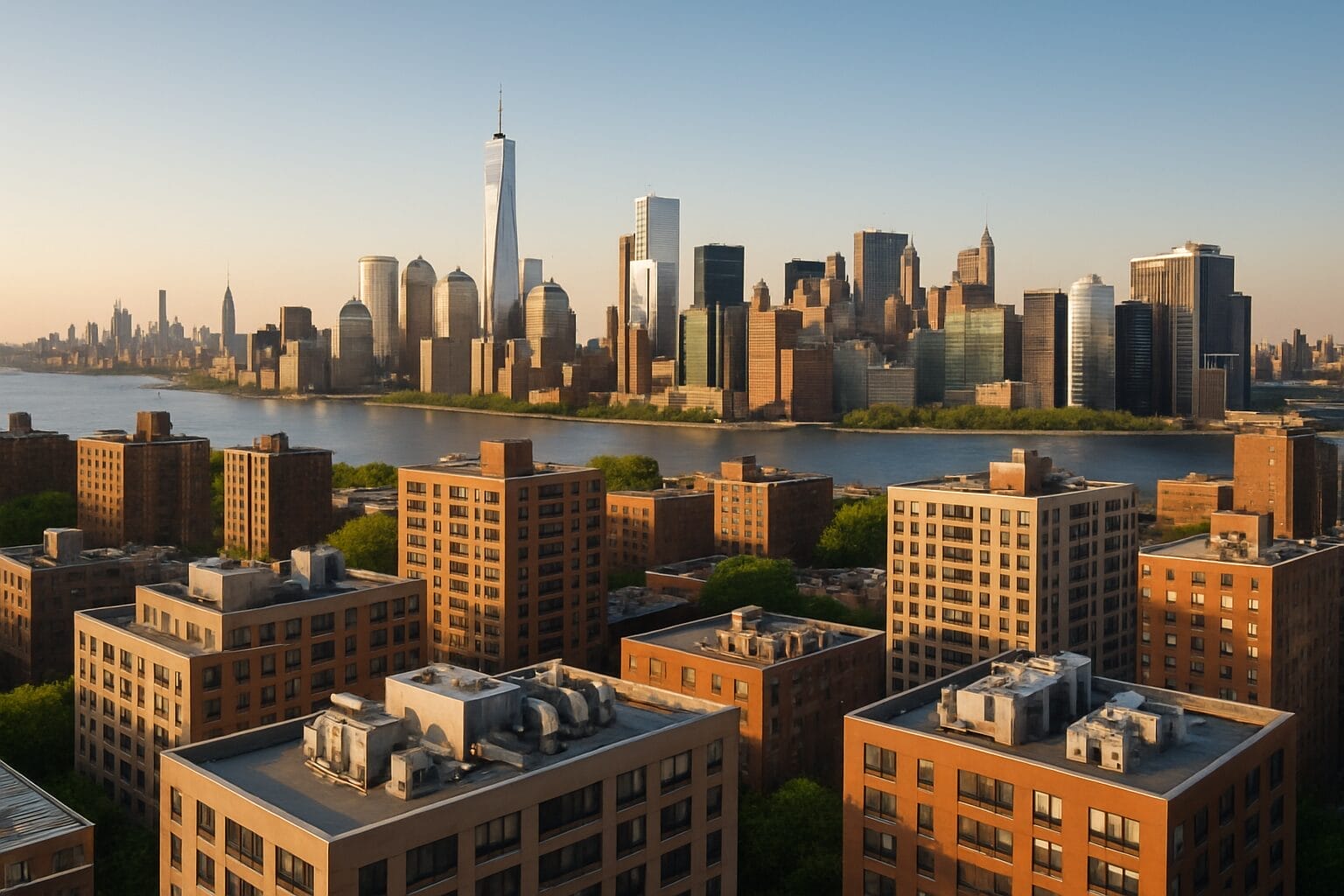
Local Law 97 penalties are no longer a future problem. The March 31 2026 first reporting deadline has passed, the May 1 2026 final penalty payment date is approaching fast, and NYC co-op and condo boards are getting their first real bills. If you own a unit in a Manhattan high-rise, sit on a Brooklyn co-op board, or are about to make an offer on anything over 25,000 square feet, this is the spring you need to understand exactly what Local Law 97 does and what it costs.
Here is the plain-English version, the penalty math, the buildings getting hit hardest, and the step-by-step action list for boards and owners this April. I have walked board members through dozens of LL97 questions in the past quarter, and the same handful of confusions keep coming up. Let’s clear them up.
In This Post
What Local Law 97 Is, In Plain English
NYC Local Law 97, often shortened to ll97 nyc by industry pros, is the most aggressive building emissions law in any major American city. It was signed in April 2019 as part of the Climate Mobilization Act and sits inside Section 28-320 of the NYC Administrative Code. The law sets hard greenhouse gas emissions caps on most buildings over 25,000 square feet, with the caps tightening over time. If your building blows past its cap, the city charges $268 for every metric ton of CO2-equivalent it goes over, every year. Source: NYC Mayor’s Office of Climate & Environmental Justice.
The Climate Mobilization Act of 2019 and Why LL97 Exists
The Climate Mobilization Act 2019 was the city’s response to the 2018 IPCC report. Buildings produce roughly two-thirds of NYC’s greenhouse gas emissions, so the City Council went after the largest ones first. LL97 is the centerpiece. It works alongside Local Law 84 (benchmarking), Local Law 87 (energy audits), and Local Law 88 (lighting and sub-meters). If you have ever filed an annual ENERGY STAR Portfolio Manager benchmark, that is the data feeding into LL97 today.
Which NYC Buildings Fall Under LL97
About 50,000 NYC buildings fall under the law. The covered set:
- Single buildings over 25,000 gross square feet
- Two or more buildings on the same tax lot together exceeding 50,000 square feet
- Two or more condo buildings governed by the same board of managers together exceeding 50,000 square feet
The list captures most pre-war Manhattan co-ops, almost every full-service condo tower, big Brooklyn brownstone co-op assemblages, and a long tail of mixed-use buildings in Long Island City, Astoria, and Downtown Brooklyn. If you are wondering whether your building falls inside, look it up on the NYC DOB Covered Buildings List.
The March 31 2026 First Reporting Deadline, Recapped
This was the first year covered owners had to submit an emissions report under LL97. Reports covered calendar year 2024 and were due to the NYC Department of Buildings by March 31 2026. The reports went through the BEAM (Building Emissions Asset Management) portal at beam.cityofnewyork.us. A registered design professional, usually a licensed engineer or registered architect, had to certify the filing.
What Owners Filed Through the BEAM Portal
The submitted package included:
- The building’s measured 2024 energy use (electric, gas, steam, fuel oil)
- The conversion to metric tons of CO2-equivalent using the city’s published emissions coefficients
- The building’s category-specific cap for the 2024 to 2029 period
- Any qualifying deductions, including renewable energy credits and exemptions
- Engineer certification
If you are on a board and you have not seen this filing, ask your property manager for the BEAM submission receipt and the engineer’s stamped report. Both should be in the building’s records.
Good-Faith Effort and Late Filers
The DOB published a “good-faith effort” pathway through May 1 2026 for buildings that filed late or filed with errors. Owners who can show they retained an engineer, started decarbonization work, and submitted before the May 1 final deadline may qualify for emissions penalty adjustment under the good-faith effort rule. Late-filing fees apply separately. Confirm specifics with LL97 counsel for your building. Source: Urban Green Council LL97 guidance.
Local Law 97 Penalties: How the $268 per Ton Math Actually Works
Local law 97 penalties are calculated annually, not once. The fine is $268 multiplied by the number of metric tons of CO2-equivalent the building emits above its cap, every single year you are over. The cap tightens in 2030, then again in 2035 and 2040, ending at near-zero by 2050. Source: NYC.gov LL97.
There are also smaller fines for not filing at all (up to $0.50 per square foot per month) and for filing a false statement (a misdemeanor with fines up to $500,000). Boards should treat the filing fine and the emissions fine as two separate exposures.
A Worked Example for a Manhattan Pre-War Co-op
Take a 100,000 square foot pre-war Upper East Side co-op heated by a 1970s gas boiler, with central laundry, an elevator, and full-service staff. A typical building like this measures around 2,200 metric tons of CO2-equivalent in 2024. Its 2024-2029 cap, set by occupancy class, is roughly 1,950 metric tons. The annual gap is 250 metric tons.
- 250 tons over the cap
- $268 per ton
- = $67,000 per year in penalties
Spread that across 80 shareholders and you are looking at roughly $840 per shareholder per year, or about $70 per month, just to cover the fine. That is on top of any capital project the building takes on to actually reduce emissions. Real buildings have come in higher and lower; the Urban Green Council penalty calculator is the easiest tool for owners to plug in their own numbers.
What May 1 2026 Means: The Final Penalty Deadline
May 1 2026 is the date the DOB starts assessing real penalty bills for calendar year 2024 emissions over the cap. Buildings that filed clean and stayed under their cap pay nothing. Buildings that exceeded the cap will see a Notice of Violation and a fine schedule. Payment terms run through the Office of Administrative Trials and Hearings (OATH), and unpaid fines can attach to the building as a tax lien.
If your board has a 2024 reading over the cap and has not yet talked to counsel, this is the week to do it.
Who Got Hit Hardest in the First Cycle
Three building archetypes are showing up over the cap most often in the early DOB data and in the early reporting from Brick Underground and The Real Deal.
Older Manhattan Luxury Condos With Gas Heat
Pre-2000 condo towers between Lincoln Center and the Upper East Side, with original gas-fired boilers, central air, full amenity floors, and 24-hour staff, are the worst-positioned. Many run 15 to 25% over their 2024 caps. Replacing a central plant with a heat pump and a building-wide hot-water loop runs $4 to $8 million for a 200-unit tower, which is why some boards are choosing to pay the fine for a year while they line up a real capital plan.
Mid-Size Brooklyn Co-ops With Original Boilers
Park Slope, Brooklyn Heights, and Cobble Hill co-ops in the 30 to 60 unit range with original 1960s and 1970s boilers are the next group. Penalties are smaller in dollars but bigger as a share of the operating budget. Boards here are leaning on Local Law 97 compliance loans through NYCEEC and Con Edison rebates to soften the cost.
Who Is Exempt or Partially Exempt
Not every building owes anything. The statute carves out specific categories. If you are buying or selling, knowing whether your building is exempt is just as important as knowing the penalty number.
Rent-Regulated Buildings
Buildings where 35% or more of dwelling units are rent-regulated fall under a different, lighter set of prescriptive measures (Article 321) instead of the emissions cap. The board still has to file, but the fine math does not apply the same way.
Religious, School, and City-Owned Properties
Houses of worship, K-12 schools, and most city-owned buildings sit in different compliance tracks. Real estate cooperatives where every unit is owner-occupied also have a path under Article 321 if the building meets specific criteria. The full exemption list is on the NYC DOB Local Laws page.
What This Means for Building Maintenance Fees and Assessments
Here is the part most owners feel first: the fine flows through to your monthly bill. Boards have three places to put the cost.
- Raise maintenance or common charges across the board (most common; spreads the pain)
- Pass a one-time assessment (used when the board wants to fund the engineering study without raising base maintenance)
- Borrow against the building (an underlying mortgage refinance for co-ops, a special line of credit for condos)
If you are on the buying side, a 4 to 8% maintenance bump tied to LL97 is the new normal in affected Manhattan and Brooklyn buildings. If your spring 2026 board package mentions a “carbon assessment” or “Article 320 line item,” that is the LL97 charge by another name. Boards in healthy financial shape are leaning on a mix of all three, plus rebates from Con Edison, NYSERDA, and NYCEEC.
For a fuller breakdown of how co-op and condo charges differ, see our HOA vs co-op fees NYC guide.
What Buyers Should Ask Before Signing a Contract
I tell every Manhattan and Brooklyn buyer the same thing this spring: do not sign a contract on a building over 25,000 square feet without seeing two pieces of paper.
Pull the BEAM Benchmarking Report at Offer Stage
Ask the listing broker for the building’s most recent benchmarking submission and its 2024 BEAM emissions filing. Both are free for the building to share, and a board with nothing to hide will hand them over. Look at the gap between the building’s actual emissions and its 2024-2029 cap, and look at the projected gap once the 2030 cap drops. A building that is fine today but 30% over the 2030 cap is a building with a six-figure capital project on the way.
Read the Last Two Board Meeting Minutes
Board minutes are the place where the LL97 conversation actually happens. Look for line items like “Article 320 plan,” “decarbonization study,” “engineer scope,” or “LL97 capital assessment.” If those items appear and the board has not voted on funding, you are walking into an open question. If they appear and the board has approved funding, you know what you are buying.
For more on how to read board materials before an offer, our Manhattan co-op board approval guide walks through the full diligence packet.
What Sellers Should Disclose This Spring
LL97 is now part of the disclosure conversation. New York is not a strict caveat-emptor state on this, and nothing in the listing agreement releases a seller from answering direct questions about pending assessments or known violations. If your building has received a Notice of Violation, your broker should know, your buyer’s attorney will find it in the lien search, and trying to bury it costs deals.
The right play is to volunteer the BEAM filing, the engineer’s stamp, and the board’s plan for the 2030 cap. Buildings with a clean filing and a credible plan are commanding the same prices they did last spring. Buildings with a violation and no plan are seeing 3 to 6% price cuts. Our home seller disclosures guide for NY and NJ covers the broader disclosure framework, and the closing costs of New York complete breakdown shows where the fine surfaces in the closing statement.
Local Law 97 Compliance Action List for Boards This Spring
If you sit on a co-op or condo board, here is the exact sequence I tell my board clients to run between April and the May 1 2026 final penalty deadline.
- Confirm the BEAM filing was submitted and pull the receipt.
- Read the engineer’s stamped emissions report. Note the 2024 emissions number and the cap.
- If you are over the cap, get a fine estimate in writing from the engineer.
- If you have a Notice of Violation, retain LL97 counsel before May 1.
- Commission an Article 320 decarbonization plan for the 2030 cap.
- Apply for Con Edison clean heating rebates and NYSERDA Multifamily Performance Program funding.
- Vote on a funding mechanism: maintenance hike, assessment, refinance, or hybrid.
- Communicate the plan to shareholders before the next annual meeting.
- Update your 2026 budget to reflect the fine and the engineering scope.
- Re-pull the BEAM data quarterly so you see the 2025 number coming.
Boards that run this sequence avoid the worst outcome, which is a second year of fines stacked on top of an unfunded capital plan.
How LL97 Connects to the Rest of NYC Real Estate Law
LL97 does not sit alone. It interacts with the broader NYC tax framework that affects co-op and condo owners. The two pieces most LL97-affected buyers also research before closing are the NYC mansion tax on purchases above $1 million and the co-op vs condo vs house breakdown for understanding which structure carries which LL97 exposure. Owners planning post-closing energy upgrades should also look at federal and state energy credits that can offset retrofit costs.
About the Author
Robert DeFalco is the founder of Robert DeFalco Realty and a New York real estate broker with more than 30 years of experience. His team advises NYC co-op and condo boards on Local Law 97 compliance and pricing impact at sale.
Frequently Asked Questions
What are the Local Law 97 penalties for NYC co-ops and condos?
$268 per metric ton of CO2-equivalent over the building’s annual cap, charged every year you exceed it. Late filers also face up to $0.50 per square foot per month, and false statements can carry fines up to $500,000.
When was the first Local Law 97 reporting deadline?
March 31 2026, for calendar year 2024 emissions, filed through the BEAM portal at beam.cityofnewyork.us with engineer certification.
What does May 1 2026 mean for Local Law 97?
May 1 2026 is the final penalty assessment date for the first compliance year. After May 1, the NYC DOB issues Notices of Violation for buildings over their cap and starts collecting fines.
Which NYC buildings fall under Local Law 97?
Single buildings over 25,000 gross square feet, two or more buildings on the same tax lot together exceeding 50,000 square feet, and condo complexes governed by the same board together exceeding 50,000 square feet, about 50,000 NYC buildings in total.
Is my co-op exempt from Local Law 97?
Buildings with more than 35% rent-regulated units, houses of worship, K-12 schools, and most city-owned properties follow Article 321 prescriptive measures instead of the emissions cap. Some owner-occupied co-ops also qualify under Article 321.
How does Local Law 97 affect my building’s maintenance fees?
Boards usually pass the fine through as a maintenance increase, a one-time assessment, or a refinance. A 4 to 8% maintenance bump tied to LL97 is common in affected Manhattan and Brooklyn buildings this spring.