
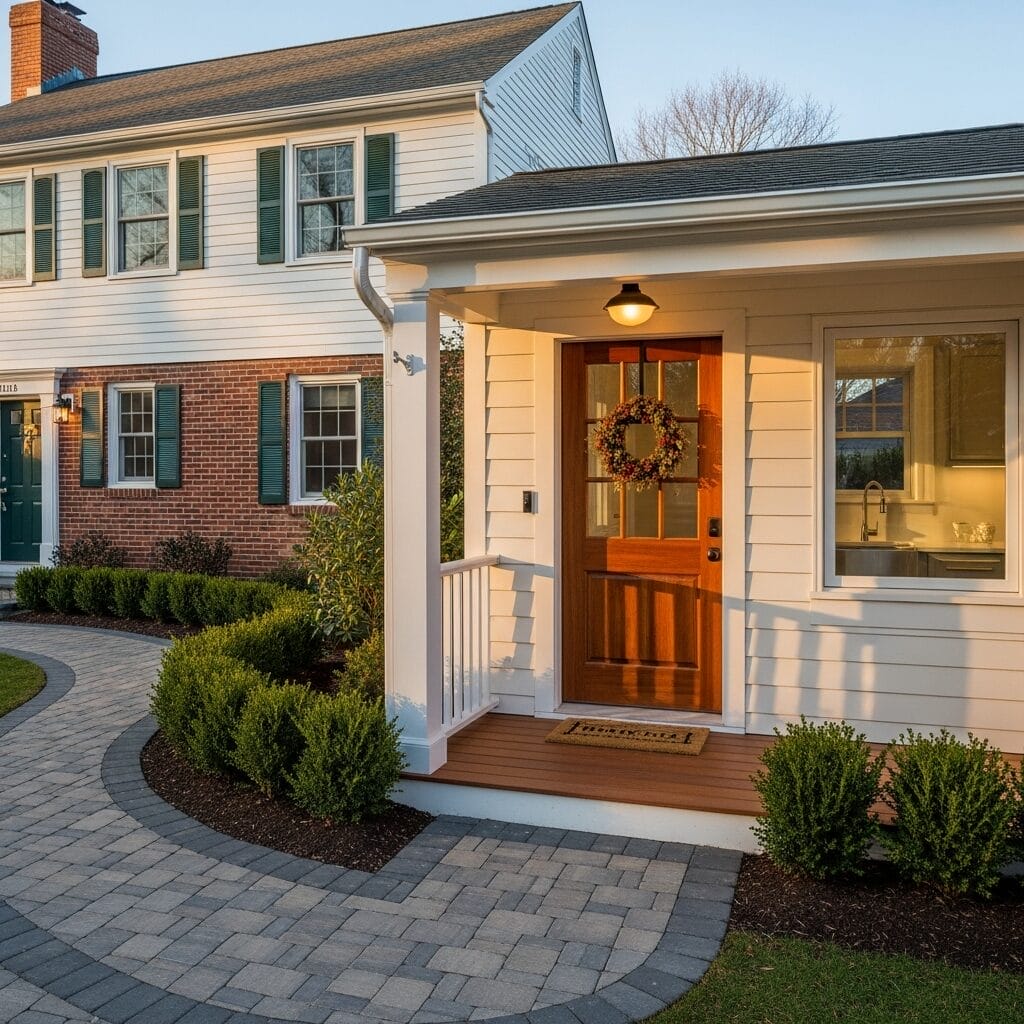
A mother in law suite is one of the most useful, most misunderstood spaces in a New York or New Jersey home. It can house an aging parent, hold an adult child saving for a down payment, or pay part of the mortgage when rented to a long-term tenant. It can also create a six-figure problem at closing if the paperwork never matched the bricks.
Our team at Robert DeFalco Realty has walked buyers and sellers through hundreds of in-law setups across Staten Island, Brooklyn, and the Hudson, Bergen, Essex, and Monmouth corridors of New Jersey. Some of those suites were textbook. Some were converted basements with no permits, no separate Certificate of Occupancy, and a buyer’s lender ready to walk on the morning of closing. This guide pulls every lesson into one place so you can plan, price, finance, build, or sell a mother in law suite with clear eyes in 2026.
Here is what we will cover: what counts as a mother in law suite, how it differs from an accessory dwelling unit, the new NYC City of Yes rules that took effect after December 2024, the patchwork of New Jersey township ordinances, cost ranges grounded in current contractor bids, FHA and conventional financing paths, real resale impact, and the disclosure traps that catch sellers off guard.
Ready to talk through your own situation? Schedule a free consult with a Robert DeFalco Realty agent and we will map your options before you spend a dollar on architects or contractors.
In This Post
What Is a Mother in Law Suite?
A mother in law suite is a private living area inside or attached to a single-family home that gives a relative their own bedroom, bathroom, and usually a small kitchenette or full kitchen. The space shares the main home’s Certificate of Occupancy, which means it is part of the same legal dwelling rather than a separate apartment. Mother in law apartments, in-law suites, and granny flats all describe variations of the same idea.
A real mother in law suite has four traits buyers and appraisers look for: a private entrance, a sleeping area, a full bathroom, and either a kitchen or a kitchenette. Some setups include a small living room. The space is meant for one person or a small couple, not a separate household paying rent under a recorded lease.
Multigenerational housing demand has climbed steadily in the New York metro area. The AARP Home and Community Preferences Survey shows that nearly 80% of adults over 50 want to age in place, and many families now plan ahead by carving a suite into a primary residence before a parent needs daily help. That demand has pushed asking prices up on listings that mention an in-law suite, especially in Staten Island neighborhoods like New Springville, Eltingville, Annadale, and Tottenville.
Mother in Law Suite vs Accessory Dwelling Unit
A mother in law suite and an accessory dwelling unit overlap, but they are not the same thing in the eyes of NYC and NJ regulators.
An accessory dwelling unit (ADU) is a legally separate, second residential unit on a single-family lot. It has its own kitchen, its own bathroom, its own entrance, and sometimes its own address or apartment letter. ADUs can usually be rented to anyone, not only family members. They often require a separate or amended Certificate of Occupancy and trigger a different appraisal treatment.
A mother in law suite, in its purest form, is part of the primary residence and is intended for family use. The kitchen may be a kitchenette without a 220V range. There is no second meter, no second mailbox, and no second C of O. The home still appraises as a single-family house with a bonus space, not as a two-family.
The line matters because lenders, appraisers, and tax assessors treat the two very differently. We will come back to this when we discuss financing and resale value.
Mother in Law Suite vs In-Law Apartment vs Guest House
In-law apartment is the term most NJ townships use in their accessory apartment ordinances. It usually implies a full kitchen and a more independent unit than a kitchenette-only mother in law suite. A guest house is a detached structure, typically without a kitchen, used for short visits. A backyard cottage or carriage house with full living facilities is closer to an ADU.
For most NY and NJ homeowners, the practical takeaway is simple: if your relative will live there full time and might one day cook their own meals on a 220V range, you are probably building toward an accessory apartment or ADU, not a casual in-law suite. Plan permits accordingly.
Are Mother in Law Suites Legal in NYC and Staten Island?
Yes, but with rules. NYC has historically been one of the harder cities in the country to add a legal second unit. The 2024 City of Yes for Housing Opportunity reform changed that, and 2026 is the first full year homeowners can plan around the new framework.
How NYC City of Yes Changes the Game in 2026
The NYC Department of City Planning’s City of Yes for Housing Opportunity, adopted by the City Council in December 2024, opened the door to ADUs in qualifying 1-2 family zoned districts across the five boroughs. The reform reduced parking minimums in many neighborhoods, allowed conversions of existing garages and basements that meet light, egress, and ceiling height standards, and created a pathway for detached backyard ADUs on qualifying lots.
For Staten Island, where most homes sit in R3-1, R3A, R3X, and R4 districts, the change is meaningful. A homeowner in Eltingville with a detached garage can now study converting that garage into a one-bedroom ADU rather than fighting a full Board of Standards and Appeals variance. The same applies to many homes in Great Kills, New Springville, and Westerleigh.
Caveats matter. City of Yes is a framework, and the NYC Department of Buildings is still publishing technical bulletins through 2026 that turn the planning rules into permit standards. Flood zone X, AE, and VE properties in shoreline neighborhoods like Midland Beach and South Beach face extra rules under the city’s flood-resilient zoning text. Historic districts and landmarked blocks have their own approvals. Always confirm with a licensed expediter or your real estate agent before you commit.
Zoning Realities: R3, R3A, and R4 on Staten Island
If you own in R3-1 or R3A, you are usually in detached-house territory with a Floor Area Ratio (FAR) cap that limits how much you can add. R3X allows somewhat larger homes. R4 ranges from R4-1 (semi-detached) to R4A and R4B. Each lets you do different things with an in-law buildout. The simple rule of thumb is this: an interior conversion within the existing footprint is almost always easier than an exterior addition that pushes against your FAR.
If R3A zoning is new to you, our full R3A zoning explainer walks through setbacks, height, and FAR with examples. Pair that with the Staten Island buyers guide before you choose a property to convert.
The Certificate of Occupancy Question
A Certificate of Occupancy is the document the NYC Department of Buildings issues to confirm a building’s legal use. If you convert a basement into a true second apartment without amending the C of O, you have an illegal conversion. That is the single biggest risk in NYC mother in law suite projects.
A legal mother in law suite that is part of the primary residence does not need a new C of O, but any plumbing, electrical, or structural work still needs filed permits and final sign-off. A legal ADU under City of Yes will require an amended or new C of O. Our dedicated guide on reading a Certificate of Occupancy in NYC walks you through how to pull the document on the DOB Building Information System and decode it.
Not sure whether your basement counts as a legal mother in law suite or an illegal apartment? Send us your address and a Robert DeFalco agent will pull the C of O and DOB history for you at no cost.
New Jersey Mother in Law Suite Rules by Township
New Jersey does not have a single statewide ADU law. The New Jersey Department of Community Affairs publishes guidance, but each municipality writes its own accessory apartment ordinance, sets its own owner-occupancy rules, and defines its own minimum lot size, parking, and unit size standards.
Townships with Written Accessory Apartment Ordinances
Maplewood, Princeton, Montclair, and South Orange each adopted accessory apartment ordinances that allow a second unit on certain single-family lots with owner-occupancy required. Maplewood’s ordinance, for instance, caps the accessory apartment at a percentage of the principal dwelling’s floor area and requires a deed restriction. Princeton’s program includes affordability set-asides for some units. If you own in these towns, the path to a legal in-law apartment is clear, even if paperwork-heavy.
Hudson and Bergen County Considerations
In Hoboken and Jersey City, accessory apartments collide with strict zoning, dense lot patterns, and the rent control conversation. Two-family conversions are more common than true accessory suites because the lot sizes do not support a separate ADU footprint. Many homeowners use a finished basement or attic as an in-law area within a duplex C of O. Bergen County towns like Fort Lee, Ridgewood, and Tenafly handle accessory apartments differently, with some requiring planning board variances.
Monmouth and Essex County Notes
Monmouth County beach towns and Essex County suburbs both lean on traditional single-family zoning that limits accessory apartments unless the lot is oversized. Montclair stands out as Essex County’s most ADU-friendly community. In Monmouth, towns like Middletown and Holmdel allow in-law suites within the primary dwelling more readily than detached ADUs.
For more on the broader NJ context, our NJ cost of living guide covers property taxes and utility costs that affect any addition project. If you are weighing NJ versus Staten Island, our Staten Island cost of living breakdown gives a side-by-side view.
How Much Does a Mother in Law Suite Cost?
Costs in 2026 reflect material and labor pressure that has not eased since the supply chain disruptions of 2021-2023. Local contractor bids in Staten Island and northern NJ tend to run 10-15% above national averages reported by remodeling industry surveys.
Attached Addition Cost Range
A one-story attached bump-out with a bedroom, full bathroom, kitchenette, and private entrance typically runs $180,000 to $320,000 in Staten Island and northern NJ. Larger or higher-finish builds push past $400,000. Foundation type, roof tie-in, and HVAC strategy drive most of the variance.
Basement Conversion Cost Range
A basement conversion into a legal mother in law suite runs $90,000 to $200,000 when ceiling heights, egress windows, and waterproofing already meet code. If the basement needs underpinning to raise ceiling height or major egress cuts to meet light and ventilation requirements, the budget climbs toward $250,000 to $350,000. Flood-zone basements in shoreline Staten Island and shore-area NJ may not be legalizable at any price.
Detached Backyard Cottage Cost Range
A detached backyard cottage that meets ADU standards under City of Yes or a NJ accessory apartment ordinance starts around $220,000 for a 500-650 square foot one-bedroom and climbs through $500,000 for high-end builds. Foundation, utility runs from the main house, and site grading often cost as much as the structure itself.
Across all three paths, plan a 10-15% contingency. Architects, expediters, filing fees, and surveys add another 8-12% on top of construction cost.
Want a ballpark figure on your specific property before you call architects? Our agents have current bids from local builders. Reach out for a no-pressure walkthrough.
Financing a Mother in Law Suite Addition
Financing is where mother in law suite plans either come together or fall apart.
FHA 203(k) and FHA Standard Options
The FHA 203(k) renovation loan is the most flexible federally backed option for a homeowner who wants to buy a property and finance the in-law buildout in one mortgage. FHA Mortgagee Letter 2023-17 and HUD’s accessory unit guidance updated in 2024 expanded the way lenders count future ADU rental income toward the borrower’s qualifying income for 2-4 unit properties when the borrower occupies one of the units. The owner-occupancy rule is firm. FHA does not currently allow the same rental-income credit on a true 1-unit property with an in-law suite that is not a separate dwelling.
If you are buying a home that already has an in-law suite under one C of O, FHA standard 203(b) financing typically applies because the property appraises as a single-family. If the property is technically a two-family with a separate unit, you are in FHA 2-unit territory, and the ADU rental income rule can help.
Conventional, HELOC, and Renovation Loans
Conventional renovation loans, including Fannie Mae HomeStyle Renovation and Freddie Mac CHOICERenovation, allow up to 97% loan-to-value for primary residences on the as-completed appraised value (95% for CHOICERenovation), with lower LTV caps on investment properties. Home equity lines of credit work for owners with strong equity who do not need to bundle the loan into the first mortgage. Construction-to-permanent loans handle full ground-up backyard cottages.
A licensed loan officer who has closed at least a few NY or NJ accessory unit deals is worth their weight in granite. Our agents work with several lenders who specialize in renovation financing across the boroughs and Hudson, Bergen, Essex, and Monmouth counties. For first-time buyers stacking this with a primary purchase, our step-by-step NY home buying guide lays out the timeline.
Does a Mother in Law Suite Add Value at Resale?
Yes, when it is legal and well-built. Appraisers in NY and NJ typically credit a legal mother in law suite as a finished bonus space that increases the gross living area or, depending on the layout, as a separate finished space comparable to a converted basement. The dollar lift varies by neighborhood. In Staten Island, listings that include a documented in-law suite have sold at premiums ranging from $40,000 to $120,000 over comparable single-family homes without the feature, based on our 2024-2025 transaction data. The premium widens in towns with strong multigenerational demand.
Appraisal Treatment in NY and NJ
Two paths exist. Path one: the suite is part of a single-family C of O, finished to code, and the appraiser counts the square footage as part of gross living area. Path two: the suite functions as a legal accessory unit, and the appraiser uses a small income approach or comparable sales of 2-family properties. Path one is more common with mother in law suites under a single C of O.
Buyer Demand Signals in 2026
Buyer searches for “homes with in-law suite” on the largest national portals climbed steadily through 2024 and 2025. Robert DeFalco listings tagged with an in-law suite spend 22% fewer days on market on average in 2025 than comparable listings without the feature. Our Staten Island real estate market update tracks the trend each quarter.
If you are weighing the in-law suite path against a 2-family purchase, read our two-family home buying guide for Staten Island. For investor-minded buyers, the NY/NJ real estate investing guide walks through cash-on-cash math for accessory rentals.
The Illegal Conversion Trap (and How to Avoid It)
Illegal basement and attic conversions are common across Staten Island, Brooklyn, and the older blocks of Hudson County. They are also the leading reason in-law suite sales fall apart in the last week before closing.
The NYC Department of Buildings publishes weekly enforcement data on illegal conversions. Vacate orders, ECB violations, and forced un-conversions all carry real costs. Vacate orders force the occupant out on timelines that range from immediate (hazardous conditions) to a few days (less urgent cases). ECB fines on illegal-conversion violations scale by class: Class 1 (immediately hazardous) violations carry daily penalties that can reach $1,000 or more per day, and per-violation amounts stack quickly when the case is not cured. Un-conversions force the seller to demolish kitchens or close off entrances before a buyer’s lender will fund.
Three practical checks help you avoid the trap. First, pull the C of O and any open DOB permits before signing a contract. Second, ask the seller for permit close-out letters on any finished basement or attic. Third, walk the space with a contractor who can spot kitchen plumbing rough-ins, gas line tees, and HVAC zones that signal a separate unit even when the listing photos hide it. If you are looking at a fixer-upper conversion candidate, our Staten Island handyman specials guide covers the cost math.
Selling a Home That Already Has an In-Law Suite
Sellers carry a disclosure duty in both NY and NJ. NY uses a Property Condition Disclosure Statement under Article 14 of the Real Property Law, and NJ relies on common-law disclosure of known material defects plus most listing agreements’ disclosure forms.
If your suite was built with permits and signed off, the path is simple. Gather your filed permits, final inspection sign-offs, and C of O. Have your listing agent reference the legal in-law suite in the MLS remarks and disclose it on the seller’s disclosure form. Price the home with a premium that reflects local comps.
If your suite was built without permits, you have three choices. Disclose and price for it. Legalize before listing, which can take 3 to 9 months in NYC and 2 to 6 months in most NJ municipalities. De-convert the space, remove the kitchen, and sell it as finished bonus space rather than a separate unit. Our agents will walk you through the math on each path. Closing on a home with an unresolved conversion can trigger lender holdbacks, title issues, or appraisal callbacks. Our NY/NJ closing process guide covers the timing.
Buying a Home with a Mother in Law Suite: Due Diligence Checklist
Use this list before you fall in love with the listing.
- Pull the Certificate of Occupancy on the NYC DOB BIS or the NJ municipality’s online portal.
- Request the seller’s permit history, including any open work permits and inspection sign-offs.
- Confirm the suite is shown on the official floor plan filed with the C of O.
- Walk the space with a licensed contractor or home inspector who flags rough plumbing, gas, and electrical that point to an unpermitted kitchen.
- Ask the seller if the suite has ever been rented to a non-family member and review any tax returns showing rental income.
- Order a title search that surfaces any open ECB or DOB violations.
- Confirm with your lender whether the property will appraise as single-family or 2-family.
- If the property is in a flood zone, confirm any below-grade space meets current flood-resilient zoning rules.
- Walk through the C of O findings with your buyer’s agent. The buyers agent guide for NY/NJ shows how to vet representation.
- Build a contingency clause in the contract that lets you walk if the suite is found to be illegal.
For broader buyer prep, see our Staten Island buyers guide and the new construction Staten Island guide if you are weighing a builder home with a planned in-law layout. Luxury buyers can compare amenities through our Aspen Knolls Staten Island overview. NJ buyers who love traditional layouts often start with our NJ colonial style homes guide.
How a Robert DeFalco Agent Helps
Robert DeFalco Realty has worked Staten Island and the surrounding NJ counties since 1990. Our agents have closed buyers and sellers through every kind of mother in law suite scenario, legal and otherwise. We help in five concrete ways.
We pull C of O and DOB records before you write an offer. We connect you with renovation lenders who price 203(k) and conventional renovation loans every week. We map local township ordinances in NJ so you know what you are allowed to build on your specific lot. We bring in a contractor for a pre-offer walkthrough on conversion candidates. We position a legal in-law suite in MLS remarks, photos, and pricing strategy so the value lands in the appraisal.
Whether you are 30 days from listing or three years from planning, book a 30-minute call with a Robert DeFalco agent. No commitment, real answers.
Frequently Asked Questions
What is a mother in law suite?
A mother in law suite is a private living area inside or attached to a single-family home with a bedroom, full bathroom, and usually a kitchenette or full kitchen. It shares the home’s Certificate of Occupancy and is intended for a family member rather than a separate tenant household.
Are mother in law suites legal in NYC?
Yes, when built with permits and either part of the primary residence’s Certificate of Occupancy or registered as an accessory dwelling unit under NYC’s City of Yes for Housing Opportunity reform. Illegal basement and attic conversions remain a major enforcement focus for the NYC Department of Buildings.
Does a mother in law suite add value?
Legal mother in law suites usually add value in NY and NJ markets, with Staten Island premiums ranging from $40,000 to $120,000 over comparable homes without the feature based on 2024-2025 sales data. Illegal conversions reduce value and can block a sale outright.
Can I get FHA financing for an in-law suite?
Yes. FHA 203(k) renovation loans can finance an in-law buildout when buying a home. FHA standard 203(b) loans work for properties already configured with a legal in-law suite under one Certificate of Occupancy. If the property is a legal 2-unit, FHA allows the borrower to count ADU rental income from the second unit when occupying one unit, per HUD’s 2024 guidance.
Mother in law suite vs accessory dwelling unit?
A mother in law suite is part of the primary single-family home under one Certificate of Occupancy. An accessory dwelling unit is a legally separate second residential unit on the same lot with its own kitchen and entrance. ADUs can be rented to anyone; in-law suites are intended for family.
Mother in law suite vs guest house?
A guest house is typically a detached structure without a kitchen, used for short stays. A mother in law suite is intended for full-time family use and almost always includes at least a kitchenette. A guest house with full living facilities crosses into ADU territory.
How much does it cost to add a mother in law suite?
Basement conversions in Staten Island and northern NJ run $90,000 to $200,000 when conditions are favorable. Attached additions run $180,000 to $320,000. Detached backyard cottages start around $220,000 and can exceed $500,000 for premium builds. Plan a 10-15% contingency on top.
What permits do I need in NJ?
Permits depend on the township. Most NJ accessory apartment projects require zoning approval, a building permit, electrical and plumbing subcode permits, and final inspections. Maplewood, Princeton, Montclair, and South Orange have written ordinances. Other towns approve in-law apartments under their general zoning code, sometimes with planning board variances.
Robert DeFalco founded Robert DeFalco Realty in 1987 and built the firm into one of Staten Island’s most active brokerages, with offices serving NY and NJ buyers and sellers across price points.