
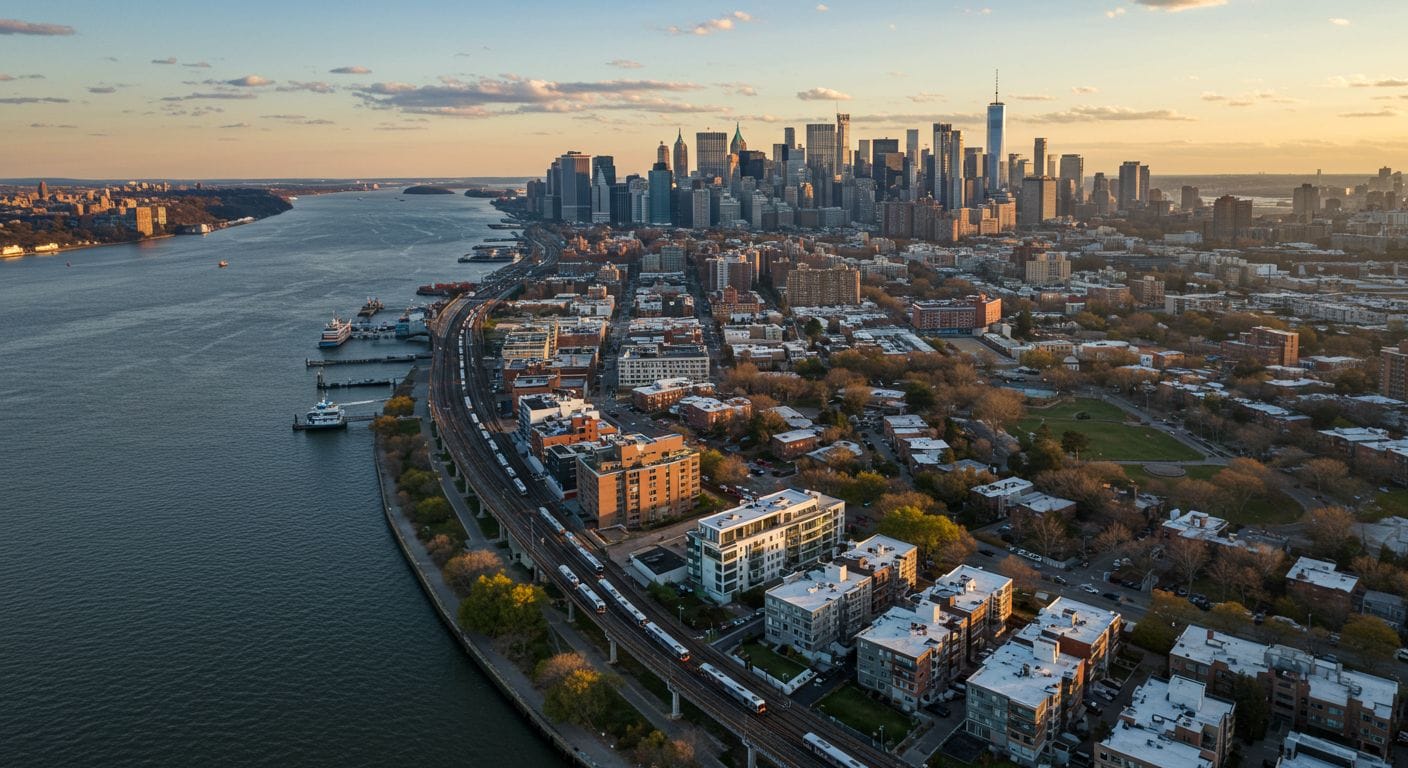
The New Jersey real estate market is heating up, with statewide median prices increasing 6.6% year-over-year despite softer demand in August 2025. While broader markets capture headlines, savvy investors recognize that exceptional returns come from identifying specific New Jersey investment towns before they reach peak recognition.
This analysis spotlights 3 strategically positioned towns—representing distinct geographic sectors and investment strategies—demonstrating the strongest indicators for price appreciation and rental demand through 2026 and beyond.
The Data Behind NJ’s Investment Opportunity
New Jersey’s fundamentals create powerful tailwinds for strategic real estate investment. The state’s average rent ($2,500) exceeds the national average by 19%, with rental demand strengthening across transit-connected communities. Statewide price growth (4.7%) outpaces the U.S. average (2.0%), while New Jersey leads the nation with 39 suburbs transitioning to renter-majority status—more than any other state.
The investment thesis strengthens when examining commuter dynamics. With 27% of single-family home purchases in early 2023 going to investors, demand remains rock-solid as young professionals and families priced out of NYC ownership choose New Jersey’s more affordable options without sacrificing their Manhattan paychecks.
Three specific towns exemplify this opportunity, each offering distinct advantages for investors targeting 2026 growth.
Town #1: Rahway – The Emerging Union County Value Play
Median home price: $450,000-$475,000 Commute to Manhattan: 35-40 minutes direct via NJ Transit Target investor profile: Cash flow seekers and value-add specialists 2026 appreciation forecast: 6-8%
Why Rahway Is Heating Up
Rahway represents Union County’s most compelling value proposition for investors seeking affordable entry points with substantial upside potential. While neighboring towns like Summit and Westfield command median prices exceeding $825,000, Rahway delivers comparable transit access at nearly half the cost.
The town’s transformation from overlooked industrial center to desirable commuter hub accelerated dramatically in recent years. Downtown revitalization brought new restaurants, craft breweries, and the Hamilton Stage performing arts center, creating the lifestyle amenities that attract quality tenants. The Union County Performing Arts Center anchors a growing cultural district that distinguishes Rahway from purely residential suburbs.
The Investment Case
Transit access drives rental demand. Rahway’s direct NJ Transit line to Penn Station positions it perfectly for hybrid workers who commute 2-3 days weekly. This convenience commands rent premiums while maintaining acquisition costs 40-50% below Hudson County markets.
Mixed housing stock creates diverse opportunities. Investors can target single-family homes ($450,000-$550,000), two-family properties (mid-$400,000s), or condos ($300,000-$400,000), allowing portfolio diversification within a single market.
Development momentum is building. The Rahway Transit Village redevelopment project adds modern multifamily housing near the train station, signaling developer confidence and creating a halo effect on surrounding property values.
Rental yield advantages. With typical two-bedroom rents reaching $2,400-$2,600 monthly, investors achieve favorable rent-to-price ratios compared to more expensive commuter towns. Cash-on-cash returns of 8-10% are achievable with proper property selection.
Risk Factors and Mitigation
Property tax rates in Union County (averaging 2.4-2.6% of assessed value) require careful underwriting. Successful investors focus on properties with strong rental demand near downtown or the train station, where tenant quality and retention justify tax burdens.
Town #2: New Brunswick – The University-Anchored Central Jersey Powerhouse
Median home price: $390,000-$420,000 Commute to Manhattan: 50-55 minutes via Northeast Corridor Line Target investor profile: Buy-and-hold investors seeking institutional-grade tenants 2026 appreciation forecast: 5-7%
Why New Brunswick Dominates Central Jersey
New Brunswick presents a rare combination of institutional stability, diverse tenant demand, and continued economic development that creates exceptional investment fundamentals. As home to Rutgers University’s flagship campus, Johnson & Johnson’s global headquarters, and Robert Wood Johnson University Hospital, the city generates sustained rental demand from multiple high-quality tenant categories.
The university alone enrolls 36,000 undergraduates plus thousands of graduate students, faculty, and staff—creating year-round occupancy that distinguishes New Brunswick from seasonal college towns. This academic presence combines with major corporate and healthcare employment to produce recession-resistant rental demand.
The Investment Case
Multiple tenant demand drivers. Unlike single-industry towns, New Brunswick attracts students, young professionals, hospital staff, and corporate employees—diversifying your tenant pool and reducing vacancy risk across economic cycles.
Infrastructure investment continues. The $180 million Trenton Transit Center renovation (completed in phases through 2025) enhanced regional connectivity. New Brunswick benefits as the primary Northeast Corridor stop between Newark and Philadelphia, improving its appeal to both northbound NYC commuters and southbound Philadelphia workers.
Affordability creates outsized returns. Median acquisition costs below $420,000 paired with strong rental demand ($1,800-$2,200 for two-bedrooms) generate compelling cash flow. Properties near the train station or Rutgers campus command premium rents while maintaining accessible entry prices.
Established rental infrastructure. The city’s long history as a rental market means investors benefit from mature property management services, established landlord-tenant norms, and well-understood market dynamics—reducing operational friction compared to emerging markets.
Upside from continued redevelopment. New Brunswick’s ongoing downtown transformation includes mixed-use developments, improved streetscapes, and enhanced retail options. These improvements support gradual rent increases and property appreciation.
Strategic Acquisition Targets
Focus on 2-4 unit multifamily properties within 1 mile of either the train station or College Avenue campus. These properties typically trade at $400,000-$550,000 and generate $3,600-$4,800 monthly gross rent, supporting favorable debt service coverage ratios for financing.
Single-family homes in the Somerset section ($450,000-$550,000) attract professional tenants and families affiliated with Johnson & Johnson or the hospital, offering lower turnover and premium rent stability.
Town #3: Asbury Park – The Jersey Shore Transformation Story
Median home price: $625,000-$650,000 Commute to Manhattan: 90 minutes via NJ Transit Target investor profile: Appreciation-focused investors and short-term rental operators 2026 appreciation forecast: 8-10%
Why Asbury Park Leads Shore Market Growth
Asbury Park represents the Jersey Shore’s most dramatic transformation, evolving from struggling resort town to year-round destination commanding premium prices. The city’s population grew 15% over the past five years while median home values increased 40%—demonstrating momentum that positions Asbury Park for continued outperformance.
Unlike seasonal shore communities, Asbury Park attracts permanent residents drawn to its arts scene, restaurant culture, and beachfront lifestyle without sacrificing urban amenities. The revitalized waterfront district anchored by the Stone Pony music venue and Paramount Theatre creates cultural draw that extends far beyond summer months.
The Investment Case
Scarcity value on the Jersey Shore. As one of the few shore towns with year-round vibrancy, Asbury Park captures demand from buyers and renters seeking coastal living with city-level dining, entertainment, and walkability. This unique positioning supports price premiums and sustained appreciation.
Dual rental market opportunities. Investors can pursue traditional long-term rentals (with over 70% of residents renting) or capitalize on short-term rental demand from weekend visitors and summer vacationers. This flexibility provides revenue optimization options based on market conditions.
Transit improvements enhance accessibility. NJ Transit service improvements and the 90-minute NYC commute make Asbury Park viable for hybrid workers willing to trade commute time for beachfront lifestyle and lower costs than Brooklyn or Manhattan.
Development pipeline supports values. The Lido Asbury Park luxury development—welcoming tenants in 2027 with units ranging from $825,000 to $8 million—signals continued confidence in the market’s premium positioning. These high-end projects create a halo effect elevating surrounding property values.
Strong rental fundamentals. With 70%+ renter population, Asbury Park offers depth of tenant demand that reduces vacancy risk. Two-bedroom apartments command $2,800-$3,400 monthly, supporting strong cash flow despite higher acquisition costs.
Capital Requirements and Returns
Asbury Park requires larger capital commitments than Rahway or New Brunswick, with most investment-grade properties trading between $600,000-$900,000. However, the higher entry point delivers superior appreciation potential (8-10% projected for 2026) and rent growth that outpaces lower-priced markets.
Cash-on-cash returns typically range 6-8% for long-term rentals, with short-term rental strategies potentially achieving 10-12% returns during peak demand periods (May-September).
Comparing the 3 Investment Towns
Best for cash flow: Rahway delivers the strongest immediate returns with favorable rent-to-price ratios and accessible acquisition costs.
Best for stability: New Brunswick’s diversified tenant base and institutional anchors provide recession-resistant fundamentals ideal for conservative investors.
Best for appreciation: Asbury Park’s transformation momentum and scarcity value on the Jersey Shore position it for the highest capital gains through 2026.
Best for diversification: Investors building New Jersey portfolios should consider all three towns, capturing different geographic sectors (Union County commuter corridor, Central Jersey university town, Jersey Shore coastal market) and risk-reward profiles.
Investment Strategy Recommendations for 2026
Act before institutional capital arrives. All three towns show indicators that attract larger institutional investors. Individual investors benefit from local market knowledge and faster execution, acquiring quality properties before competition intensifies.
Focus on transit proximity. In Rahway and New Brunswick, properties within 10-minute walk of train stations command sustained rent premiums and attract the highest-quality tenants.
Underwrite conservatively. New Jersey’s high property taxes (2.2-2.6% of assessed value statewide) and landlord-friendly tenant protections require careful financial modeling. Budget for 8-10% annual expenses beyond mortgage payments.
Leverage local expertise. Partner with Robert DeFalco Realty’s team for market intelligence, off-market opportunities, and transaction execution in these rapidly evolving markets.
Consider portfolio approach. Rather than concentrating capital in a single town, diversify across 2-3 of these markets to balance cash flow (Rahway), stability (New Brunswick), and appreciation (Asbury Park).
Why 2026 Is the Entry Point
New Jersey’s statewide fundamentals—limited inventory, strong job markets, and rental demand exceeding national averages by 19%—create the rising tide lifting all boats. But these 3 specific towns offer disproportionate upside for investors who recognize their advantages before broader market recognition drives prices higher.
Rahway’s value proposition won’t last as downtown revitalization reaches critical mass. New Brunswick’s affordability relative to its institutional anchors represents market inefficiency that corrects over time. Asbury Park’s transformation is only entering its middle innings, with years of appreciation ahead as the Jersey Shore’s premier year-round destination.
The investors who act in 2026 position themselves ahead of the curve—acquiring quality assets in fundamentally strong markets before the broader investment community fully prices in their advantages.
Ready to capitalize on New Jersey’s investment opportunities? Contact Robert DeFalco Realty’s investment specialists for detailed market analysis, property identification, and transaction support across Rahway, New Brunswick, and Asbury Park. Our team’s 30+ years serving the New York-New Jersey region positions you for success in these high-potential markets.
Related resources: