
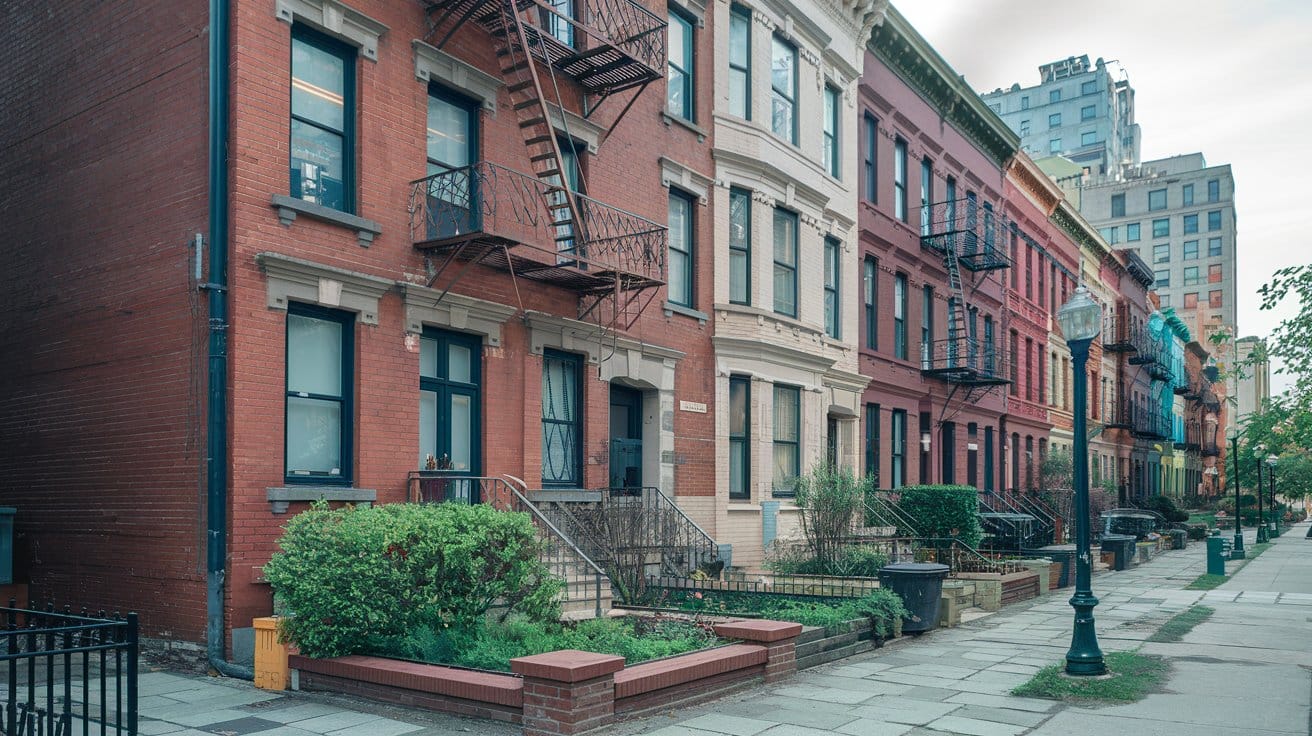
Mayor-elect Zohran Mamdani’s signature promise to freeze rents on nearly 1 million rent-stabilized apartments has captured headlines and energized tenants. But behind the populist appeal lies a financial reality threatening the city’s smallest property owners—the mom-and-pop landlords whose buildings form the backbone of New York’s affordable housing stock.
While large corporate landlords spread risk across massive portfolios, small landlords operating 1-4 unit buildings face existential pressure from a policy that could eliminate their ability to cover rising costs without increasing revenues.
The Financial Bind: When Operating Costs Exceed Rent Revenue
The numbers tell a stark story. Between April 2024 and March 2025, operating costs for rent-stabilized buildings increased 6.3% according to the Rent Guidelines Board. Property taxes—representing 29% of total operating expenses—rose 3.9%. Insurance costs skyrocketed 150% from 2019 to 2025, far outpacing every other major expense category.
Maintenance costs climbed 39% since 2019. Utilities increased 31%. Labor expenses rose alongside inflation. Yet during this period of soaring costs, rent increases for stabilized units remained capped at modest levels—and under Mamdani’s plan, would stop entirely for four years.
The Rent Guidelines Board’s data reveals that 10% of rent-stabilized buildings already report operating costs equal to or greater than their rental income. These properties teeter on the edge of tax foreclosure, unable to generate sufficient revenue to cover basic expenses. A rent freeze would push many over the cliff.
Ebony Hannibal, a Brooklyn landlord, exemplifies the crisis. She owns a four-unit building and struggles with a $3,800 monthly mortgage while pursuing tenants who owe nearly $100,000 in back rent. “If Mamdani’s freeze becomes reality, I plan to sell my building,” Hannibal told The Wall Street Journal. “But you must wonder who would buy it if the rents don’t cover the costs.”
Her situation is not unusual. “Every single landlord in my neighborhood has similar experiences,” she said.
Small Landlords vs. Corporate Operators: The Unequal Impact
Unlike institutional investors managing hundreds or thousands of units across diversified portfolios, small landlords typically have all their wealth concentrated in one or two buildings. They cannot absorb losses in one property by spreading costs across others. When expenses rise but revenues freeze, they have no cushion.
Sam Kaplan, who owns a 12-unit building in Astoria that’s been in his family since the 1960s, explains the impossible arithmetic: “My property taxes went up 8% last year. Insurance premiums jumped 15%. Heating costs are through the roof. But I can only raise rents 2.75%? The math doesn’t work.”
Sharon, a second-generation Brooklyn property owner whose family renovated a previously uninhabitable building, faces similar pressure: “My insurance costs are going up from $37,000 to $70,000. Every year, the city increases property tax assessments by about 6%. We need to replace appliances and conduct inspections. It’s getting to the point where operating expenses are now exceeding revenues.”
The contrast with corporate landlords is striking. Large operators like Blackstone or Related Companies employ sophisticated financial engineering: cross-collateralization across portfolios, institutional capital access, economies of scale for insurance and maintenance, and political influence to shape policy. Small landlords have none of these advantages.
The 2019 Turning Point: How HSTPA Changed Everything
The 2019 Housing Stability and Tenant Protection Act (HSTPA) fundamentally altered the economics of small-scale landlording in New York. For decades, landlords could apply vacancy bonuses (up to 20% rent increases when tenants moved out) to cover turnover costs. They could recover expenses for individual apartment improvements (IAIs) or major capital improvements (MCIs) like new boilers or roofs.
HSTPA effectively abolished vacancy bonuses and drastically limited IAI and MCI cost recovery—capping recoverable renovation expenses at $50,000 spread over 15 years. Rehabilitating a century-old tenement building often costs twice that amount, leaving owners little incentive to invest in improvements.
Columbia Business School research documented the result: “a dramatic increase in deferred maintenance” and surging warehousing of apartments. By 2023, as many as 60,000 rent-stabilized units—roughly 5% of the city’s stabilized stock—sat empty because landlords couldn’t afford to bring them to market.
Robert, another small landlord, describes the calculus: “There are operating costs to every unit. When those operating costs exceed what we can collect in rent, plus the fixed building costs, then it’s no longer viable.” Rather than lose money renting, owners leave apartments vacant.
The Deterioration Risk: Echoes of the 1970s
Housing advocates dismiss concerns about building deterioration, but New York’s history provides cautionary precedent. During the 1970s fiscal crisis, building owners unable to cover costs through rent revenue deferred basic maintenance. Property taxes went unpaid. Buildings were abandoned. Entire neighborhoods declined.
Some owners even resorted to arson—insurance payouts represented the only value that could be extracted from properties worth less than their debt.
Housing-code violations for buildings with high concentrations of rent-stabilized units increased 47% from 2021 to 2025, compared with a 22% increase for buildings with fewer stabilized units, according to NYU’s Furman Center. Inadequate heat or hot water, mold, leaks, and plumbing failures proliferate as landlords defer repairs they cannot afford.
Michelle, an Upper West Side property owner, manages the daily reality: coordinating with utilities to ensure gas works for heating season, scheduling lead inspections, replacing appliances, addressing unexpected emergencies. “It’s a full-time job,” she said. Yet the revenue to support this maintenance grows more uncertain each year.
De Blasio’s Precedent: What Happened During Previous Freezes
Mayor Bill de Blasio implemented rent freezes in 2015, 2016, and 2020. The results provide insight into what Mamdani’s four-year freeze might produce.
Between 2013 and 2023, the Consumer Price Index rose more than 27%. Rent-stabilized apartment rents increased less than 12%—less than half the inflation rate. For landlords operating older buildings, this translated into widening gaps between income and expenses.
Ann Korchak, board president of Small Property Owners of New York, points to Rent Guidelines Board data showing operating expenses increased over 6% in 2017 and 4.5% in 2018 during the freeze period. “Rent was not keeping up,” she said. “If you don’t have enough revenue to keep up with your expenses, you often are now delaying a repair.”
The freezes benefited existing tenants by holding their housing costs stable. But they accelerated deferred maintenance, reduced property values, and discouraged investment in aging buildings.
The Market Distortion: Why Free-Market Renters Pay More
Mamdani’s rent freeze would apply only to rent-stabilized apartments—about 40% of NYC’s rental stock. The other 60% operates in the market-rate segment, where landlords face no regulatory caps on increases.
Data tracked by the Rent Guidelines Board shows how landlords with mixed portfolios (both regulated and market-rate units) push up market rents to offset constrained regulated income. Average rents in core Manhattan, where most buildings contain both unit types, rose 17% between 2019 and 2022. Citywide, the increase was only 7%.
Consider Mamdani’s own building in Astoria, where he lives in a rent-regulated apartment while earning $142,000 as a state assemblymember. According to a tax challenge filed by the landlord, the building’s 30 market-rate units generate $761,544 in annual rent while the 22 rent-regulated units generate $452,628. If the landlord seeks to maintain profitability, all cost increases must be recovered from market-rate tenants.
The result: rent freezes for stabilized tenants accelerate rent increases for unregulated tenants. Young professionals, recent college graduates, and newcomers to New York—those without access to stabilized units—bear the burden.
Twenty-year-old Peter, a Fordham University student, described searching for market-rate housing in the Bronx: “After a month of looking, we finally found a place. They were charging insane rent, like $3,600 a month for a very small unit—virtually a closet. Yet it’s the only thing we could find.”
What Small Landlords Need: A Path Forward
Mamdani’s campaign claims small landlords won’t be abandoned through a “Comparative and Alternative Hardship” exemption allowing some rent increases based on demonstrated need. But many remain unconvinced that bureaucratic hardship applications will provide timely relief for struggling operators.
Ann Korchak of Small Property Owners of New York proposes pragmatic alternatives to a freeze: amend the 2019 HSTPA provisions restricting IAI and MCI cost recovery to allow owners to bring 50,000+ warehoused apartments back to market. “That would make an impact on affordable housing,” she emphasizes, “far more than new construction schemes that take years, if they happen at all.”
Other proposals include property tax reform to relieve Tax Class 2 multifamily properties of punitive effective rates, addressing scaffold law requirements driving insurance costs, and restoring stronger J-51 tax abatements tied to building rehabilitation and energy upgrades.
The challenge is balancing tenant protection with landlord sustainability. Economist Eric Sims of the University of Notre Dame explains: “It’s not about pitying landlords. It’s about understanding incentives. You can’t expect people to invest in something if they’ll never break even—just like you can’t expect tenants to volunteer to pay more rent.”
The Stakes for NYC’s Housing Future
The tension between Mamdani’s populist promise and economic reality will define New York’s housing landscape for years. Small landlords represent a critical segment: they’re more likely to accept Section 8 vouchers, maintain relationships with long-term tenants, and keep older buildings operational despite thin margins.
Lose this segment to foreclosure or forced sales, and the replacements are predictable: either corporate operators seeking scale efficiency, or buildings deteriorating into uninhabitability. Neither outcome advances affordability or preserves the diverse housing stock that makes New York accessible across income levels.
The next mayor faces a choice: engineer a four-year freeze that accelerates financial strain and building deterioration, or pursue balanced reforms addressing both tenant affordability and landlord viability. The small landlords navigating impossible arithmetic today will determine whether New York’s affordable housing survives tomorrow.
At Robert DeFalco Realty, we understand the complexities facing property owners across New York and New Jersey. Whether you’re a small landlord evaluating your options or an investor analyzing market dynamics, our team provides expert guidance rooted in 30+ years of regional experience. Contact us today for personalized consultation on navigating NYC’s evolving rental landscape.
Related resources: