
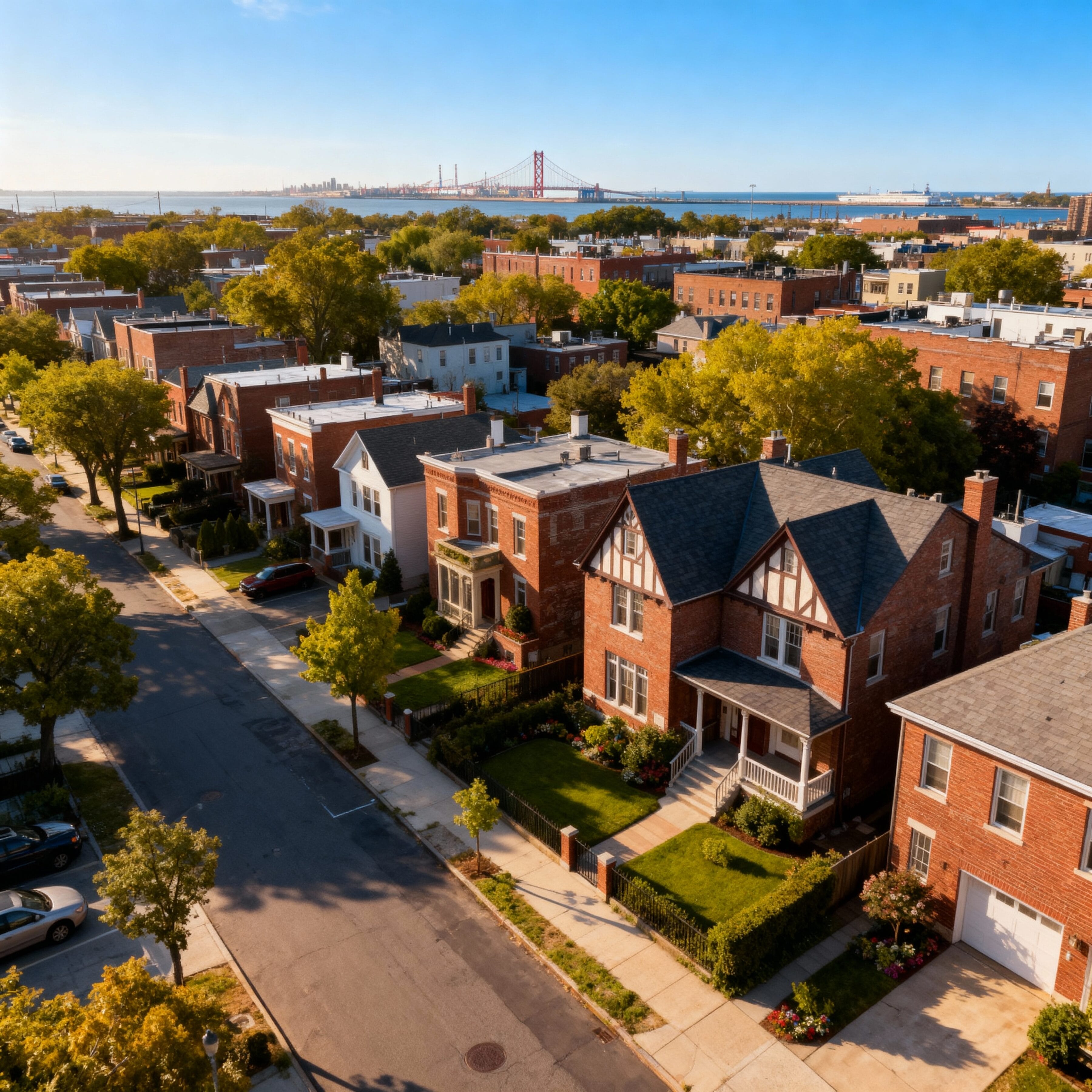
Brooklyn’s office submarkets show varying performance in 2025, with the Navy Yard reporting 11.8% vacancy, significantly lower than DUMBO’s 29.3% and Downtown Brooklyn’s 15.1% . While the original article’s claims about a “7-point vacancy decline” and “35 unique companies” require verification against current market data, Brooklyn’s office market does demonstrate distinct submarket performance patterns that differ from Manhattan’s challenges.
What Is Driving Brooklyn’s Office Market Dynamics?
Brooklyn’s office market is shaped by five structural factors: hybrid work adoption reducing space demand, aging Class B and C stock requiring capital improvements, sublease inventory flooding the market with 2.1 million square feet available as of Q3 2025, residential strength at 2% vacancy creating conversion opportunities, and targeted infrastructure investments . Brooklyn’s overall office vacancy reached 23.1% in Q2 2025, down 170 basis points from the prior year, driven by increased leasing activity up 33% year-over-year . Class A leasing more than doubled in Q2 2025, marking the highest mid-year activity in five years .
Brooklyn Navy Yard: Current Occupancy Status
The Brooklyn Navy Yard Development Corporation operates as a 300-acre waterfront campus offering below-market rents, real estate tax exemptions, and workforce development support . The Navy Yard features Dock 72 with flexible office space, Steiner Studios’ 310,000 square foot production facility, and diverse manufacturing and creative businesses . Current leasing opportunities include spaces ranging from 1,444 to 215,156 square feet across multiple buildings . The Navy Yard’s 11.8% vacancy rate reflects strong performance compared to broader Brooklyn metrics, supported by amenities including the Market @77 food hall, on-campus Wegmans, brewery, and ferry connectivity .
Williamsburg and Greenpoint: Market Performance
Williamsburg’s office market shows Class A averaging $49.57 per square foot and Class B at $44.60 per square foot, with 904,297 square feet available . The neighborhood benefits from residential density supporting daily occupancy and creative industry clustering, with media and technology companies maintaining significant presences . Average asking rents in Brooklyn dropped 5.1% over the past year to $53.33 per square foot, with Class A buildings facing vacancies near 25% while Class B offices maintain just 9.1% vacancy .
South Brooklyn Waterfront: Development Activity
Industry City encompasses 6 million square feet across 16 buildings and 35 acres, with 800,000 square feet leased since March 2020, achieving over 80% occupancy . The complex features office, light manufacturing, studio, and retail space. Bush Terminal’s 71-acre transformation includes film and television production campus development supported by $136 million in NYC Economic Development Corporation investment .
6 Investment Implications for Real Estate Professionals
Six investment implications emerge from Brooklyn’s office market dynamics:
- Market bifurcation: Trophy Class A assets show stronger performance while Class B and C face structural challenges requiring capital investment
- Conversion opportunities: Office-to-residential conversions offer 18-24% IRR potential in submarkets like DUMBO, Gowanus, and Downtown Brooklyn
- Rent compression: Brooklyn office rents fell 4.2% in 2024 while residential rents grew 6.8%, creating arbitrage opportunities
- Sublease pressure: 2.1 million square feet of sublease inventory at $38-45 PSF undercuts direct landlord pricing
- Financing evolution: Bridge and construction lenders remain active for adaptive reuse despite traditional bank pullback from office lending
- Submarket variation: Navy Yard at 11.8% vacancy significantly outperforms DUMBO at 29.3%, requiring targeted investment strategies
4 Future-of-Work Trends These Submarkets Prove
Four emerging trends validate Brooklyn’s office submarkets as indicators of workplace evolution:
- Hybrid work normalization: 73% of NYC metro employers require three in-office days or fewer, reducing space demand by 40%
- Community-centric design: Mixed-use projects like Industry City integrate office with retail, food, and social amenities
- Industrial-to-office conversions: Adaptive reuse of manufacturing buildings supports creative and tech sectors
- Sustainability requirements: New leases increasingly demand LEED Gold or higher certification
3 Strategic Takeaways
Brooklyn’s office submarkets demonstrate three strategic realities: live-work proximity drives tenant decisions over CBD prestige, industrial authenticity creates competitive advantages, and mixed-use environments with strong residential markets support office viability. The Navy Yard’s success reflects this model through preserved industrial character combined with modern amenities and transportation connectivity .
For specific acquisition targets and market analysis, contact DeFalco Realty at (718) 987-7900 or visit their Brooklyn office vacancy analysis for detailed conversion feasibility frameworks and current investment opportunities.