Park Slope Brooklyn: Complete Neighborhood Guide 2026
Looking for a Brooklyn neighborhood with world-class brownstones, one of the best urban parks in America, and top-performing public schools? Park Slope Brooklyn checks all three boxes. This northwest Brooklyn community spans ZIP codes 11215 and 11217, covers roughly 250 blocks of tree-lined streets, and consistently ranks among New York City’s most desirable neighborhoods for families, professionals, and creatives.
With a population of approximately 67,000 residents and a median household income above $130,000, this neighborhood attracts buyers willing to pay premium prices for quality of life. Median home sale prices hover near $1.45 million as of early 2026, with landmark brownstones regularly exceeding $3 million.
This guide covers everything you need to know about living in Park Slope Brooklyn, from housing costs and school ratings to subway access, dining, and the pros and cons of daily life.
What Is Park Slope Brooklyn Known For?
The neighborhood sits on the western slope of a glacial ridge that drops toward the Gowanus Canal. The neighborhood runs roughly from Flatbush Avenue on the north to Prospect Expressway on the south, Fourth Avenue on the west, and Prospect Park on the east. That eastern border gives the neighborhood its defining feature: direct access to Prospect Park, Frederick Law Olmsted and Calvert Vaux’s 585-acre masterpiece.
Brownstone Architecture
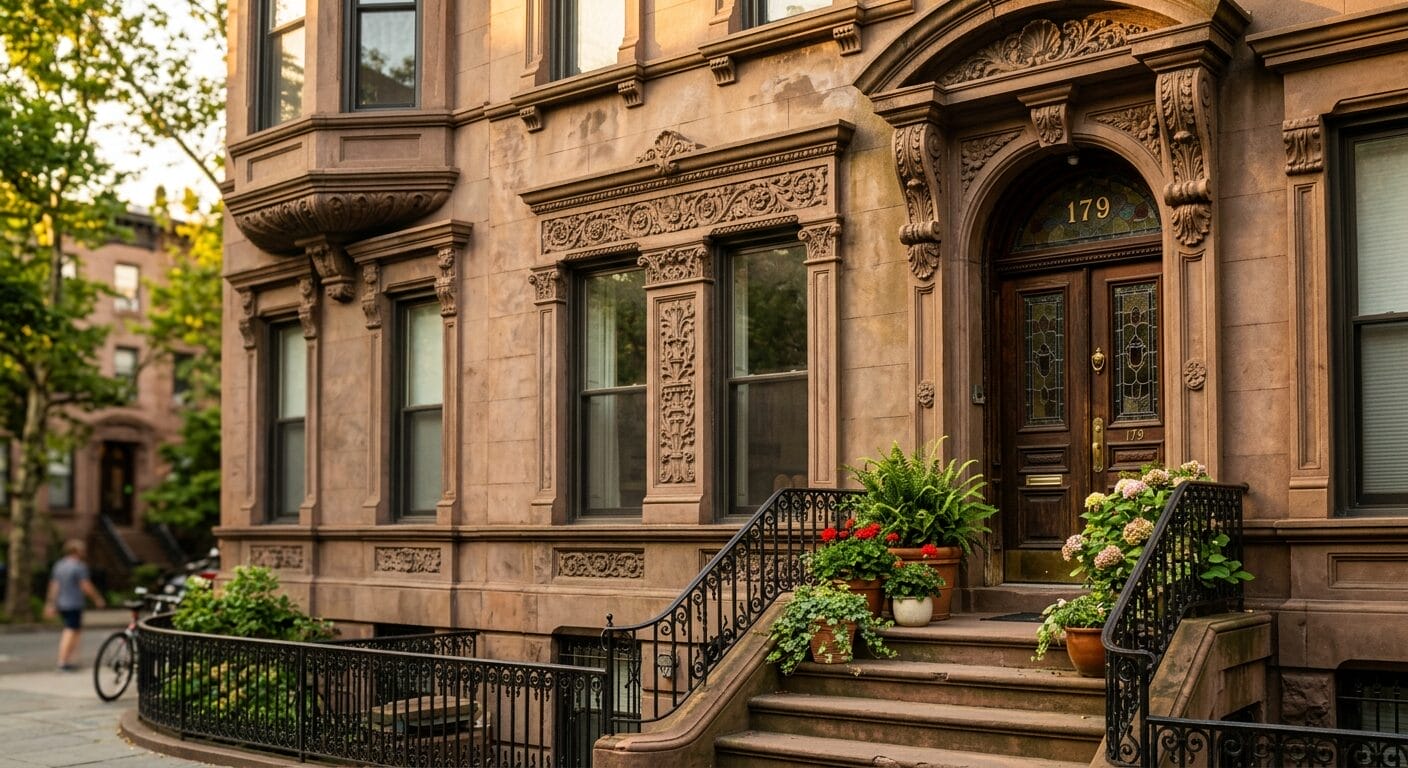
The neighborhood holds one of the largest intact collections of Victorian-era brownstones and row houses in the United States. The Park Slope Historic District, designated in 1973 and expanded in 2012, protects blocks of Romanesque Revival, Queen Anne, and Neo-Grec homes built between the 1880s and 1920s. Walking down Carroll Street, Montgomery Place, or President Street feels like stepping into a 19th-century architectural catalog.
These three-to-four-story brownstones feature high ceilings, ornate plasterwork, original fireplaces, parlor floors with 11-foot ceilings, and garden-level apartments. Many owners have renovated interiors to modern standards while preserving exterior facades under Landmarks Preservation Commission guidelines.
Prospect Park
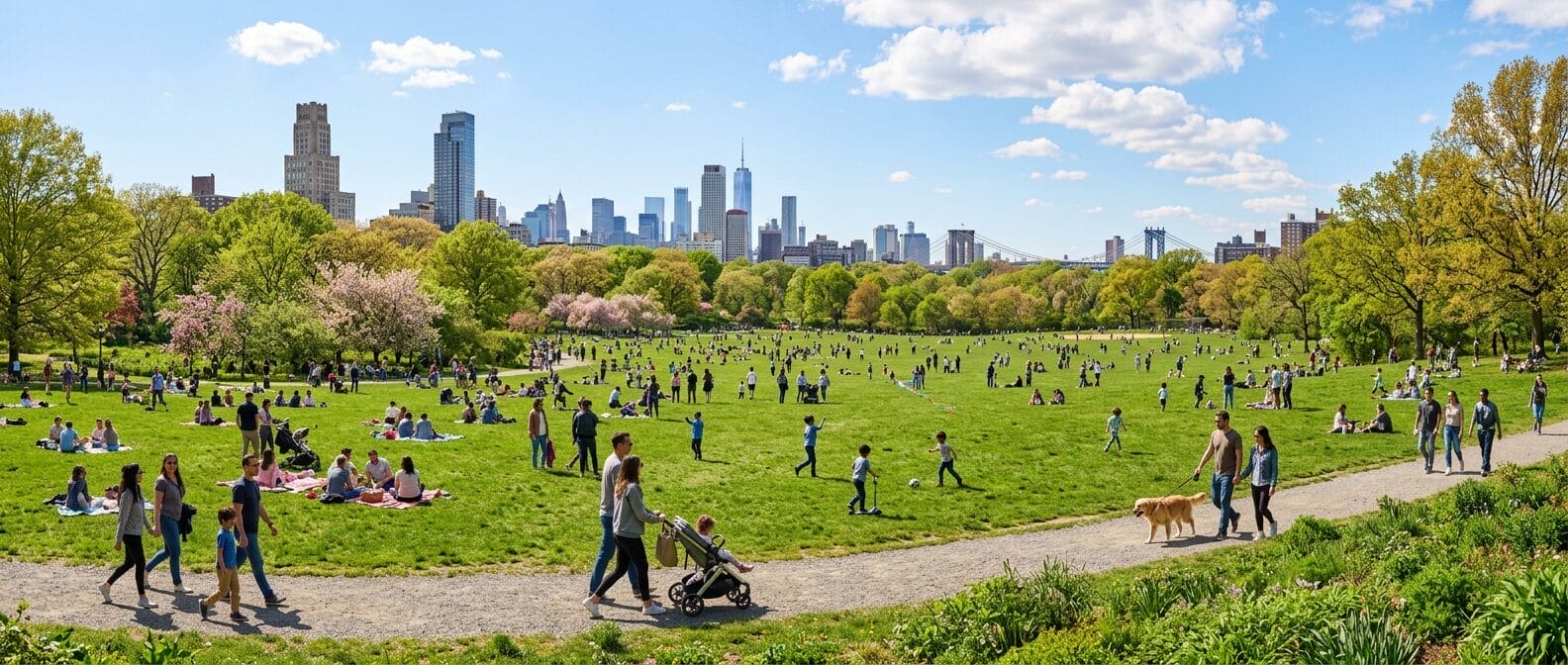
Prospect Park defines daily life in the neighborhood. Residents jog the 3.35-mile loop road, picnic on Long Meadow (the longest continuous meadow in any U.S. urban park at 90 acres), visit the Prospect Park Zoo, paddle on Prospect Park Lake, and use the Bandshell for summer concerts. The park also houses the Prospect Park Tennis Center, LeFrak Center ice rink, and Smorgasburg food market on weekends during warmer months.
Year-round park programming includes free outdoor movie screenings, the Celebrate Brooklyn! performing arts festival, and holiday markets. Families with young children gravitate to the nine playgrounds scattered throughout the park.
Family-Friendly Culture
The neighborhood earned its reputation as one of New York City’s most family-oriented communities over the past three decades. Stroller traffic on Seventh Avenue rivals foot traffic in Midtown Manhattan on weekday mornings. Parents organize playdates in Prospect Park, attend story hours at the Brooklyn Public Library’s Park Slope branch, and fill local coffee shops during school drop-off hours.
The neighborhood’s family focus shows in its commercial offerings. Toy stores, children’s bookshops, kid-friendly restaurants, and pediatric practices cluster along Fifth and Seventh Avenues. The Park Slope Parents online community, with thousands of active members, functions as a local information hub for childcare, school recommendations, and neighborhood events.
Dining and Shopping
Fifth Avenue and Seventh Avenue serve as the neighborhood’s two main commercial corridors. Seventh Avenue skews toward upscale dining, boutique shopping, and specialty food stores. Fifth Avenue offers a more eclectic mix of restaurants, bars, independent shops, and international eateries at slightly lower price points.
Standout dining includes Al di La Trattoria (Northern Italian), The Pines (New American), Miriam (Israeli/Mediterranean), and Fonda (Mexican). The neighborhood also supports a strong coffee culture, with Gorilla Coffee, Cafe Regular, and Southside Coffee drawing loyal crowds.
The Park Slope Food Co-op, founded in 1973, operates as one of the oldest and largest member-owned food cooperatives in the country. Members contribute 2 hours and 45 minutes of work per month in exchange for access to organic and natural foods at near-wholesale prices. This institution reflects the neighborhood’s progressive, community-minded identity.
Explore current Park Slope homes for sale to see what’s on the market right now.
Is Park Slope Brooklyn a Good Place to Live?
Short answer: yes, for buyers who can afford the entry price. The neighborhood delivers a combination of safety, walkability, green space, school quality, and cultural depth that few NYC neighborhoods match.
Safety and Crime
Park Slope falls within the NYPD’s 78th Precinct. Crime rates in this precinct rank among the lowest in Brooklyn. Reported crimes per capita sit well below the borough average, and violent crime remains rare. The neighborhood’s high foot traffic, active block associations, and engaged community contribute to a strong sense of personal safety.
Walking alone at night on well-lit streets like Seventh Avenue, Fifth Avenue, and the residential side streets between them feels comfortable for most residents. The area around the Barclays Center and Atlantic Terminal (north Park Slope border) sees more activity and slightly different safety dynamics, so buyers should walk those blocks during different times of day.
Walkability and Bikeability
The neighborhood earns a Walk Score of 96 out of 100, placing it in the “Walker’s Paradise” category. Daily errands like grocery shopping, pharmacy visits, banking, and dining require no car. The protected bike lane on Ninth Street connects to the Prospect Park loop and the broader Brooklyn cycling network.
Citi Bike stations dot the neighborhood at roughly every three to four blocks, and dedicated bike lanes on Fourth Avenue and Prospect Park West give riders safe routes into Downtown Brooklyn, the Brooklyn Bridge path, and beyond.
Community and Culture
The neighborhood supports a strong arts and literary culture. The Old Stone House museum hosts lectures and community events. BookCourt’s legacy lives on through independent bookshops. The Bell House and other nearby venues (in neighboring Gowanus) offer live music, comedy, and cultural programming.
The community also hosts an annual Halloween parade, a holiday lights celebration, and seasonal street fairs that draw thousands. The community boards actively engage in zoning, development, and quality-of-life discussions.
For buyers comparing Brooklyn neighborhoods, our Manhattan vs. Brooklyn buyers guide breaks down the key trade-offs.
Real Estate and Housing Market in Park Slope Brooklyn
The Park Slope housing market is one of Brooklyn’s most competitive. Inventory stays tight, demand stays high, and well-priced properties attract multiple offers within days.
Current Market Conditions (Early 2026)
Based on market data through Q1 2026, median home sale prices in Park Slope sit at approximately $1.45 million, reflecting year-over-year appreciation of roughly 4-6%. The median price per square foot runs around $1,050 to $1,150, depending on property type and condition.
Key pricing tiers break down as follows:
Brownstones and Townhouses: $2.5 million to $5 million+ for single-family brownstones. Landmark-quality homes on prime blocks (Carroll Street, Montgomery Place, 1st through 4th Streets near Prospect Park) regularly list above $4 million. Fixer-upper brownstones in need of renovation start around $2 million.
Condos: $650,000 to $1.5 million for one-to-three-bedroom units. New construction condos along Fourth Avenue command $900 to $1,300 per square foot. Boutique condo conversions in historic buildings price at the higher end of this range.
Co-ops: $450,000 to $1.1 million for one-to-three-bedroom apartments. Co-ops remain the most affordable ownership entry point, though boards enforce strict financial requirements including low debt-to-income ratios and liquid reserve minimums. Understanding HOA vs. co-op fees in NYC helps you budget for monthly carrying costs beyond your mortgage.
Multi-Family: $1.8 million to $3.5 million for two-to-four-family properties. These attract owner-occupants who offset mortgage costs with rental income from additional units.
For a detailed breakdown of ownership types, read our guide on what is a condo in NYC and NJ.
Market Trends
The local market tracks closely with broader Brooklyn real estate trends. Limited new construction, landmark designation restrictions, and steady buyer demand keep prices firm even during softer market periods. The Fourth Avenue corridor has added the most new condo inventory over the past decade, with glass-and-steel towers offering modern amenities that contrast with the neighborhood’s brownstone character.
Days on market for well-priced properties average 30 to 50 days. Overpriced listings (especially brownstones above $4 million) may sit longer. Buyers should expect competition for co-ops priced below $700,000 and condos below $900,000.
Want to see how Park Slope compares to other premium Brooklyn areas? Browse homes in Prospect Heights, Cobble Hill, and Carroll Gardens to compare price points and housing stock.
Rental Market
Rental prices in the area reflect the neighborhood’s desirability. As of early 2026, expect the following monthly rents:
- Studio: $2,200 to $2,800
- One-bedroom: $2,800 to $3,600
- Two-bedroom: $3,500 to $5,000
- Three-bedroom: $4,500 to $7,000+
These rents place Park Slope among Brooklyn’s most expensive rental markets, alongside Brooklyn Heights and Williamsburg. For more affordable Brooklyn options, check our guide to affordable Brooklyn neighborhoods.
Use our affordability calculator to determine your purchase budget before you start searching.
Transportation and Commuting from Park Slope Brooklyn
The neighborhood offers strong public transit connections that make car-free living practical for most residents.
Subway Lines
Three subway lines serve the neighborhood directly:
- F and G trains at Fourth Avenue-9th Street and 7th Avenue stations. The F express runs to Manhattan (West 4th Street in about 20 minutes, Midtown in 30-35 minutes). The G connects to Williamsburg, Greenpoint, and Long Island City without requiring a Manhattan transfer.
- R train at Fourth Avenue-9th Street, Union Street, and Prospect Avenue stations. The R runs through Downtown Brooklyn, Lower Manhattan, and into Midtown.
- B and Q trains at the Seventh Avenue and Prospect Park stations on the neighborhood’s eastern edge. These lines offer fast service to Midtown Manhattan (30-35 minutes) and connect to the Brighton Beach line heading south.
- 2 and 3 express trains at Bergen Street and Grand Army Plaza stations along the northern border. These provide the fastest Manhattan commute, reaching Wall Street in 20 minutes and Times Square in about 25 minutes.
Bus Routes
The B61, B67, B69, and B63 bus routes connect Park Slope to surrounding neighborhoods including Red Hook, Downtown Brooklyn, Prospect Lefferts Gardens, and Coney Island. The B63 runs along Fifth Avenue and Atlantic Avenue, serving as a useful crosstown connector.
Commute Times
| Destination | Typical Commute | Best Route |
|---|---|---|
| Lower Manhattan/FiDi | 20-25 minutes | 2/3 express |
| Midtown Manhattan | 30-35 minutes | F express or B/Q |
| Downtown Brooklyn | 10-15 minutes | R or walking |
| Williamsburg | 20-25 minutes | G train |
| Long Island City | 30-35 minutes | G train |
Driving and Parking
Car ownership in this neighborhood requires patience. Street parking operates on alternate-side rules, and finding a spot during evening hours can take 15 to 30 minutes of circling. Some brownstone owners have private driveways or garage access, which adds real value to a property.
The Prospect Expressway provides access to the BQE, Belt Parkway, and points south. The Brooklyn-Battery Tunnel (Hugh L. Carey Tunnel) connects to Lower Manhattan for drivers heading into the city.
For a broader look at getting around the metro area, see our New York City metropolitan area guide.
Things to Do in Park Slope Brooklyn
Beyond Prospect Park, the neighborhood and its immediate surroundings offer a deep bench of activities.
Parks and Outdoor Spaces
Prospect Park remains the anchor. The Audubon Center at the Boathouse offers nature programs and birdwatching. The Ravine, a 250-acre forested area, provides genuine woodland walks minutes from brownstone-lined streets. The Lullwater and waterfall system create peaceful spots away from the more active Long Meadow and Nethermead areas.
The Old Stone House in Washington Park (Fifth Avenue at Third Street) serves as a small museum and community space on the site of a Revolutionary War battle.
Bartel-Pritchard Square marks the formal entrance to Prospect Park at the intersection of Prospect Park West and 15th Street.
Cultural Attractions
- Brooklyn Museum (adjacent, on the east side of Prospect Park): one of the largest art museums in the U.S., with world-class Egyptian, American, and contemporary collections
- Brooklyn Botanic Garden (adjacent): 52 acres of specialty gardens, including the famous Cherry Esplanade and Japanese Hill-and-Pond Garden
- Prospect Park Zoo: a compact, family-friendly zoo operated by the Wildlife Conservation Society
- Brooklyn Public Library, Central Branch at Grand Army Plaza: the main branch of the Brooklyn library system, housed in a striking Art Deco building
- Barclays Center (northern border): home of the Brooklyn Nets and a major concert and events venue
Food and Drink Highlights
The dining scene rewards exploration. Beyond the restaurants mentioned earlier, local favorites include:
- Convivium Osteria (Mediterranean, cozy garden seating)
- Runner & Stone (artisan bakery and restaurant)
- Dizzy’s (classic diner on 9th Street, a weekend brunch institution)
- Union Hall (bar with bocce courts and a live music basement)
- Barbés (live music venue with global acts in an intimate space on 9th Street)
- Bierkraft/various craft beer bars along Fifth Avenue
Shopping
Seventh Avenue features curated boutiques, home goods stores, and specialty shops. Fifth Avenue offers vintage stores, record shops, and a broader mix of independent retail. The Grand Army Plaza Greenmarket operates year-round on Saturdays, offering fresh produce, baked goods, meats, and cheeses from regional farms.
Schools and Education in Park Slope Brooklyn
School quality drives many families to this area. The neighborhood falls within NYC Department of Education District 15, which includes several of Brooklyn’s highest-performing public schools.
Top Public Elementary Schools
PS 321 William Penn (180 7th Avenue): Widely considered one of the best public elementary schools in New York City. Math proficiency rates exceed 75%, and reading proficiency rates top 80%. The school draws families from across Brooklyn, and living within its catchment zone adds measurable value to nearby properties. PS 321 offers strong parent involvement, arts programming, and after-school activities.
PS 107 John W. Kimball (1301 8th Avenue): Another high-performing elementary school with proficiency rates well above district averages. Known for project-based learning and a strong sense of community.
PS 282 Park Slope (180 6th Avenue): Serves the southern Park Slope area with solid academic results and a diverse student body.
Middle Schools
MS 51 William Alexander (350 5th Avenue): Ranked among the top middle schools in Brooklyn and consistently in New York City’s top 25. Strong programs in academics, arts, and athletics. Acceptance is competitive and based on academic criteria.
MS 88 Peter Rouget (544 7th Avenue): A well-regarded neighborhood middle school offering gifted and talented tracks alongside general education.
High Schools
Park Slope residents have access to Brooklyn’s selective high schools through the citywide admissions process. Notable options include Brooklyn Technical High School (one of NYC’s nine specialized high schools), Millennium Brooklyn High School, and the Brooklyn Latin School.
Private and Independent Schools
Berkeley Carroll School (181 Lincoln Place): A pre-K through 12th grade independent school known for rigorous academics, arts, and athletics. Annual tuition ranges from approximately $35,000 to $55,000 depending on grade level.
Poly Prep Country Day School (nearby in Bay Ridge): A pre-K through 12 independent school with a large campus and strong college placement record.
Saint Saviour Catholic Academy and several other parochial schools serve families seeking faith-based education.
For families weighing school quality against home values, our guide to NYC and NJ school district rankings and home values offers useful data points.
Pros and Cons of Living in Park Slope Brooklyn
Pros
- Prospect Park access. Having 585 acres of green space at your doorstep is a quality-of-life advantage that few NYC neighborhoods offer.
- Exceptional public schools. PS 321 and MS 51 rank among the city’s best, giving families a genuine alternative to private school tuition.
- Architectural beauty. The brownstone streetscapes create a visual character unmatched in most American cities.
- Walkability. A Walk Score of 96 means you can handle nearly every errand on foot.
- Strong transit. Access to F, G, R, B, Q, 2, and 3 trains gives you multiple Manhattan commute options.
- Low crime. The 78th Precinct reports some of Brooklyn’s lowest crime rates per capita.
- Community engagement. Active block associations, parent networks, and local organizations create a connected neighborhood.
Cons
- High prices. Median home prices near $1.45 million and brownstones starting at $2.5 million put ownership out of reach for many buyers.
- Competitive school zones. PS 321’s catchment zone is small, and living just outside it means a different school assignment.
- Parking headaches. Alternate-side rules and limited garage space make car ownership frustrating.
- Noise and congestion near Barclays Center. The northern edge of the neighborhood gets loud during events.
- Co-op board restrictions. Many co-op buildings enforce strict financial and subletting rules.
- Limited housing inventory. Landmark protections and few vacant lots keep new construction minimal.
The neighborhood consistently ranks among the most expensive neighborhoods in NYC. Buyers on tighter budgets should also explore all Brooklyn homes for sale or read about affordable Brooklyn neighborhoods for alternatives.
Frequently Asked Questions About Park Slope
What ZIP codes cover Park Slope Brooklyn?
The neighborhood falls primarily within ZIP codes 11215 and 11217. The 11215 ZIP covers the majority of the neighborhood, including the area south of Flatbush Avenue. The 11217 ZIP covers the northern portion near Atlantic Avenue and the Barclays Center.
How much does it cost to buy a home in Park Slope?
As of early 2026, median home sale prices sit around $1.45 million. Co-ops start in the $450,000 range for one-bedrooms. Condos range from $650,000 to $1.5 million. Brownstones and townhouses typically list between $2.5 million and $5 million+.
Is Park Slope safe?
Yes. The NYPD’s 78th Precinct covers Park Slope and reports crime rates well below the Brooklyn average. Violent crime is rare, and the neighborhood’s walkable, well-lit streets feel comfortable at most hours.
What subway lines serve Park Slope?
The F, G, and R trains have stations within the neighborhood. The B and Q trains stop at Seventh Avenue and Prospect Park on the eastern edge. The 2 and 3 express trains stop at Bergen Street and Grand Army Plaza along the northern border. This gives residents access to seven subway lines.
What are the best schools in Park Slope?
PS 321 William Penn and PS 107 John W. Kimball rank among Brooklyn’s best elementary schools. MS 51 William Alexander is one of the top middle schools in the borough. Berkeley Carroll School offers top-tier private education from pre-K through 12th grade.
How long is the commute from Park Slope to Manhattan?
Commute times range from 20 to 35 minutes depending on your Manhattan destination. The 2/3 express trains reach the Financial District in about 20 minutes. The F and B/Q trains reach Midtown in 30 to 35 minutes.
Is Park Slope good for families?
Yes. Park Slope is widely considered one of NYC’s best neighborhoods for families. Top-rated public schools, Prospect Park’s playgrounds and green space, safe streets, and family-oriented businesses make it a top choice for parents. The trade-off is high housing costs.
What is the difference between North Slope and South Slope?
North Slope (above 9th Street) features the most expensive brownstones, proximity to Prospect Park’s main entrance at Grand Army Plaza, and the densest restaurant and shopping scene. South Slope (below roughly 9th to 15th Street) offers slightly lower prices, a quieter atmosphere, and more of a residential feel. Both areas share the same schools, parks, and transit access.
Can I find affordable housing in Park Slope?
Affordable is relative in Park Slope. Co-ops offer the lowest buy-in, with one-bedroom units starting around $450,000. Rentals for studios start near $2,200 per month. Buyers seeking lower price points should consider neighboring areas like Prospect Heights or explore our affordable Brooklyn neighborhoods guide.
How does Park Slope compare to other Brooklyn neighborhoods?
Park Slope commands premium prices similar to Brooklyn Heights and Cobble Hill. It offers more green space than either of those neighborhoods thanks to Prospect Park. School quality exceeds most Brooklyn alternatives. Younger buyers seeking nightlife and a different energy often compare Park Slope to Williamsburg, which offers a different lifestyle at similar price points.
Find Your Home in Park Slope
This neighborhood combines architectural beauty, top-performing schools, world-class park access, and strong transit into one of New York City’s most complete neighborhoods. The premium prices reflect real demand from families, professionals, and long-term residents who value quality of life above all else.
Whether you are searching for a brownstone on a landmark block, a modern condo on Fourth Avenue, or a co-op within the PS 321 zone, the right local agent makes all the difference. Robert DeFalco Realty specializes in Brooklyn real estate and knows Park Slope block by block.
Ready to start your home search in Park Slope Brooklyn? Browse current Park Slope listings or contact our team today. We will match you with properties that fit your budget, lifestyle, and timeline.
Explore all of our neighborhood guides to compare Park Slope with other top NYC and NJ communities.
Published by Robert DeFalco Realty. Updated March 2026. Data sourced from NYC Department of Education, NYPD CompStat, StreetEasy, NYC Department of City Planning, and Prospect Park Alliance.