
St. George Staten Island: Complete Neighborhood Guide 2026
In This Guide
St. George Staten Island sits at the northeastern tip of the borough and serves as Staten Island’s front door. The free Staten Island Ferry connects this neighborhood to Lower Manhattan in 25 minutes, making it the fastest commute to the Financial District of any neighborhood on the island. With waterfront condos starting around $350,000, a growing cultural scene, and major redevelopment reshaping the shoreline, St. George offers something rare in New York City: harbor views, walkability, and affordability in the same zip code.
This guide covers everything you need to know about living on Staten Island in the St. George neighborhood. You will find real data on housing, commuting, schools, safety, and honest trade-offs to help you decide if this is the right fit.
What Is St. George Staten Island Known For?
St. George Staten Island occupies the northeastern corner of the borough, bordered by the Kill Van Kull to the north, Upper New York Bay to the east, Tompkinsville to the south, and New Brighton to the west. The zip code is 10301, and the neighborhood covers roughly 0.41 square miles, making it one of the most densely developed areas on Staten Island.
The neighborhood takes its name from George Law, a 19th-century developer who gave up his waterfront land rights in exchange for having the area named after him. That deal happened in the 1880s when businessman Erastus Wiman was building the Staten Island Railway terminal here. The terminal opened in 1886 and turned St. George into the island’s civic and transit center practically overnight.
With a population of about 8,600 residents (part of a larger combined area of 20,500 when including adjacent New Brighton), St. George Staten Island carries a distinctly urban character compared to the rest of the borough. The median age sits around 32, younger than most Staten Island neighborhoods. The community is racially diverse: roughly 31.9% Black, 21.4% White, 34.3% Hispanic, and 7.2% Asian, based on 2020 Census data.
Three features define St. George Staten Island above everything else. First, the St. George Ferry Terminal is the busiest transit hub on the island, handling the free Staten Island Ferry to Manhattan’s Whitehall Terminal plus connections to the Staten Island Railway and nearly every local bus route. Second, the neighborhood houses Staten Island’s government center, including Borough Hall, the Richmond County Courthouse, and the Richmond County Supreme Court. Third, the waterfront has undergone a major revival over the past two decades, bringing Empire Outlets, SIUH Community Park (home of the Staten Island FerryHawks), the National Lighthouse Museum, and the Postcards 9/11 memorial.
That combination of transit access, government services, cultural institutions, and waterfront development gives St. George Staten Island a profile unlike any other neighborhood on the island.
Is St. George Staten Island a Good Place to Live?
Short answer: yes, especially for young professionals, artists, and buyers who value a quick Manhattan commute and don’t mind a neighborhood still mid-transformation.
Here is why residents rate this neighborhood well.
Commute Speed
No neighborhood on Staten Island gets you to Manhattan faster. The ferry ride from St. George to Whitehall Terminal takes 25 minutes, and the ferry runs 24/7, 365 days a year, completely free. Walk off the boat and you are steps from the 1, R, and W subway lines in Lower Manhattan. Total door-to-desk time to the Financial District can be as low as 35 minutes, faster than many Brooklyn and Queens commutes.
The NYC Ferry’s St. George route adds another option, connecting riders to destinations along the East River waterfront. For drivers, Bay Street provides access to the Staten Island Expressway and the Verrazzano-Narrows Bridge.
Affordability
St. George Staten Island offers some of the lowest entry points for homebuyers anywhere in New York City. Waterfront condos start around $350,000 to $450,000. Co-ops and older apartments list even lower. Multi-family properties typically fall between $550,000 and $800,000. For context, the median home price in Manhattan exceeds $1 million, and Brooklyn’s median sits above $800,000.
The median household income in the broader St. George-New Brighton area is about $48,018, and roughly 70% of housing units are renter-occupied. For a breakdown of annual costs, see our Staten Island property tax guide. That renter-heavy mix keeps purchase prices accessible for buyers willing to invest in an area with strong upside potential. For a clearer picture of what you can afford, try our affordability calculator.
Cultural Energy
St. George Staten Island has developed into the island’s cultural center. The 2,800-seat St. George Theatre on Hyatt Street hosts Broadway touring shows, concerts, and comedy acts year-round. The Staten Island Museum on Wall Street covers arts, natural science, and local history. The National Lighthouse Museum preserves the story of the U.S. Lighthouse Service in a restored 1860s Coast Guard depot. SIUH Community Park brings professional baseball to the waterfront every summer with the Atlantic League’s FerryHawks.
Artists and musicians started moving to the North Shore in the mid-2000s, drawn by cheap rents and the quick ferry connection. That creative community continues to grow, with studios, galleries, and performance spaces scattered along Bay Street and the surrounding blocks.
Waterfront Access
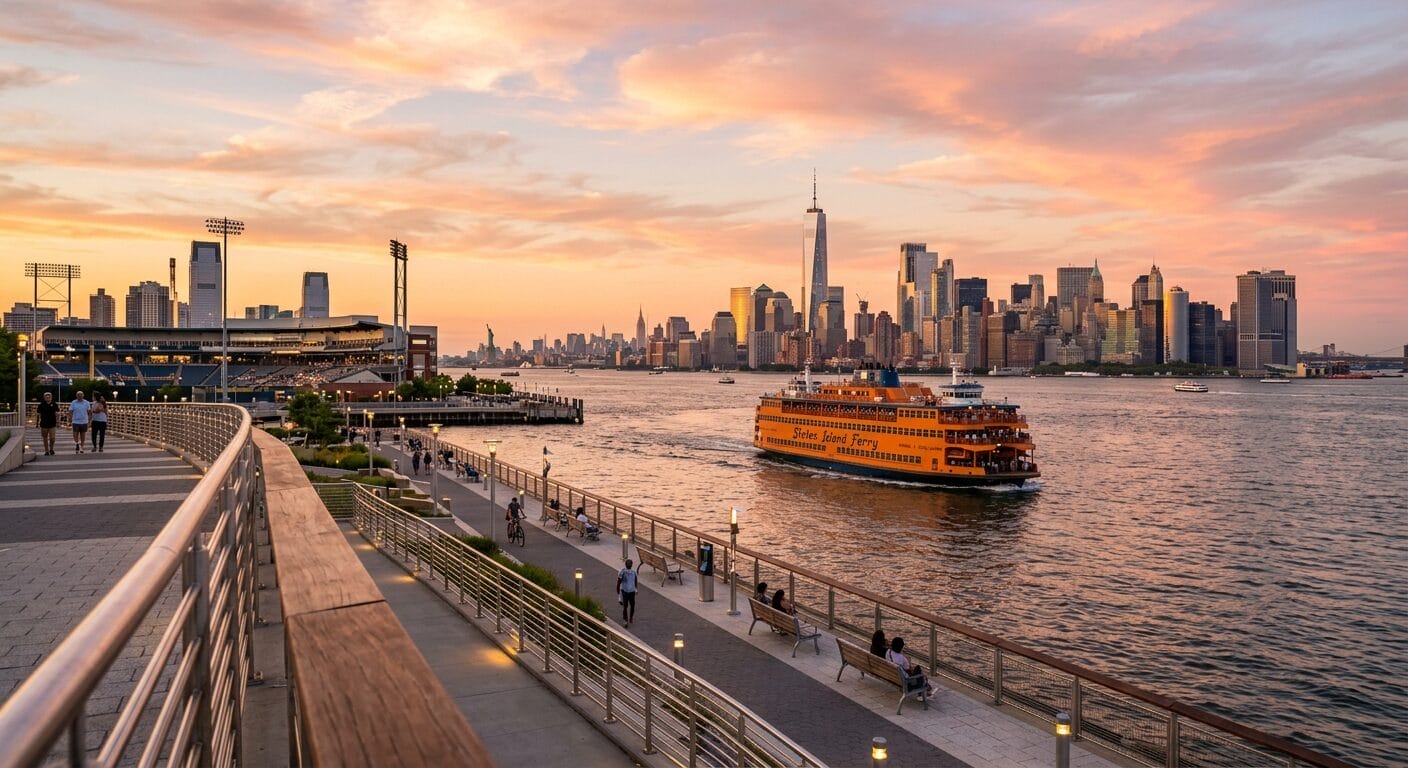
The St. George waterfront esplanade offers unobstructed views of the Statue of Liberty, Governors Island, and the Manhattan skyline. The Postcards memorial, a pair of 30-foot white marble wings, honors Staten Island’s 9/11 victims. Pier 1 provides public fishing access. Empire Outlets, the city’s first outlet shopping center, sits steps from the ferry terminal.
The city’s North Shore Action Plan, announced in 2023, includes further improvements: a redeveloped Wheel site (the canceled New York Wheel location), an extended promenade, upgrades to the ballpark, and improved pedestrian connections to the terminal.
Real Estate and Housing Market
The St. George Staten Island housing market offers variety and value that is hard to match in the rest of NYC.
Current Market Snapshot
As of early 2026, here is where the numbers stand:
- Median home price: approximately $450,000 to $550,000 (varies widely by property type)
- Condo prices: $350,000 to $550,000 for one- to two-bedroom units
- Multi-family properties: $550,000 to $800,000
- Year-over-year appreciation: 3 to 5%, tracking the borough-wide trend
- Days on market: 60 to 80 days for properly priced listings
- Inventory: limited, reflecting borough-wide supply constraints
Compared to the South Shore, where single-family homes often start above $600,000, St. George Staten Island provides a lower entry point with stronger appreciation upside as waterfront development continues.
Housing Types
Condos and Co-ops: The most common purchase option in St. George. The Lighthouse Point development near the ferry terminal represents the newest condo inventory. Older buildings throughout the neighborhood offer co-op units at lower price points, sometimes under $200,000 for studios. Monthly maintenance fees vary from $400 to $900 depending on building age and amenities.
Multi-Family Homes: Two- and three-family properties are common throughout St. George Staten Island, particularly along the residential streets climbing the hills south of Richmond Terrace. These attract investors and owner-occupants who want rental income to offset mortgage costs. For guidance on multi-family purchases, see our two-family home buying guide.
Historic Homes: The St. George/New Brighton Historic District, designated in 1994, includes 78 homes in Victorian, Queen Anne, Shingle, Colonial Revival, and Tudor styles. These properties sit on the steep, tree-lined streets above Fort Hill and along Daniel Low Terrace. Actor Paul Newman and Martin Sheen both lived in the Ambassador Apartments building on Daniel Low Terrace early in their careers. These homes rarely hit the market, but when they do, prices reflect their character and historic designation. For a recent example of how condo pricing works in St. George, see our analysis of the Pete Davidson condo sale at Bay Street Landing.
Apartment Buildings: Several mid-rise and high-rise buildings dot the neighborhood. The 20-story Castleton Park Apartments on St. Marks Place ranks among the tallest structures on Staten Island. Rental conversion to condo is an ongoing trend in some of these buildings.
Homes for Sale
Browse current homes for sale in St. George Staten Island or explore the wider North Shore market. Waterfront and transit-adjacent properties move quickly, so working with a local agent who knows the neighborhood block by block matters. Robert DeFalco Realty has served the Staten Island market for decades and can help you find the right fit.
For a broader view of pricing across the island, our Staten Island home value guide breaks down every neighborhood.
Transportation and Commuting
St. George Staten Island is the transit center of the borough. No other Staten Island neighborhood comes close in connectivity.
Staten Island Ferry
The St. George Ferry Terminal is the island’s most important transit asset. The free Staten Island Ferry runs 24 hours a day, 7 days a week, connecting to Whitehall Terminal in Lower Manhattan in about 25 minutes. During peak hours, boats depart every 15 to 20 minutes. Off-peak and overnight service runs every 30 to 60 minutes.
The ferry carries approximately 70,000 riders per weekday. Beyond commuting, the ride itself offers world-class views of the Statue of Liberty, Ellis Island, and the Lower Manhattan skyline.
Staten Island Railway (SIR)
The St. George station is the northern terminus of the SIR, which runs south through the island to Tottenville. The SIR operates on a schedule similar to a subway, with trains every 15 to 30 minutes. A MetroCard or OMNY tap covers the fare, and free transfers to the ferry and MTA buses make the SIR an affordable option.
Bus Service
Nearly every Staten Island MTA bus route terminates at or passes through the St. George Terminal, including:
- S40/S90: Runs along the North Shore waterfront
- S46/S96: Connects to the West Shore and Industrial Park
- S48: Serves the North Shore to Mariners Harbor
- S51/S81: Connects to the South Shore via Bay Street
- SIM express buses: Direct service to Midtown and Downtown Manhattan during peak hours
NYC Ferry
The NYC Ferry St. George route provides service along the East River, adding another Manhattan connection beyond the Staten Island Ferry.
Driving
Bay Street runs south from the terminal area and connects to the Staten Island Expressway (I-278), which leads to the Verrazzano-Narrows Bridge and Brooklyn. Typical drive times from St. George Staten Island:
- Verrazzano-Narrows Bridge: 10 to 15 minutes
- Brooklyn (Bay Ridge): 20 to 30 minutes
- Staten Island Mall: 15 to 20 minutes
- New Jersey (Bayonne Bridge): 10 to 15 minutes
Area Code and Zip Code
St. George Staten Island uses area codes 718, 347, 929, and 917. The primary zip code is 10301.
Things to Do
St. George Staten Island packs more cultural attractions per square mile than any other part of the borough.
Arts, Culture, and Entertainment
St. George Theatre: This 2,800-seat theater on Hyatt Street opened in 1929 and completed a major renovation in 2004. The Spanish and Italian Baroque interior, designed by Nestor Castro, makes it one of the most beautiful performance spaces in NYC. The venue hosts concerts, Broadway touring shows, comedy acts, and community events throughout the year.
Staten Island Museum: Located on Wall Street near the terminal, the museum covers natural science, art, and local history. Exhibits rotate regularly, and the permanent collection focuses on Staten Island’s ecological and cultural heritage.
National Lighthouse Museum: Housed in a restored building of the former U.S. Light-House Depot Complex, this museum tells the story of America’s lighthouse system. The 10-acre waterfront site includes five historic buildings and an 850-foot pier.
SIUH Community Park: Home of the Staten Island FerryHawks (Atlantic League), this 7,171-seat waterfront stadium offers one of the best views in minor league baseball: the Manhattan skyline beyond the outfield.
Shopping
Empire Outlets: The first outlet shopping center in New York City, Empire Outlets sits directly adjacent to the ferry terminal. Brands include Nike, Gap, Nordstrom Rack, H&M, and others. The location draws both residents and tourists stepping off the ferry.
St. George Greenmarket: A seasonal farmers market operates on Hyatt Street during spring, summer, and fall, offering local produce, baked goods, and artisan products.
Waterfront and Outdoors
The St. George waterfront esplanade stretches along the harbor, providing walking paths, benches, and panoramic views. Pier 1 offers public fishing access. The nearby Snug Harbor Cultural Center and Botanical Garden, a short bus ride or walk into New Brighton, adds 83 acres of gardens, galleries, and performance spaces.
Dining
Bay Street and the blocks near the terminal feature a growing food scene. Options range from Sri Lankan restaurants (a reflection of the North Shore’s Sri Lankan community) to Italian delis, craft coffee shops, and waterfront dining at Empire Outlets. The neighborhood’s food diversity exceeds what most visitors expect.
Schools and Education
St. George Staten Island sits within School District 31, which covers all of Staten Island. The neighborhood offers several public school options.
Public Schools
The NYC Department of Education operates five public schools in St. George:
- PS 16 John J. Driscoll (grades PK-5)
- PS 31 William T. Davis (grades PK-5)
- PS 74 Future Leaders Elementary School (grades K-5)
- Curtis High School (grades 9-12): The first high school built on Staten Island, opened in 1904. Curtis is a designated NYC landmark and offers specialized programs.
- Ralph R. McKee Career and Technical Education High School (grades 9-12): Focuses on vocational and technical training pathways.
Educational attainment in the broader area shows 37% of adults 25 and older hold a college degree or higher. The graduation rate for North Shore high schools sits around 73%, close to the citywide average of 75%.
For a wider look at how school quality affects home values, see our school district rankings guide.
Library
The St. George Library Center at 5 Central Avenue serves as Staten Island’s main branch of the New York Public Library. Built in 1907 by architects Carrere and Hastings in the Georgian Revival style, the three-story building houses adult, children’s, and young adult collections.
St. George Staten Island vs. Nearby Neighborhoods
vs. Tompkinsville: Tompkinsville sits directly south of St. George and shares the same gritty, evolving character. Housing prices run slightly lower, but Tompkinsville lacks the direct waterfront access and cultural institutions that St. George offers. Browse Tompkinsville listings.
vs. New Brighton: West of St. George, New Brighton offers a similar mix of Victorian homes and multi-family properties on steep, tree-lined streets. It sits slightly farther from the ferry terminal, adding 5 to 10 minutes to the commute. Prices are comparable. Explore New Brighton homes.
vs. Stapleton: South along the waterfront, Stapleton has its own redevelopment story, centered on the Stapleton Waterfront project. Housing options overlap with St. George, but Stapleton lacks the direct ferry terminal access. See Stapleton listings.
vs. Midland Beach: Southeast along the East Shore, Midland Beach offers beachfront living with the FDR Boardwalk and Ocean Breeze Fishing Pier. Home prices run ,000 to ,000. Midland Beach trades transit speed for ocean access and one of the safest precincts in the city.
vs. South Shore neighborhoods: Neighborhoods like Huguenot, Great Kills, and Annadale offer suburban single-family homes with bigger lots but longer commutes. Median prices on the South Shore start around $680,000 and run above $1 million for waterfront properties. St. George trades yard space for transit speed and urban energy.
Living Here: Pros and Cons
Pros
- Fastest commute to Manhattan on Staten Island. The free ferry takes 25 minutes to Lower Manhattan, beating most subway commutes from Brooklyn and Queens.
- Lowest entry prices on the island. Condos and co-ops start well below $400,000, and multi-family properties offer rental income potential.
- Cultural and entertainment hub. St. George Theatre, the FerryHawks stadium, museums, and Empire Outlets all sit within walking distance.
- Active redevelopment. The North Shore Action Plan, Lighthouse Point, and ongoing waterfront improvements signal continued investment and appreciation.
- Views. Panoramic harbor views of the Statue of Liberty, Manhattan skyline, and Governors Island are visible from the waterfront and hillside streets.
- Diversity. One of the most diverse neighborhoods on Staten Island by race, age, and income.
Considerations
- Safety varies by block. The 120th Precinct covers St. George and the wider North Shore. Crime rates sit above the Staten Island average, though they have dropped 83% since 1990. Street awareness matters, especially at night.
- Limited single-family inventory. Buyers looking for detached homes with yards will find more options on the South Shore or Mid-Island.
- Neighborhood still in transition. Some blocks feel polished, while others show signs of disinvestment. Development is uneven.
- Parking can be tight. Street parking near the ferry terminal fills up fast, especially during weekday commuting hours.
- Noise near the terminal. Properties close to the ferry and bus terminal experience higher ambient noise from transit operations.
Frequently Asked Questions
Is safe?
Safety has improved dramatically. The 120th Precinct reported an 83.3% drop in crime between 1990 and 2022. The area is safer than it was a generation ago, but crime rates still run above the Staten Island average. Stick to well-lit, trafficked streets at night and you will be fine. For full borough-wide safety data, see our Staten Island safety guide.
How long is the ferry ride from to Manhattan?
The Staten Island Ferry takes about 25 minutes from the St. George Terminal to Whitehall Terminal in Lower Manhattan. The ride is free, runs 24/7, and offers views of the Statue of Liberty and the skyline.
What is the average home price?
Prices vary by property type. Condos range from $350,000 to $550,000. Co-ops can start under $200,000. Multi-family homes list between $550,000 and $800,000. Historic homes in the designated district can exceed $1 million.
Is a good investment?
Strong indicators point to yes. Ongoing waterfront redevelopment, the North Shore Action Plan, and Lighthouse Point all add value. The free ferry commute keeps demand steady among Manhattan workers priced out of Brooklyn and Manhattan. Rental demand remains high given the 70% renter-occupied housing stock.
What is the zip code for?
The zip code is 10301. Area codes include 718, 347, 929, and 917.
Are there good schools?
The neighborhood has five public schools, including Curtis High School, a city-designated landmark that opened in 1904. McKee High School offers career and technical education programs. School quality varies, so tour specific schools before committing. Check our school district rankings guide for borough-wide comparisons.
What is there to do?
Plenty. The St. George Theatre hosts concerts and Broadway shows. SIUH Community Park brings live baseball to the waterfront. Empire Outlets offers shopping steps from the ferry. The National Lighthouse Museum and Staten Island Museum add cultural depth. Seasonal farmers markets and a growing restaurant scene round things out.
Can I walk to the ferry from most of?
Yes. Most of St. George sits within a 10 to 15 minute walk of the ferry terminal. Properties on the waterfront and along Bay Street are even closer. The hillier residential streets south and west of the terminal add a few extra minutes.
What kind of housing is available?
You will find condos, co-ops, multi-family homes, historic Victorian-era houses, and mid-rise apartment buildings. Single-family detached homes are rare compared to the South Shore. The variety makes St. George accessible to a wide range of buyers and budgets.
How does compare to Brooklyn for affordability?
St. George is significantly cheaper. A two-bedroom condo here costs roughly $400,000 to $500,000, compared to $700,000 or more for comparable space in most Brooklyn neighborhoods. The commute to Lower Manhattan via the ferry is often faster than subway rides from deep Brooklyn. For a full breakdown, read our moving to Staten Island guide.
Next Steps: Finding Your Home
St. George Staten Island rewards buyers who see the trajectory. The waterfront revival is real, prices remain well below borough and citywide medians, and the ferry commute gives Manhattan workers a genuine alternative to overpriced apartments in other boroughs.
Ready to explore? Browse current homes for sale in St. George or expand your search across the North Shore. If you are comparing neighborhoods, our Staten Island neighborhoods guide and cost of living breakdown will help you weigh the options.
Contact Robert DeFalco Realty to schedule a tour or discuss your options with an agent who knows every block of St. George Staten Island.